To enable us to give you our full attention during your showroom visit, please book an appointment
- Opening Hours
Showroom Open by Appointment Only
Monday - Friday 9:00am - 5:00pm
Saturday or Sunday 9:00am - 3:00pm

To enable us to give you our full attention during your showroom visit, please book an appointment
Ash engineered wood flooring combines a real ash hardwood top layer with a stable engineered core. It gives you the pale colour and lively grain of ash with greater dimensional stability than a comparable solid board. It can work well in living rooms, bedrooms, dining rooms, hallways and some kitchens, including homes with compatible underfloor heating.
Engineered ash flooring is made with an ash wear layer over a multi-layer core. The surface is real timber rather than a printed wood effect, while the construction below is designed to improve stability.
Ash is known for its pale, creamy colour and pronounced grain. Depending on the grade, it may look calm or show more knots and tonal movement. Prime grades are usually cleaner, while natural or rustic grades show more variation.
If you are comparing materials, our guide to wood flooring explains the difference between engineered and solid wood and where each may suit.
| Feature | Engineered ash | Solid ash |
| Surface | Real ash top layer | Solid ash throughout |
| Stability | Better control of normal seasonal movement | More responsive to humidity and temperature change |
| Underfloor heating | Often possible when the product is approved | More product dependent |
| Refinishing | Depends on wear-layer thickness | Usually allows greater sanding depth |
| Best reason to choose | Ash appearance with added stability | Maximum depth of solid timber |
The engineered route is useful when you want real ash, but the property, heating system or indoor conditions make stability important.
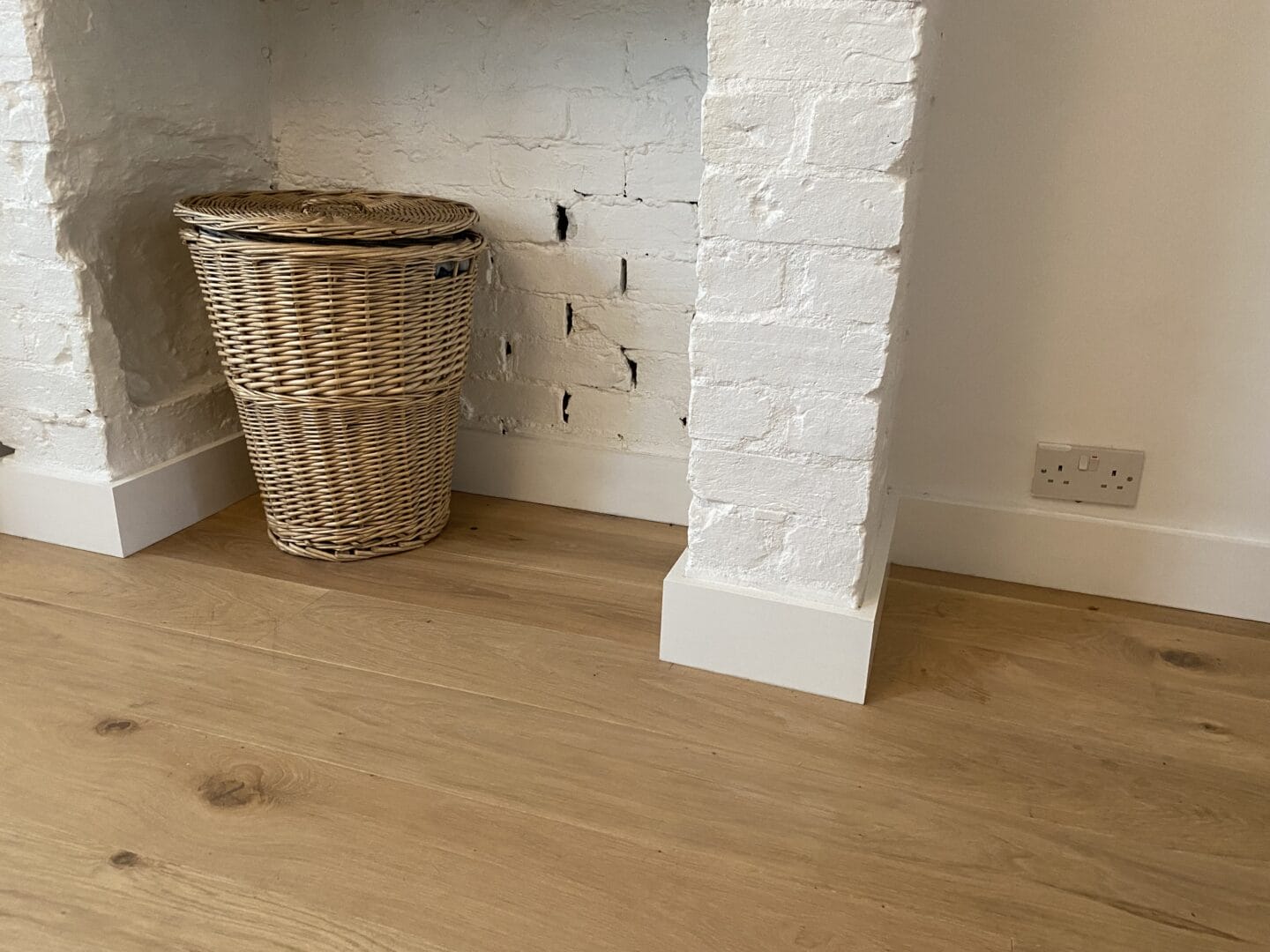
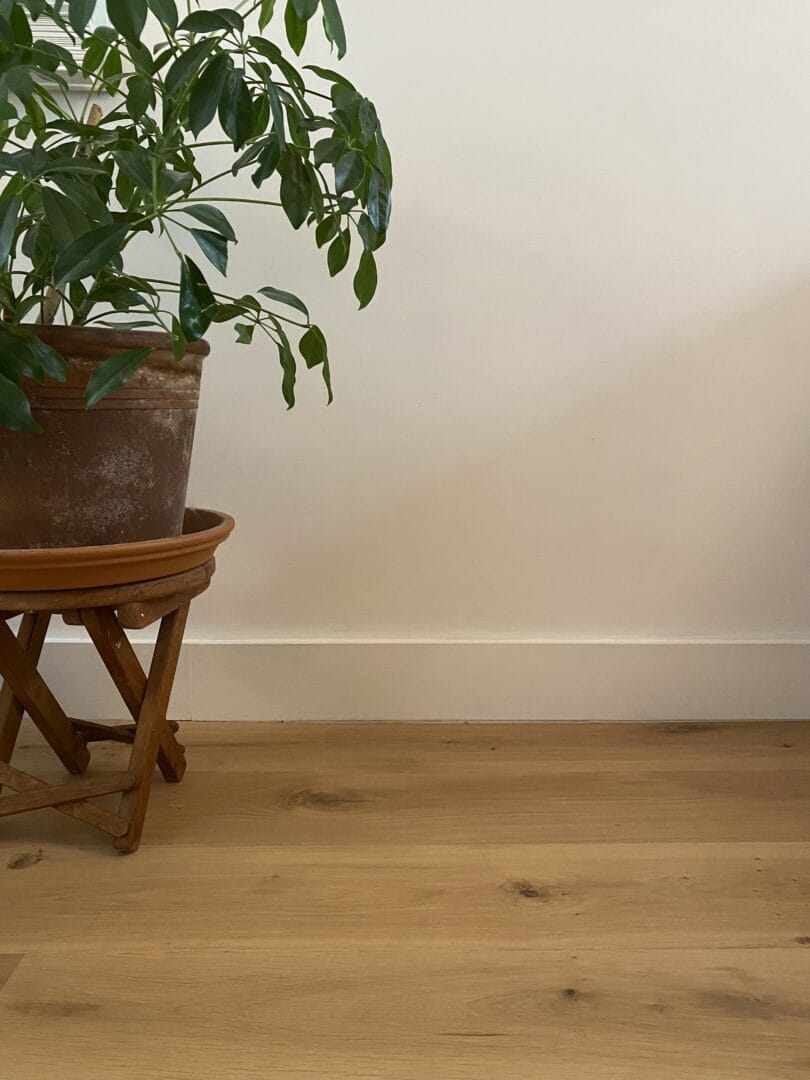
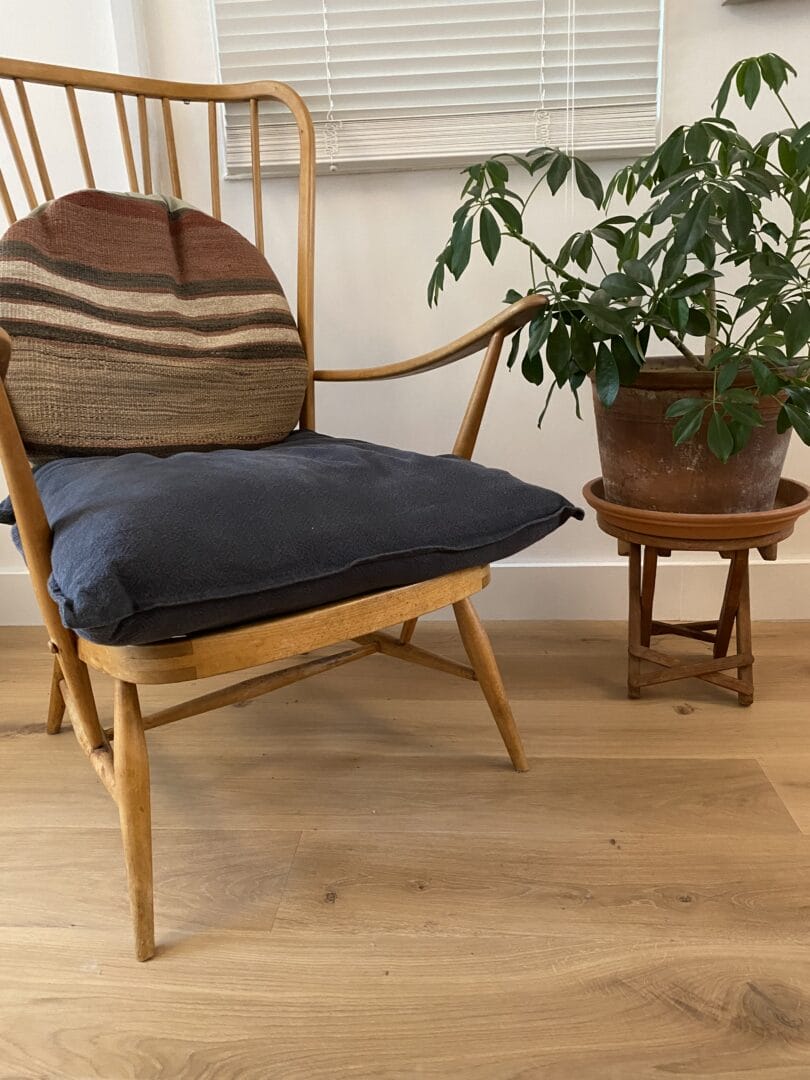
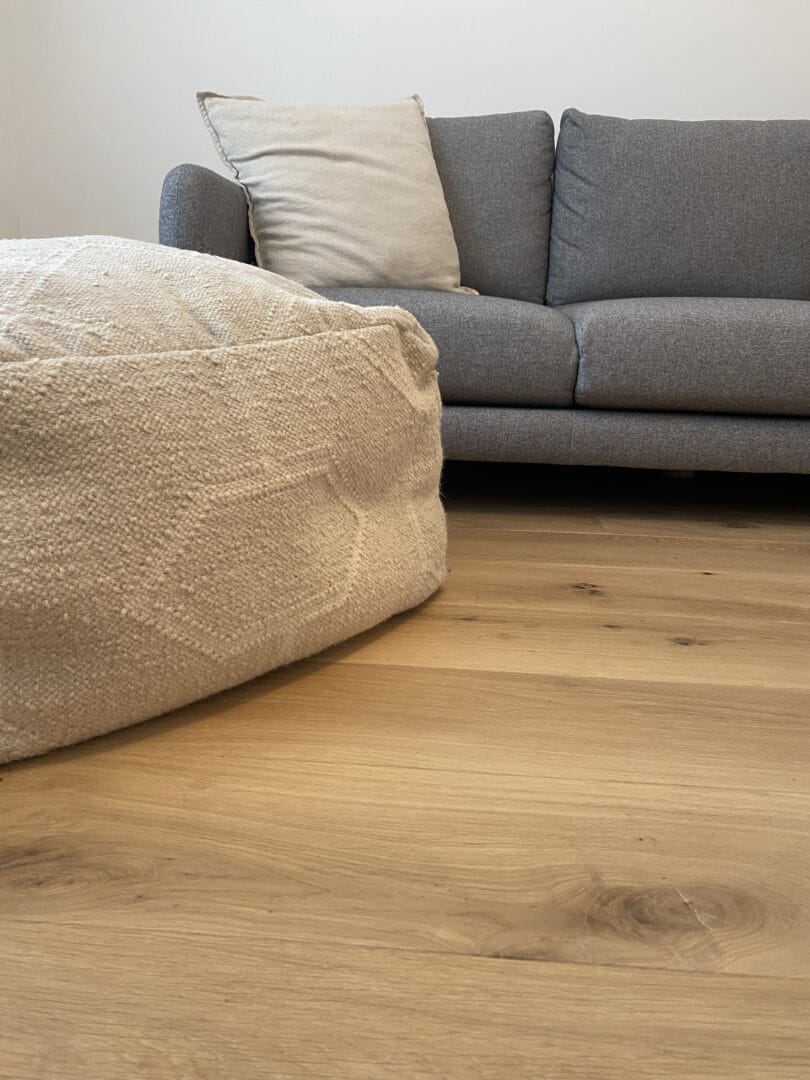
Ash can brighten a room without looking flat. Its grain is often more obvious than its pale colour first suggests, giving the floor movement and texture.
That can work well in contemporary, Scandinavian-influenced and classic interiors. Because real timber varies, compare several full boards in the room where possible.
The multi-layer construction helps control natural expansion and contraction. It does not make the floor immune to moisture, but it generally improves stability compared with an equivalent solid board.
Ash is a hardwood, but durability is not determined by species alone. The board, finish, wear layer, fitting quality and level of traffic all matter.
Lacquered, brushed and oiled finishes each affect appearance, marking and maintenance differently. If you are deciding between finishes, our guide to oil and lacquer explains the practical trade-offs.
Many engineered wood products can be used with underfloor heating, but compatibility must be confirmed for the specific board and heating system.
Do not assume that “engineered” automatically means suitable. The flooring, subfloor, adhesive or underlay, thermal resistance and heating controls all need to work together. The manufacturer’s installation guidance should take priority.
Living and dining rooms show the grain well. Bedrooms and home offices suit its lighter palette, while hallways can work with a suitable finish and entrance matting.
Some kitchens are suitable when the chosen product is approved, and spills are dealt with promptly. Retail and hospitality interiors are also possible, but commercial suitability should be confirmed from the product specification.
Conventional engineered ash is not a waterproof floor. Bathrooms, wet rooms, outdoor spaces and areas where standing water is likely are poor default choices unless a manufacturer specifically states otherwise.
Heavy grit can scratch the finish, furniture can mark the surface, and the number of times the floor can be sanded depends on the usable wear layer.
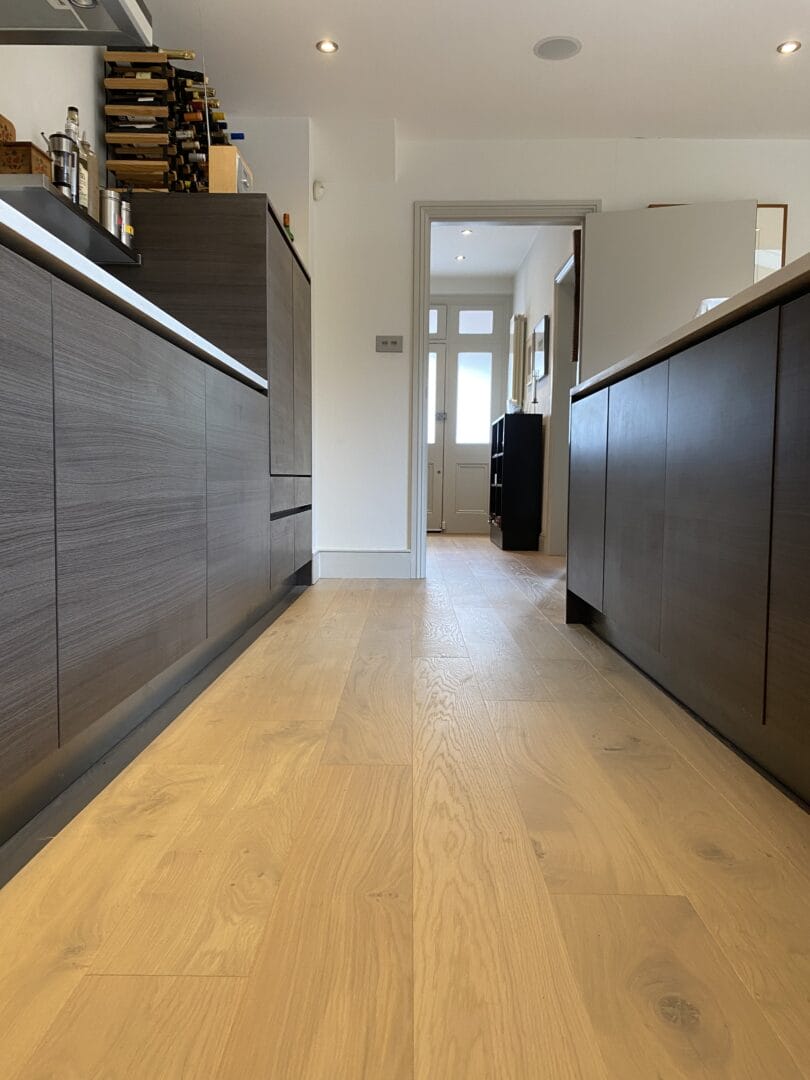
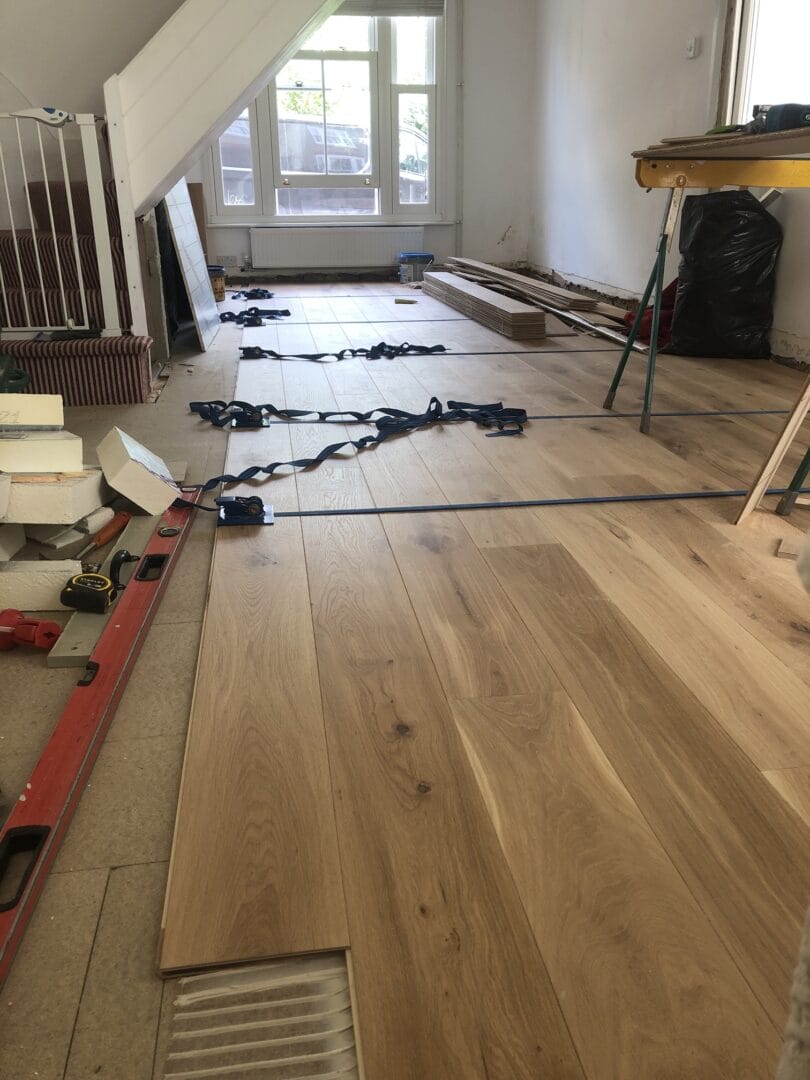
Start with the room rather than the colour.
Check the wear layer, not just the total board thickness. A thicker usable top layer may allow more scope for future refinishing. Then look at board width and length, grade, finish and fitting method.
Wide planks show off the grain, while narrower boards or herringbone parquet create more movement. A smooth pale surface may show marking more readily than a brushed or characterful grade.
Before you buy, check:
At Art of Flooring, we would choose the floor around the room, subfloor, heating system and way the home will be used, then narrow the finish and appearance. A technically unsuitable floor does not become a better choice because the sample happens to be beautiful.
Before fitting, the subfloor needs to be assessed for condition, flatness and moisture. The correct preparation cannot be diagnosed from a product description alone.
The usual sequence is to confirm the product specification, assess the subfloor, complete required preparation, follow the manufacturer’s acclimatisation guidance, plan board layout and expansion provision, then fit using the specified method.
Boards may be floated over an appropriate underlay or fixed to the subfloor, depending on the product and site conditions.
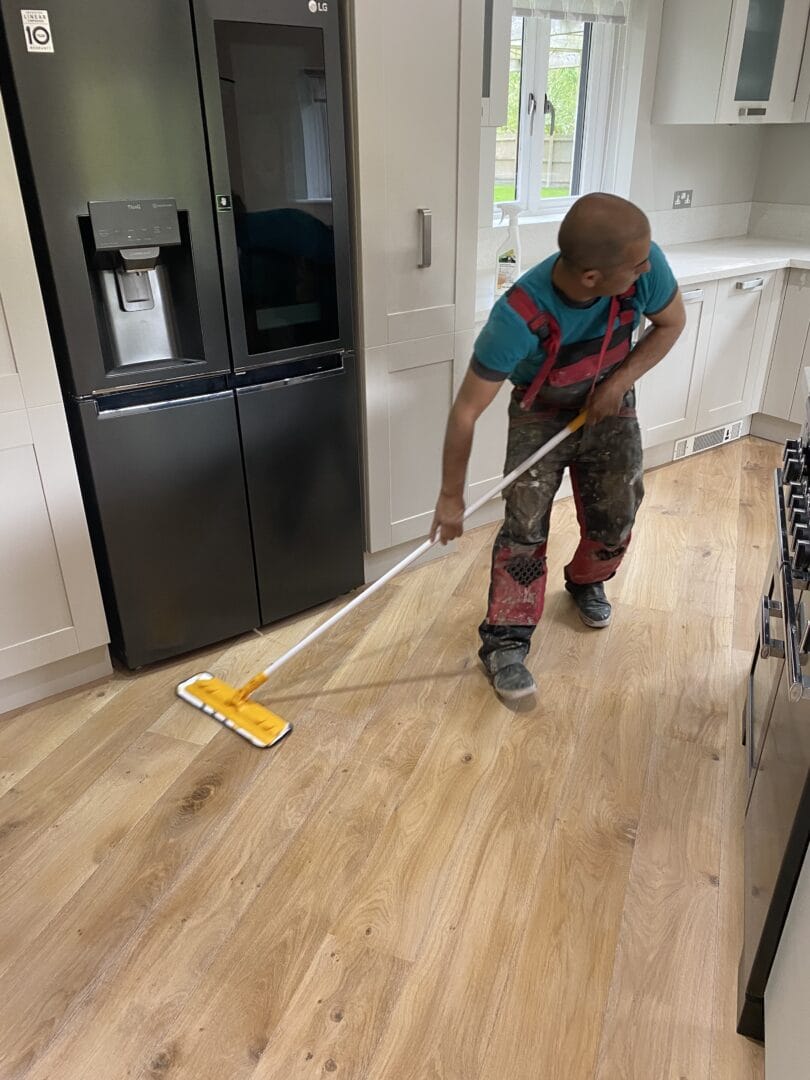
Remove grit regularly, deal with spills promptly, use felt protection beneath furniture and avoid soaking the floor. Cleaning products should suit the exact lacquered, oiled or UV-oiled finish.
Pets do not automatically rule out ash. Trimmed claws, entrance mats and a forgiving finish can help.
Ash is less widely stocked than oak, so product choice and material price can vary.
The board price is only one part of the project. Wastage, preparation, adhesive or underlay, fitting, trims and subfloor work can all affect the final figure. Compare quotations on a like-for-like basis. The useful number is the cost of the complete, properly prepared and fitted floor, not the lowest square-metre price in isolation.
There is no single lifespan for engineered ash flooring. Construction, wear layer, finish, preparation, fitting and care all affect how it performs over time. Refinishing depends on the real wood top layer.
Engineered construction uses the feature hardwood mainly where it is seen rather than requiring the whole board to be solid ash. If responsible sourcing matters to you, look for product-level chain-of-custody information and recognised certification such as FSC or PEFC rather than relying on a broad “sustainable” claim. FSC reported more than 171 million hectares of FSC-certified forest globally by the end of 2025, while PEFC reported about 296 million hectares at the end of 2025. Certification still needs to be checked on the flooring product itself.
Ash is worth considering if you want a genuine wood floor with a light appearance, visible natural grain and the added stability of engineered construction.
The final choice should still be based on more than colour. Think about the traffic the room receives, the maintenance you are comfortable with, whether underfloor heating is involved and what preparation the subfloor may need.
You may prefer oak for a broader range, walnut for deeper colour, laminate where a real wood surface matters less, or solid ash where future sanding potential matters more than engineered stability.
If ash remains on your shortlist, compare several full-size samples alongside the technical specifications. You can also book an appointment at our Cambridge showroom to compare wood flooring choices in person and discuss the room, subfloor and fitting requirements before you commit.