To enable us to give you our full attention during your showroom visit, please book an appointment
- Opening Hours
Showroom Open by Appointment Only
Monday - Friday 9:00am - 5:00pm
Saturday or Sunday 9:00am - 3:00pm

To enable us to give you our full attention during your showroom visit, please book an appointment
Joanne and Phil had lived with carpet in their kitchen for long enough. It worked, until it did not. They wanted a floor that felt warmer underfoot, looked the part, and was simply easier to live with day to day. So they came into our Cambridge showroom to talk it through properly, not just pick up samples and guess.
They were weighing up engineered wood versus LVT. They loved the look of wood, but they also needed something that could handle a real kitchen: spills, shoes, and constant foot traffic.
On the surface, this looked like a straightforward kitchen floor replacement. Remove the carpet, fit the new floor, job done.
But good flooring is not just about what you see on top. For LVT especially, the finish depends on the condition beneath it. That is why we always make sure the subfloor is right before we commit to fitting.
In their consultation, we talked through how different materials behave in kitchens, including how they cope with heat, moisture, and daily wear.
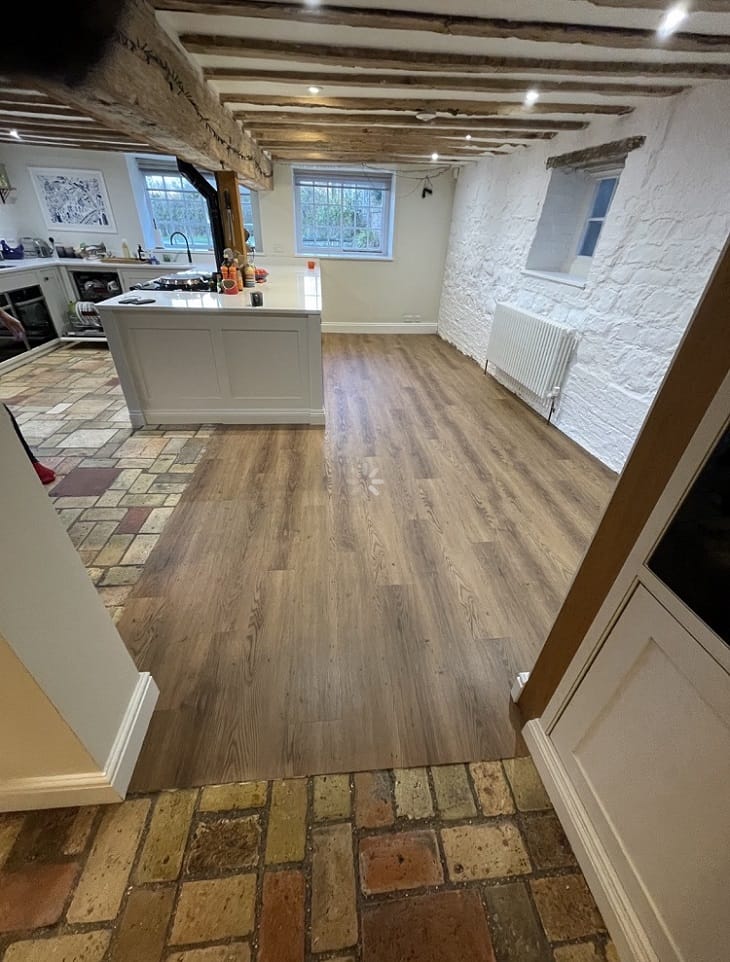
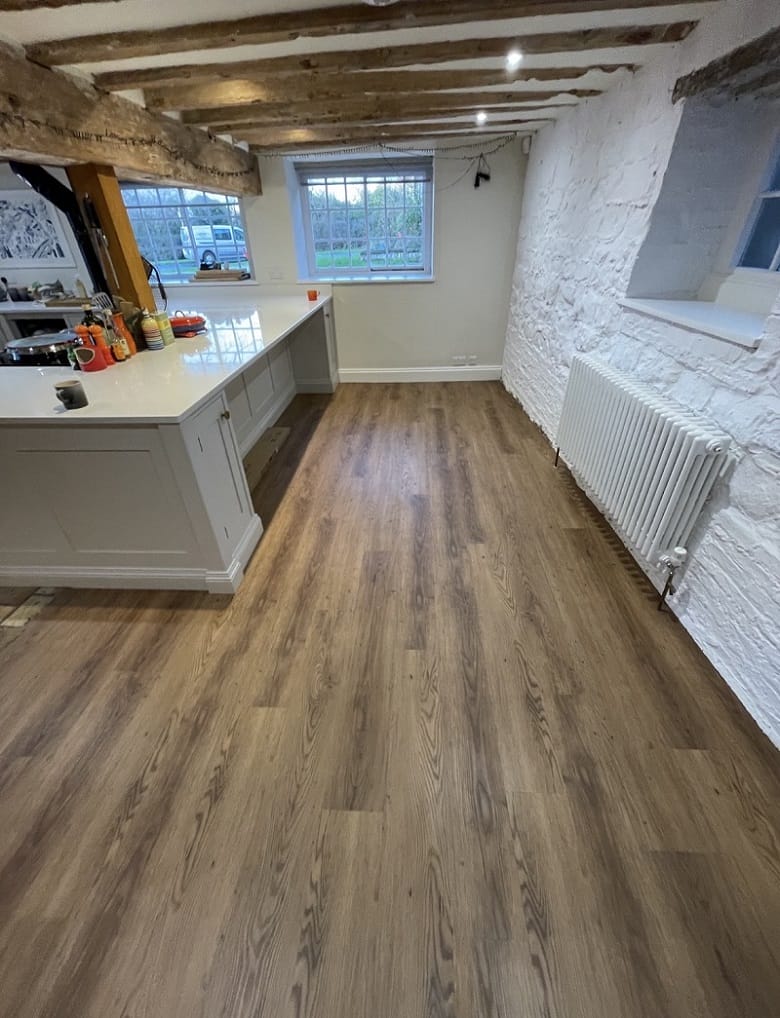
Harvey Maria’s Croft Oak LVT in Wildfox stood out because it gave Joanne and Phil the wood look they liked, with the resilience and easy care that made sense for their space. It felt like the right fit.
The next step was making sure the subfloor would support it properly.
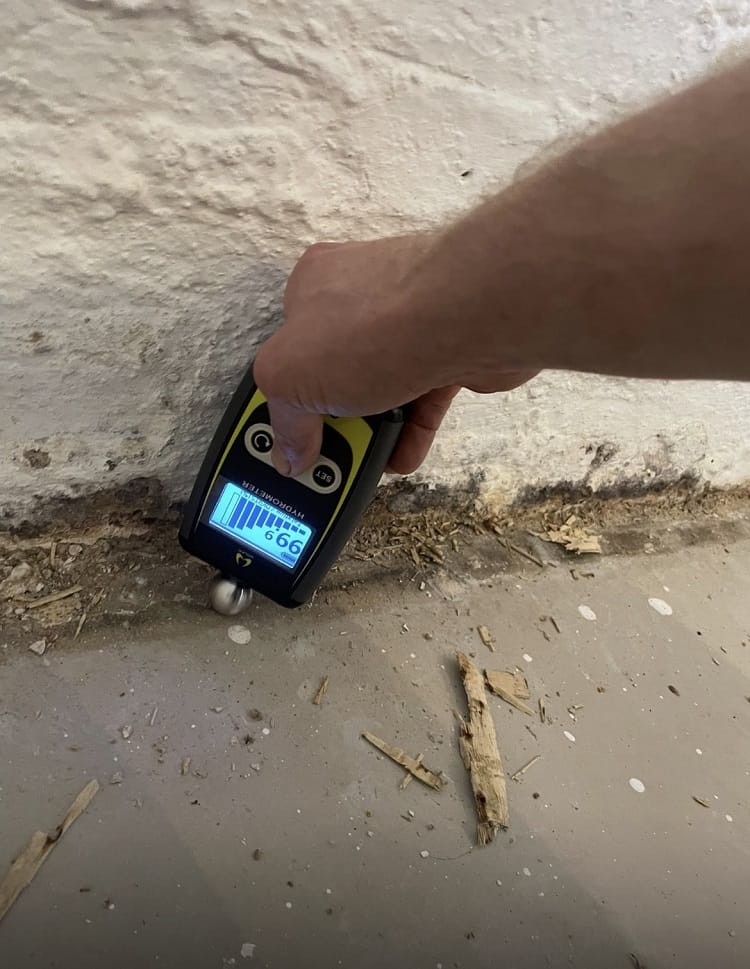
Our survey uncovered two problems that could have affected the finish if they were left as they were:
1) Cracked and poorly laid compound
A previous contractor had used too much smoothing compound (up to around 20mm deep) and had not removed the laitance. Over time, it had cracked and separated, leaving an unstable base.
2) Damp at the external wall
The damp-proof membrane had not extended far enough, which meant moisture was still a concern in that area.
Catching this early mattered. It meant Joanne and Phil got clarity before any fitting started, and we could adjust the plan properly rather than pushing ahead and hoping for the best.
This is the part homeowners do not always see, but it is often the difference between a floor that looks good on day one and a floor that stays reliable.
Our in-house team:
Only once the subfloor was secure and dry did we begin fitting the LVT. It is a more careful route, but it reduces risk and protects the quality of the finished floor.
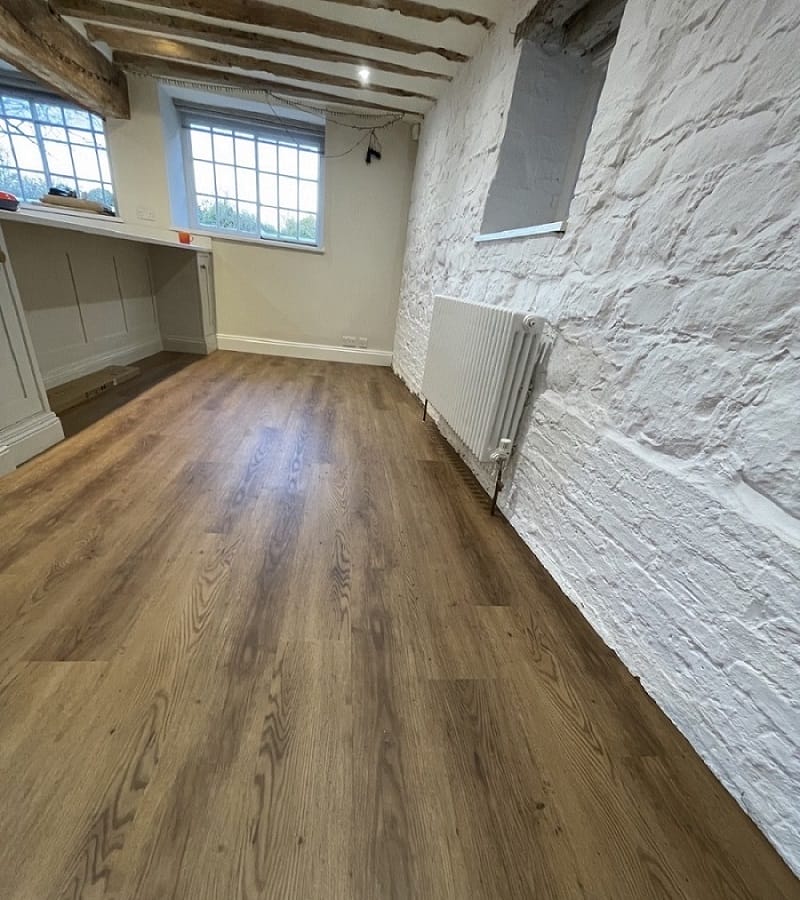
With the preparation done, the new flooring could be installed cleanly and efficiently. Karl also managed some tight finishes, which helped the whole space feel neat and properly finished.
The change was immediate. The kitchen felt brighter and calmer, but still practical for everyday life. It looked like a home again, not a room waiting for the “next job” to be done.
Most importantly, Joanne and Phil told us they felt looked after throughout. They appreciated the honest advice, regular updates, and the calm professionalism from start to finish.
“It’s made such a difference; we finally have a kitchen that feels finished. We’d recommend your team in a heartbeat.”
If you are unsure whether LVT or engineered wood is right for your kitchen, we can help you choose with confidence.
Book a relaxed consultation in our Cambridge showroom and we will:
No pressure. Just clear guidance.