To enable us to give you our full attention during your showroom visit, please book an appointment
- Opening Hours
Showroom Open by Appointment Only
Monday - Friday 9:00am - 5:00pm
Saturday or Sunday 9:00am - 3:00pm

To enable us to give you our full attention during your showroom visit, please book an appointment
Choosing between engineered wood vs solid wood flooring often feels simpler than it really is. Both are real wood floors. Both can look beautiful once fitted. And both are widely used in UK homes.
The difference only becomes clear when you look beyond appearance and consider how each flooring option behaves over time. This guide explains the difference between solid wood and engineered wood plainly, so you can choose a floor that suits your home, how you live in it, and how long you expect it to last.
If you need stability and flexibility, particularly over concrete subfloors, in modern homes, or alongside underfloor heating, engineered wood flooring is usually the safer and more predictable choice.
If you want maximum longevity, the ability to sand and refinish repeatedly, and you are fitting flooring into a stable environment such as a period or long-term home, solid wood flooring can be the better option.
In short:
Choose engineered wood if your home needs adaptability.
Choose solid wood if you want a floor designed to last for decades and are comfortable managing its conditions.
This article is based on practical experience of how solid wood and engineered wood flooring behave once they are lived on, across different room types, subfloors, and household routines.
Rather than relying on headline claims, it focuses on:
| Feature | Engineered Wood Floor | Solid Wood Floor |
| Construction | Layer of real wood over multiple layers of wood | One solid piece of hardwood |
| Stability | More resistant to movement | More reactive to humidity |
| Refinishing | Limited, depending on the wear layer | Can be sanded many times |
| Subfloor options | Concrete or timber | Timber subfloor preferred |
| Underfloor heating | Often suitable | Usually not recommended |
| Installation | Floating, glued or nailed | Usually nailed or glued |
| Best suited to | Modern homes, UFH, mixed conditions | Stable homes, long-term installs |
An engineered wood floor is made by bonding a layer of real wood to a core made from multiple layers of wood, often plywood. Each layer runs in a different direction.
This layered structure is what gives engineered wood its strength and stability. It helps reduce expansion and contraction caused by changes in temperature and humidity.
Solid wood flooring is made from a single, solid piece of hardwood. The grain you see on the surface runs all the way through the plank.
This traditional form of wooden flooring has been used for centuries and is still valued for its longevity and character.
Installation is usually more demanding.
Engineered wood flooring is typically less expensive upfront, particularly for wider boards. Installation can also be simpler in some settings, which can reduce overall cost.
Solid wood is often more expensive than engineered at the start, but its ability to be sanded many times means it may last significantly longer. For homeowners planning to stay put long term, that durability can represent value over time.
Surface durability depends more on the type of wood than on whether the floor is solid or engineered.
The key difference is refinishing:
This is why solid wood can last across multiple generations in the right conditions.
Wood moves naturally as moisture levels change.
Engineered wood and solid wood respond differently:
This makes engineered wood the more reliable choice for underfloor heating and areas where temperature or humidity fluctuates.
Engineered floors can be installed over concrete or timber subfloors and often allow floating installations.
Solid wood flooring usually requires fixing to a timber subfloor and is rarely suitable below ground level.
Solid wood often feels slightly more substantial, but underlay choice plays a major role for both flooring types.
In flats and apartments, sound control is often a bigger consideration than whether the floor is solid or engineered.
Both flooring types are available in a wide range of hardwood species and finishes.
Solid wood retains a traditional premium perception, particularly in older homes. High-quality engineered wood, however, can offer the same visual impact with greater practical flexibility.
Engineered wood uses timber efficiently by combining a thin layer of real wood with a supportive core. Solid wood uses more raw material but can remain in service for much longer.
From an environmental perspective, longevity and correct use matter more than labels.
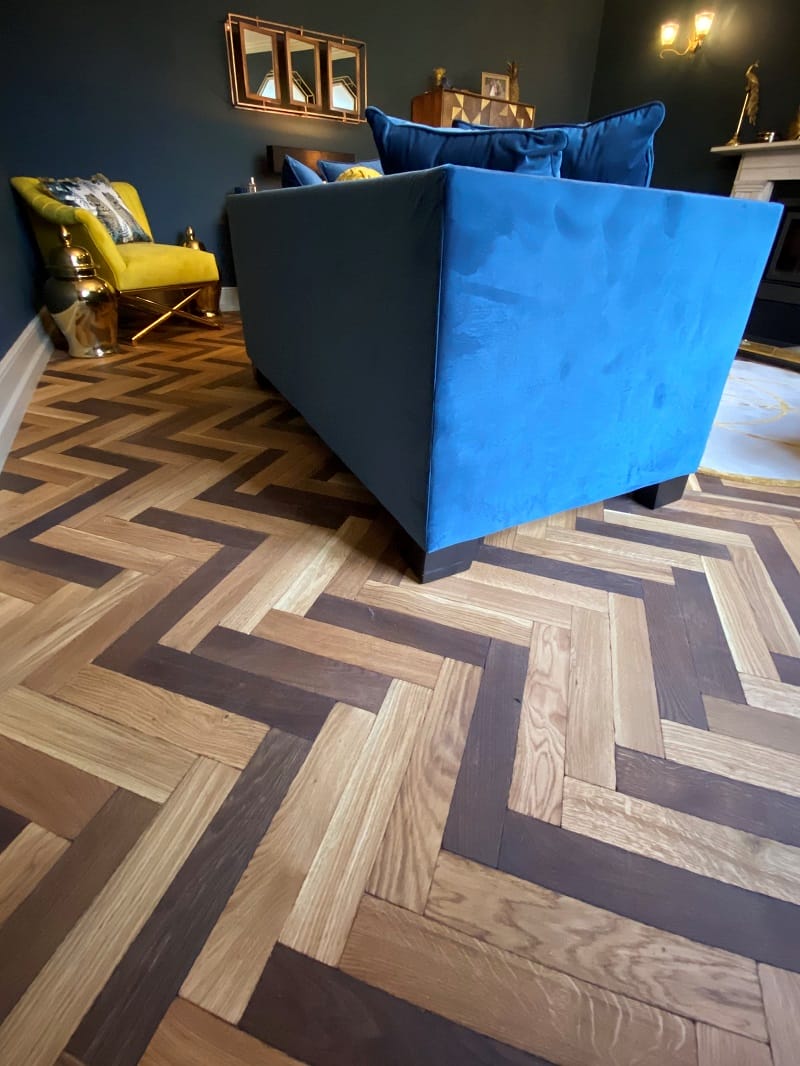
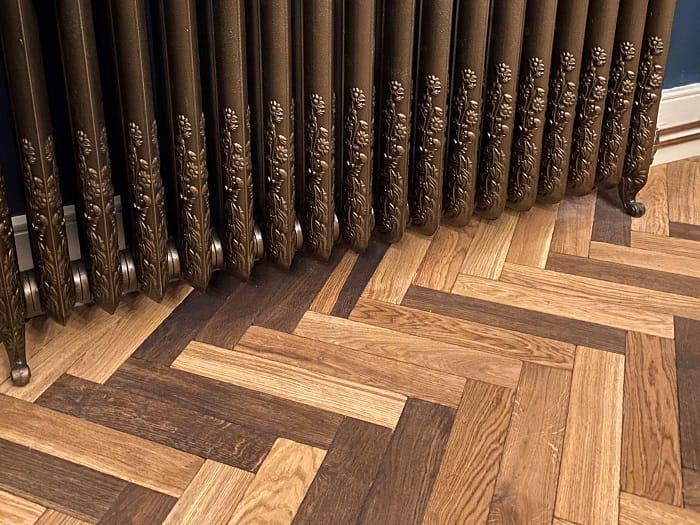
Best choice: Engineered wood or alternative flooring
Best choice: Usually engineered wood Forbes
Best choice: Neither solid nor engineered wood
Best choice: Either, depending on priorities
Best choice: Engineered wood flooring
If you are still weighing up engineered or solid wood flooring, seeing real samples and talking through your subfloor, heating, and day-to-day use often makes the decision clearer.
A short, practical conversation can help you avoid expensive mistakes later, and ensure the floor you choose continues to feel right long after it’s fitted.