To enable us to give you our full attention during your showroom visit, please book an appointment
- Opening Hours
Showroom Open by Appointment Only
Monday - Friday 9:00am - 5:00pm
Saturday or Sunday 9:00am - 3:00pm

To enable us to give you our full attention during your showroom visit, please book an appointment
Maple engineered wood flooring has a real maple surface over a layered engineered core. Its pale colour, fine grain and clean appearance suit bright, contemporary interiors, while the engineered construction offers greater dimensional stability than comparable solid maple flooring. It can work well in living spaces, bedrooms, hallways and home offices when the exact product, subfloor and fitting method suit the room.
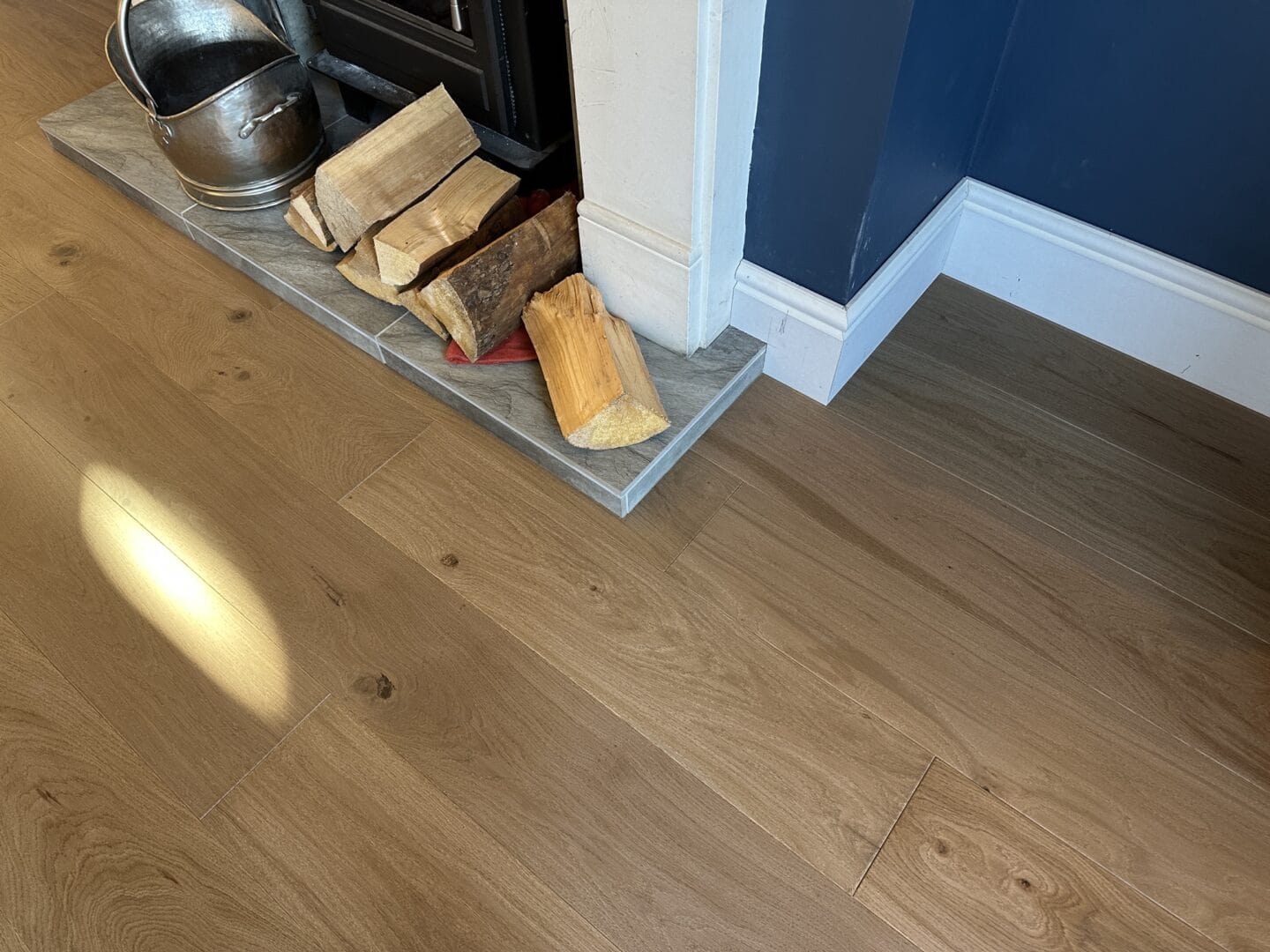
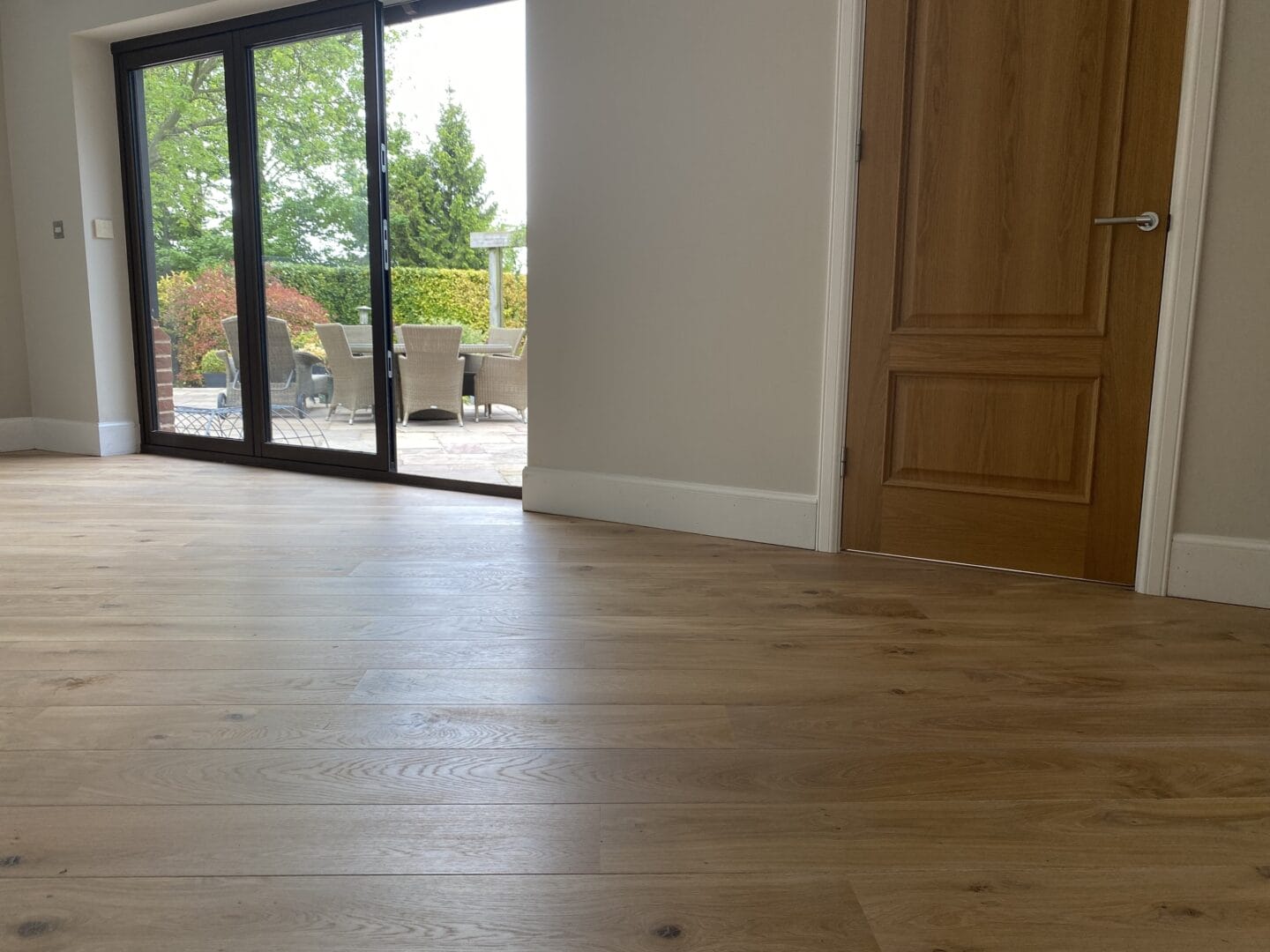
Engineered wood flooring combines a real wood surface with a layered core. Depending on the product, the core may use plywood, timber layers or another wood-based construction. The maple provides the visible colour and grain, while the layers beneath help control movement as indoor temperature and humidity change. If you are comparing board constructions more broadly, see Art of Flooring’s wood flooring guide.
Maple tends to have a finer, quieter grain than many oak floors, with tones that can range from creamy white towards light golden or reddish brown. That restrained appearance can work particularly well when the floor needs to support the furniture, artwork or architecture rather than dominate the room.
| Factor | Engineered maple | Solid maple |
| Construction | Real maple surface over engineered core | Maple timber throughout |
| Stability | Generally better controlled in changing indoor conditions | More sensitive to normal timber movement |
| Refinishing | Depends on wear layer and construction | Usually greater lifetime sanding potential |
| Installation | Several systems may be possible, product dependent | More dependent on site conditions and fitting method |
| Underfloor heating | Exact product must be checked | Generally more restricted |
Neither construction is automatically better. Solid maple may appeal if maximum future sanding potential is the priority. A suitable engineered board may make more sense where dimensional stability and a modern floor build-up matter more.
Maple’s light colour and subtle grain can give a room a cleaner, airier feel. It works naturally with Scandinavian-inspired and minimalist interiors, but its quieter character can also sit comfortably in more traditional rooms where other materials or architectural details should take the lead.
Hard maple is a relatively hard flooring timber, which makes it worth considering for busy homes. However, the Janka hardness of the timber species is not a complete performance rating for an engineered floor. The finish, wear layer, construction, installation, maintenance and everyday use all influence how the completed floor performs.
The layered construction of engineered flooring is designed to reduce some of the movement associated with a single piece of solid timber. It still needs appropriate site conditions, preparation and fitting, but this stability can make engineered flooring easier to consider in modern homes.
Maple engineered flooring may be available with matt or satin lacquer, natural oil and other factory finishes. The finish changes both the look and the maintenance requirements. A matt surface tends to preserve maple’s understated appearance, while satin adds more sheen. An oiled surface can feel closer to the timber itself. For a fuller comparison, read Art of Flooring’s guide to oil and lacquer finishes.
Maple’s pale, relatively uniform appearance will not suit everyone, particularly if you prefer the stronger grain movement often associated with oak. Real maple also changes naturally with daylight, so the colour you see when a floor is first fitted may become warmer over time.
Refinishing and underfloor-heating compatibility depend on the individual board. Engineered construction also does not make real wood waterproof. Bathrooms, wet rooms and areas with frequent standing water generally call for flooring specifically approved for those conditions.
Sometimes, but not simply because the floor is engineered. Kährs’ current underfloor-heating guidance states that its wood-floor surface temperature must not exceed 27°C and specifically notes that hard maple is not recommended with underfloor heating because it moves more than some other species. That guidance applies to Kährs products, not every maple floor, so the exact manufacturer’s specification must take precedence.
Before choosing a maple floor for a heated room, check the board construction, thermal requirements, fitting method and heating controls. The subfloor also needs assessing for relevant moisture conditions, flatness and suitability rather than judging the installation from the flooring sample alone.
Start with the room rather than the colour sample. Look at the real maple wear layer, core construction, surface finish, board dimensions, fitting system and the manufacturer’s guidance for the intended setting.
If future refinishing matters, wear-layer thickness deserves particular attention. The NWFA Engineered Wood Flooring Refinishable Program is a voluntary certification programme designed to identify engineered products with sufficient wear layers for refinishing. Its criteria should not be treated as a promise that any particular board can be sanded, because the floor’s construction, condition and previous treatment still matter.
At Art of Flooring, the useful comparison is the complete floor rather than the sample in isolation. The room, existing floor, accessible subfloor conditions, preparation and fitting system all influence whether an attractive product is technically suitable. That is also why a lower material price does not necessarily mean a lower completed-project cost.
Before fitting, the subfloor should be assessed for relevant moisture conditions, flatness and suitability. The board then needs to be installed in line with its product instructions, including any acclimatisation, expansion and heating requirements. The correct method may be floating, glued or another manufacturer-approved system, depending on the board and floor build-up.
For day-to-day care, regularly remove dust and grit, deal with spills promptly and use products approved for the floor’s finish. Avoid excessive water and protect furniture contact points. Moving rugs occasionally can also help reduce sharply defined colour differences between covered and exposed maple.
There is no single responsible lifespan for every maple engineered floor. Wear-layer thickness, finish, installation, household traffic and maintenance all affect longevity. A floor with a suitable refinishable surface may have more scope for future restoration, but whether sanding is possible needs to be assessed from the actual board and its condition.
Maple is a relatively specialised choice in the UK, and material prices vary by construction, grade, finish and supplier. Rather than treating an online price per square metre as the project cost, compare what the completed quotation includes.
| Cost element | What to compare |
| Maple engineered flooring | Board construction, grade, finish and wastage |
| Adhesive, underlay and accessories | What the selected fitting system requires |
| Professional fitting | Layout, board format and site conditions |
| Subfloor preparation | What is needed after the floor is assessed |
| Future maintenance | Finish requirements and refinishing potential |
Maple is worth considering if you want a real wood floor with a light colour, restrained grain and clean contemporary appearance. Its engineered construction can also be a practical alternative to solid maple where greater dimensional stability is useful.
The important part is choosing the right maple floor, not maple in the abstract. Check the wear layer, finish, construction, room conditions and any heating requirements, then consider the preparation and fitting the complete project needs.
If you are comparing maple with oak, walnut or another engineered wood floor, view samples in your own lighting where possible. You can also book a visit to Art of Flooring’s Cambridge showroom to compare wood-floor options and discuss the practical requirements of your project.