To enable us to give you our full attention during your showroom visit, please book an appointment
- Opening Hours
Showroom Open by Appointment Only
Monday - Friday 9:00am - 5:00pm
Saturday or Sunday 9:00am - 3:00pm

To enable us to give you our full attention during your showroom visit, please book an appointment
Engineered hardwood flooring is a strong choice for busy households because it gives you the natural look of real wood with better stability, durability, and everyday practicality. Its multi-layered construction helps reduce warping, copes well with foot traffic, and is easier to maintain than many traditional solid wood floors.
Busy homes ask a lot from a floor. Wet shoes come through the hallway. Chairs scrape back at dinner. Pets run in from the garden. Children drop toys, bags, and everything in between.
A traditional hardwood floor can look beautiful, but it can also need more care than many households can realistically give it. Solid wood naturally expands and contracts, and in rooms with moisture or temperature changes, that movement can lead to gaps, warping, or extra maintenance.
Engineered hardwood flooring offers a more practical middle ground. It still has the look and feel of authentic wood, but its construction gives it better stability and strength for everyday family life.
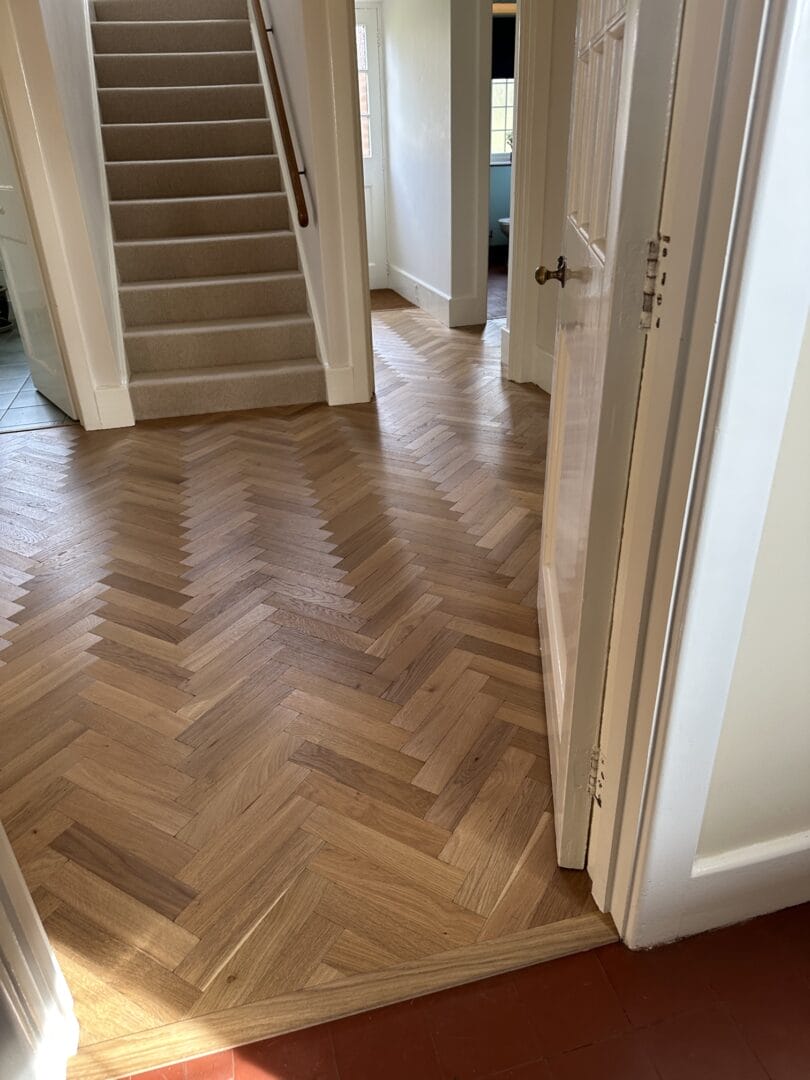
Engineered hardwood flooring is made from multiple layers. The top layer is a real wood veneer, often oak, walnut, or another hardwood. Beneath that is a plywood core or high-density base that gives the plank strength and stability.
That multi-layered structure is what makes engineered flooring different from a plank of solid timber. The top layer gives the natural look, grain, and colour variations of real wood. The under-core helps the board resist movement when humidity or temperature changes.
For a busy household, that matters. It means the floor is less likely to shrink, warp, or move like solid wood floors can in certain conditions.
In a home with children, pets, visitors, and regular foot traffic, flooring needs to do more than look good. It needs to cope.
Engineered wood flooring is made by layering materials to improve strength and durability. This helps it handle everyday pressure from furniture, dropped toys, shoes, and busy rooms such as kitchens, hallways, and open-plan living areas.
The quality of the product still matters. A thicker wear layer, a strong core, and a suitable finish will usually perform better over time than a cheaper, thinner board.
Wood naturally reacts to moisture and temperature. This is one reason solid wood can be more difficult in certain rooms.
Engineered wood flooring is designed to reduce that movement. Its layered construction helps the plank stay more stable, which lowers the risk of shrinking, warping, or gaps forming between boards.
This makes it suitable for areas where solid wood may feel less practical, including kitchens, basements, and some bathrooms where humidity is controlled. Many products are also compatible with underfloor heating, provided the manufacturer’s guidance is followed.
Guidance on using wood flooring with underfloor heating
No real wood flooring is completely scratch-proof. The better question is how well it handles normal use.
Scratch resistance depends on three things:
Harder woods tend to cope better in busy homes. A lacquered finish can add a protective surface, while an oil finish can be easier to spot repair. For homes with pets, children, or heavy foot traffic, this choice matters more than many people realise.
Wood hardness ratings for flooring.
A good engineered wood floor is built to last.
Depending on the thickness of the top layer, many engineered floors can be sanded and refinished. A wear layer of around 3mm to 6mm gives more scope to restore the surface later, rather than replacing the whole floor.
This is one of the reasons engineered oak flooring remains a popular choice. It offers the warmth and look of real wood flooring, with the practical benefit of a structure designed for modern homes.
Busy households need flooring that does not demand constant attention.
Engineered hardwood flooring is relatively simple to care for. Regular sweeping or vacuuming removes grit and debris. A damp mop can handle everyday cleaning. Spills should still be wiped promptly, but the floor is generally less sensitive to small changes in moisture than many solid wood floors.
For best results:
This is where engineered flooring earns its place. It gives you the warmth of a wooden floor without making the home feel too precious to live in.
Installation affects more than cost. It affects disruption.
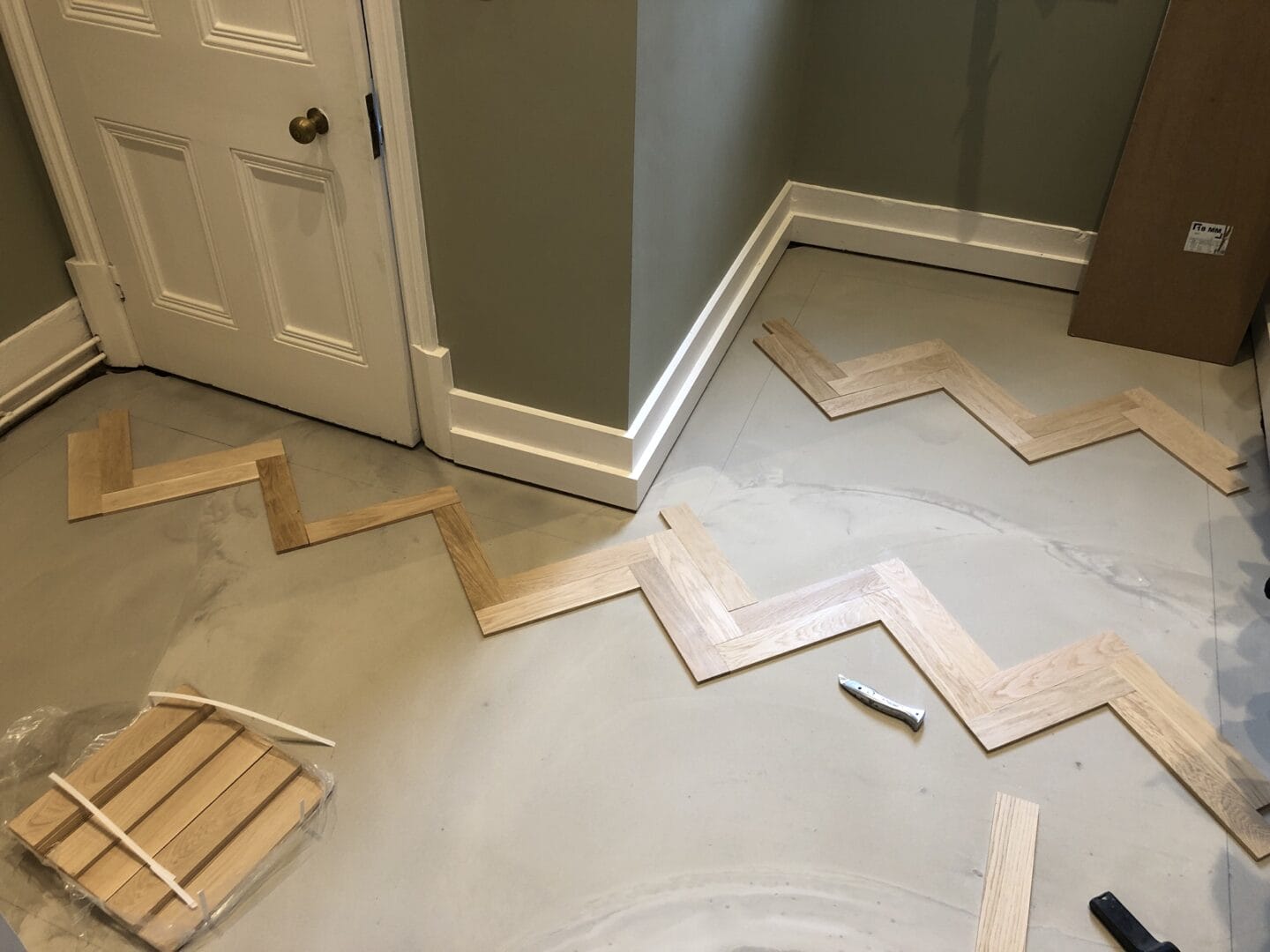
Many engineered wood flooring options use click-lock systems or floating floor methods. These can be quicker and easier to install than traditional solid hardwood flooring, depending on the room, subfloor, and product.
That can make a real difference in a family home where long-term disruption is not ideal. It also gives homeowners more flexibility when choosing from a range of engineered wood flooring, including plank, herringbone, and parquet styles.
Professional wood flooring installation.
The main reason many homeowners choose engineered hardwood is simple. It looks like real wood because it is real wood.
The top layer gives the authentic wood grain, texture, and natural colour variation people want. The structure underneath gives the floor more stability than solid wood in many modern homes.
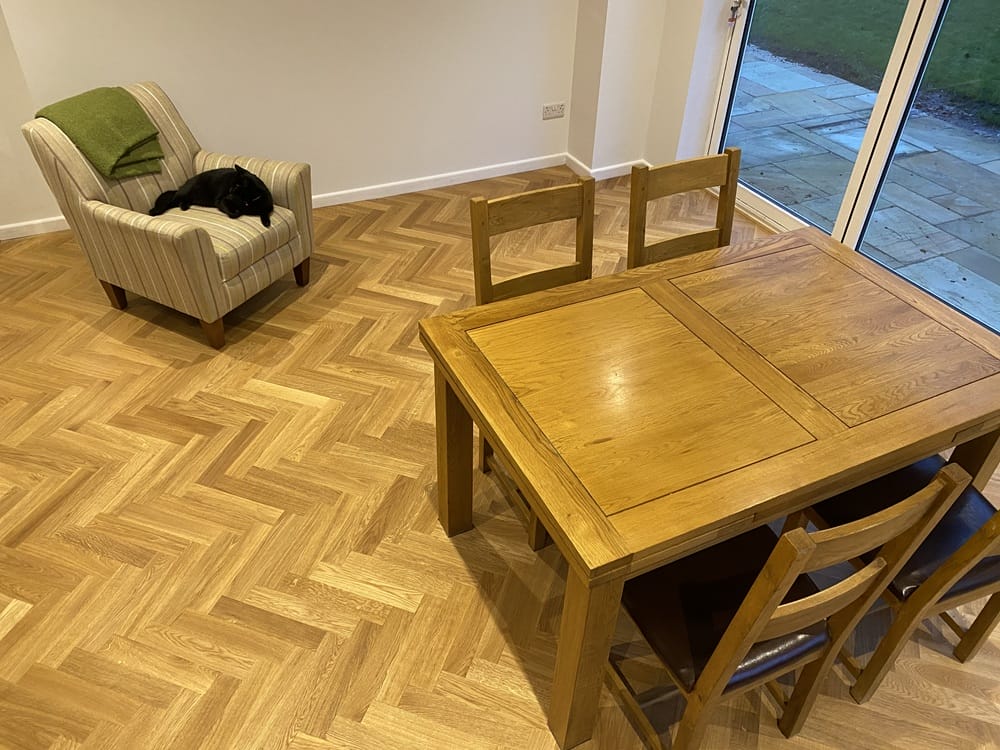
There is also a wide design range. Homeowners can choose oak, walnut, wide plank boards, herringbone, parquet, brushed finishes, matt lacquer, or oil finishes. That makes engineered hardwood flooring flexible enough for both traditional homes and more contemporary spaces.
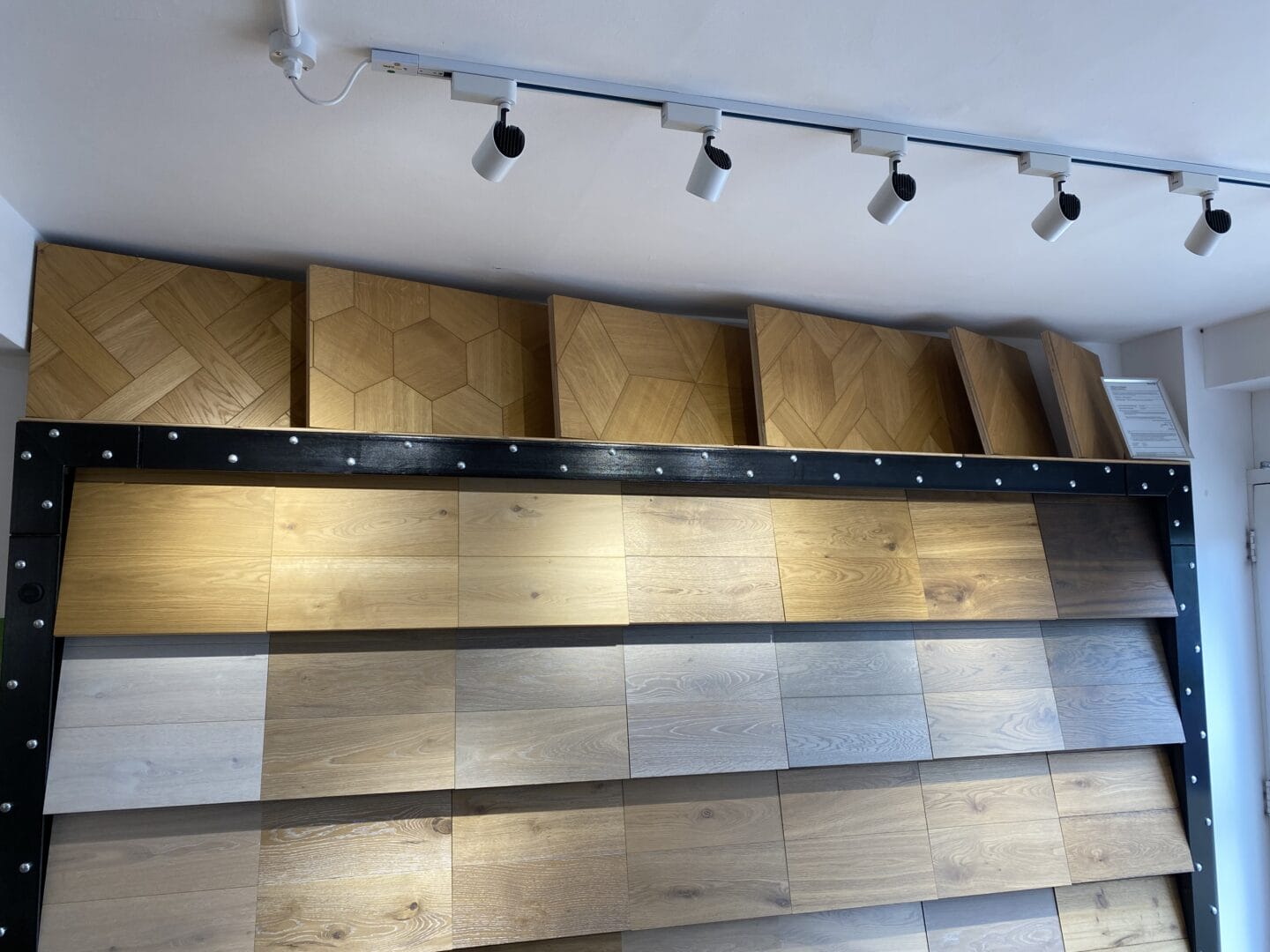
For busy households, engineered hardwood often sits between solid wood, laminate, and vinyl. It keeps the natural look of wood, but offers better practicality than solid hardwood in rooms where movement or moisture may be a concern.
| Feature | Engineered Hardwood | Solid Hardwood | Laminate | Vinyl |
| Moisture resistance | Good | Lower | Moderate | High |
| Durability | High, depending on finish | Moderate to high | High | High |
| Refinishing | Limited, depending on the wear layer | Multiple times | No | No |
| Appearance | Real wood | Real wood | Synthetic | Synthetic |
| Underfloor heating | Often suitable | More limited | Product dependent | Product dependent |
Laminate and vinyl can be practical, especially where water resistance or budget is the main priority. But for homeowners who want the look and feel of authentic wood, engineered wood flooring offers a stronger balance of appearance, durability, and practicality.
Not all engineered flooring is the same. The right choice depends on how the room is used, who lives in the home, and how much wear the floor needs to handle.
Look carefully at:
If longevity matters, it is worth choosing a high-quality engineered wood flooring collection rather than making the decision on appearance alone.
View our engineered wood flooring range.
Engineered hardwood flooring is practical, but it is not perfect.
It cannot always be refinished as many times as solid wood. Deep scratches can still happen. Quality also varies between manufacturers, which is why the construction, wear layer, finish, and installation all matter.
This is not a floor to choose purely on the lowest price. A poor-quality product may look right at first, but it can be harder to repair, less stable, and less satisfying over time.
The safer approach is to match the product to the way the home is actually used.
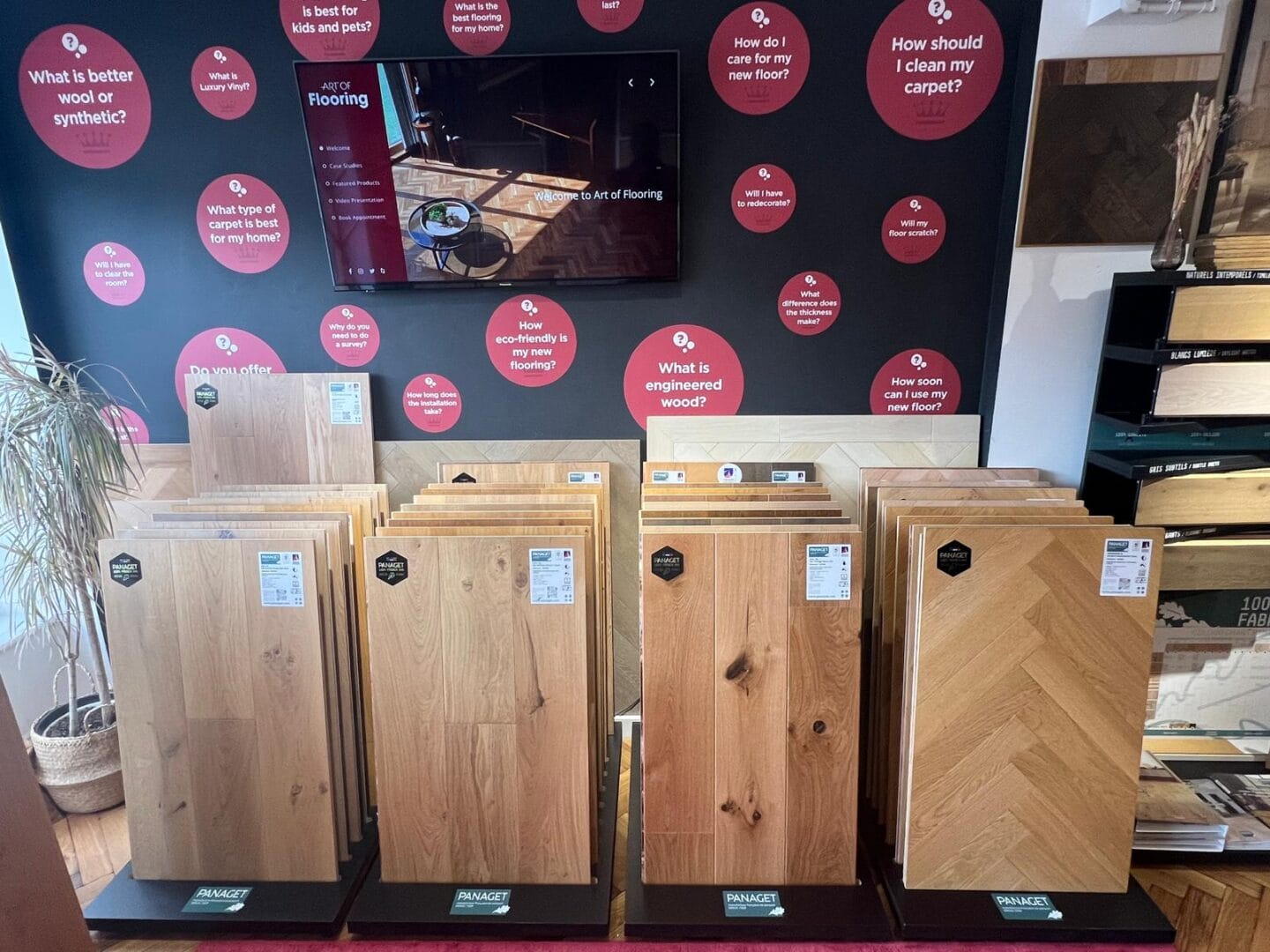
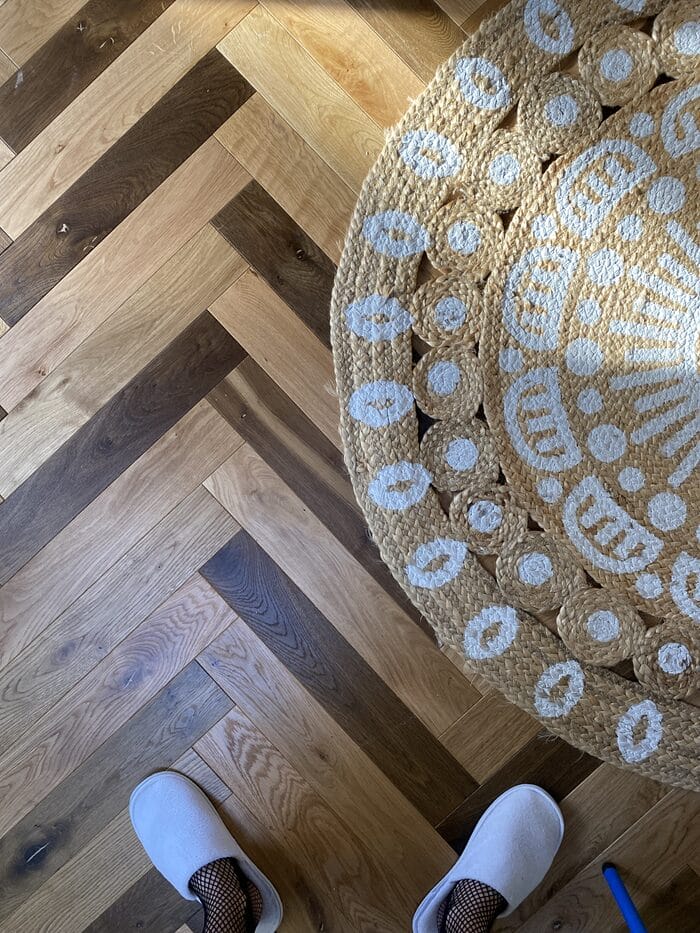
Engineered wood flooring often costs more than laminate or vinyl, but less than some solid hardwood options. The value comes from what it gives back over time.
A good engineered floor can offer:
For a busy household, that can mean fewer regrets later. The cheapest flooring is not always the best value if it marks quickly, feels synthetic, or needs replacing sooner than expected.
Engineered hardwood flooring is especially useful in:
It works best where the homeowner wants a floor that feels warm and natural, but still has the strength and stability to cope with everyday use.
A few simple habits help protect the floor without turning maintenance into a chore.
Use mats near entrances to catch grit before it scratches the surface. Add rugs in high-use areas such as hallways or play spaces. Clean with a damp mop rather than excess water. Use furniture pads under chairs and tables. Choose a matt or lightly textured finish if you want minor marks to be less visible.
The best floor is not just the one that looks good on installation day. It is the one that still feels right after years of normal use.
A good wood floor should not make a home feel difficult to live in.
Engineered hardwood flooring gives busy households the warmth and character of real wood, with the added strength and stability needed for daily life. It can handle movement, foot traffic, pets, children, and changing conditions more confidently than many traditional solid wood floors.
If you are comparing flooring options, start with how the room is used. Then look at the wear layer, finish, wood species, and installation method. That is usually where the right choice becomes clear.
To choose the best engineered wood flooring for your home, explore our flooring range or speak to a specialist about the finish, structure, and style that will suit your space best.