To enable us to give you our full attention during your showroom visit, please book an appointment
- Opening Hours
Showroom Open by Appointment Only
Monday - Friday 9:00am - 5:00pm
Saturday or Sunday 9:00am - 3:00pm

To enable us to give you our full attention during your showroom visit, please book an appointment
Engineered wood flooring is a real wood floor made from multiple layers of wood bonded together: a hardwood wood top layer (the “wear layer” / wood veneer) over a stable core (commonly plywood or HDF). The layered build helps reduce seasonal movement versus a solid wood floor, so it’s often chosen over concrete and, when approved, for use with underfloor heating.
When people search “engineered wood flooring vs…”, they’re usually trying to avoid regret: movement, moisture, and whether the floor can be renewed.
| Flooring option/floor types | What it is | Water tolerance | Can it be refinished? | Best for | Watch-outs |
| Engineered wooden floor | Real hardwood wear layer over a layered core | Better stability than solid, but still wood | Sometimes (depends on wear layer + product guidance) | Many living areas; some concrete installs | Moisture and poor installation still cause problems |
| Solid wood floor / solid hardwood | One piece of timber throughout | Sensitive to humidity swings | Yes (typically more scope) | Traditional homes: long-term renewal | Movement/seasonal gaps; not always ideal over concrete |
| Laminate / laminate floor | Printed surface over a fibreboard core | Varies; edges can swell if water gets in | No | Budget-conscious refits; quick refresh | Doesn’t feel like real hardwood; can sound hollow |
| Vinyl flooring (LVP) | Plastic/composite layers with printed design | Generally more water-tolerant | No | Kitchens, utility, busy households | Not timber; heat/indentation varies by product |
Note: “Better” depends on your room, subfloor, and expectations. This guide focuses on how to choose engineered confidently, not sell you a single answer.
A solid wood floor is one piece of timber. It naturally expands and contracts across its width as indoor humidity changes. That’s normal wood behaviour.
An engineered floor uses thin layers of wood laid in alternating directions and bonded together. This cross-layer construction reduces movement. It does not mean zero movement, but it can mean fewer surprises in real homes with central heating, seasonal swings, and open-plan spaces.
You will commonly see:
A quiet truth: performance depends on the whole build quality, milling, finish, and installation, not just the label “engineered”.
If you only check one spec, check the top layer thickness (the wear layer/wood veneer). It’s the biggest clue about renewal potential.
Two simple clarifiers:
Practical wear-layer Thresholds
These are practical expectations, not promises. Always check the specific engineered wood products you’re buying.
| Wear layer (mm) | “Tier” | What it usually means in real life |
| 2.5–3 mm | Thin | Limited refinishing scope; careful refresh may be possible on some boards |
| 4–6 mm | Standard/sweet spot | Better long-term flexibility; more realistic renewal potential |
| 6 mm+ | Premium | Closer to “solid-like” flexibility in many homes |
When choosing a range of engineered wood, look for:
Quality varies: lower-grade boards can have weaker cores, less durable finishes, and more sensitive joints.
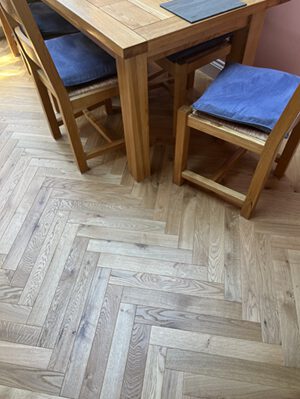
Here’s the room-by-room view most people actually need.
| Room | Recommended? | Why | What to look for |
| Living rooms | Yes | Warmth underfoot; premium feel | Wear layer, finish type, sample in your light |
| Bedrooms | Often yes | Comfort and calm matter | Lower sheen if you prefer a softer light |
| Hallways | Yes, with care | High-traffic route | Durable finish, mats, and realistic expectations |
| Kitchens | Conditional | Can work with habits + correct prep | Tight joints, robust finish, spill plan |
| Basements / below grade | Conditional on yes | Often, a reason people choose engineered | Moisture testing, vapour control, suitable method |
| Bathrooms | Generally avoid | Frequent wetting + humidity | If you need “wet-room tolerant”, consider other floor types |
| Underfloor heating | Conditional | Many products allow it when approved | Manufacturer approval + install method + temperature limits |
This is where most “bad flooring” stories start, not with the board, but with the prep.
If you want to see what good prep looks like in a real home, take a look at our Engineered wood flooring case study.
If you’re curious what ‘good’ looks like in the trade, the UK training body FloorSkills is a useful reference point.
Concrete moisture is a common deal-breaker. Many manufacturers require RH testing before you install engineered wood flooring over slabs. Industry standards exist (for example, ASTM RH testing); you don’t need to memorise them, but you do need the right checks completed and documented.
Underlay/vapour barrier basics: the goal is to reduce moisture migrating into the wood floor system, which can lead to cupping, gapping, or adhesive failure.
A few avoidable errors cause most call-backs:
Pro tip: your engineered wood floor should be treated as a system (subfloor + moisture control + method + board). The nicest board won’t save a rushed install.
Pricing varies by specification and prep. Rather than chasing a number, focus on the drivers:
In general terms, engineered often sits above laminate, and can sit below or alongside solid hardwood, depending on the build and finish.
Lifespan varies widely by wear layer, finish, traffic, and maintenance. Tie your expectations to what you’re actually buying; a thin wear layer is a different ownership journey from a premium board.
Indoor air quality, safety, and sustainability (modern homeowner reality)
If your household is sensitive to smells or you simply want to make a responsible choice, ask better questions:
Some engineered wood products contain composite components. Look for clear emissions information and compliance statements from the supplier. Formaldehyde emissions rules exist (for example, TSCA Title VI in the US), the key is not the acronym, it’s having transparent product documentation.
FloorScore is a widely recognised certification related to VOC emissions testing for flooring products. If indoor air quality matters, look for credible third-party schemes and avoid vague “eco” claims without evidence
If you’re choosing natural wood and timber, sourcing matters. FSC (Forest Stewardship Council) and PEFC labels are meant to indicate responsible forestry and chain-of-custody standards. If it matters to you, verify the claim rather than relying on sales copy.
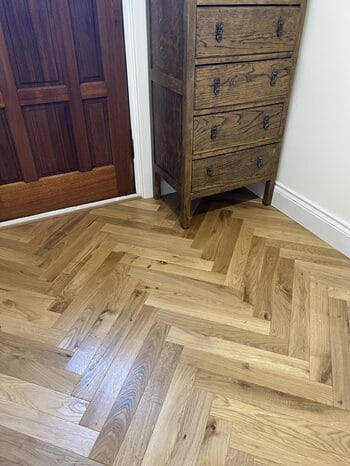
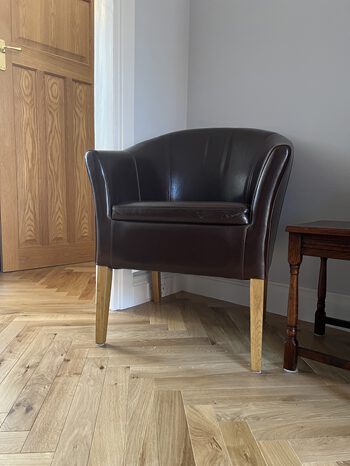
Use this as a quick “no regrets” check before you buy samples:
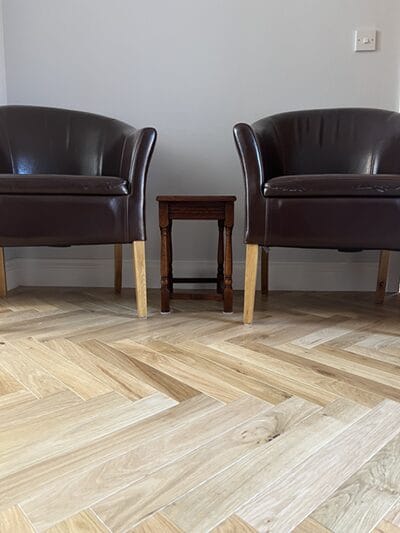
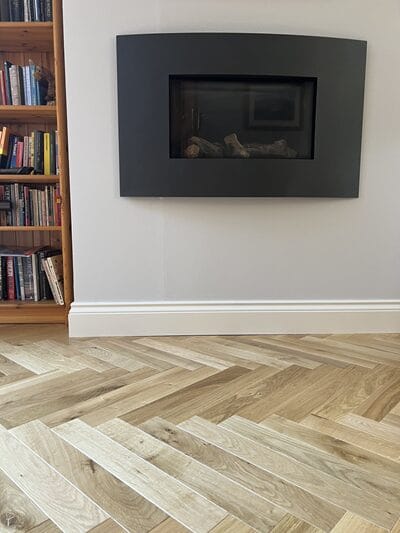
If you are considering parquet flooring (including herringbone engineered), ask about subfloor flatness tolerances, as pattern floors can show imperfections sooner
If you are weighing up engineered versus solid, do it with samples, not guesswork. Shortlist two or three finishes, view them in your own light, and note your subfloor and heating setup. If you want a second opinion, send a couple of room photos and rough measurements, and we will help you compare like-for-like and choose a spec that suits how you live.