To enable us to give you our full attention during your showroom visit, please book an appointment
- Opening Hours
Showroom Open by Appointment Only
Monday - Friday 9:00am - 5:00pm
Saturday or Sunday 9:00am - 3:00pm

To enable us to give you our full attention during your showroom visit, please book an appointment
If you've been exploring new flooring for your home, you've probably come across the term parquet engineered wood flooring. It often appears alongside popular styles such as herringbone and chevron, but what does it actually mean?
Simply put, parquet engineered wood flooring is real wood flooring arranged in decorative geometric patterns, with each board featuring a genuine hardwood surface supported by a stable layered core. It combines the timeless appearance of traditional parquet with the practical advantages of engineered construction.
For many homeowners, it's a way to introduce warmth, texture and character without compromising on everyday performance. Whether you're renovating a Victorian hallway or updating a contemporary kitchen-diner, engineered parquet offers a distinctive look that suits a wide variety of interiors.
If you're still deciding between different wood flooring options, our guide to wood flooring explains the differences between engineered and solid wood in more detail.
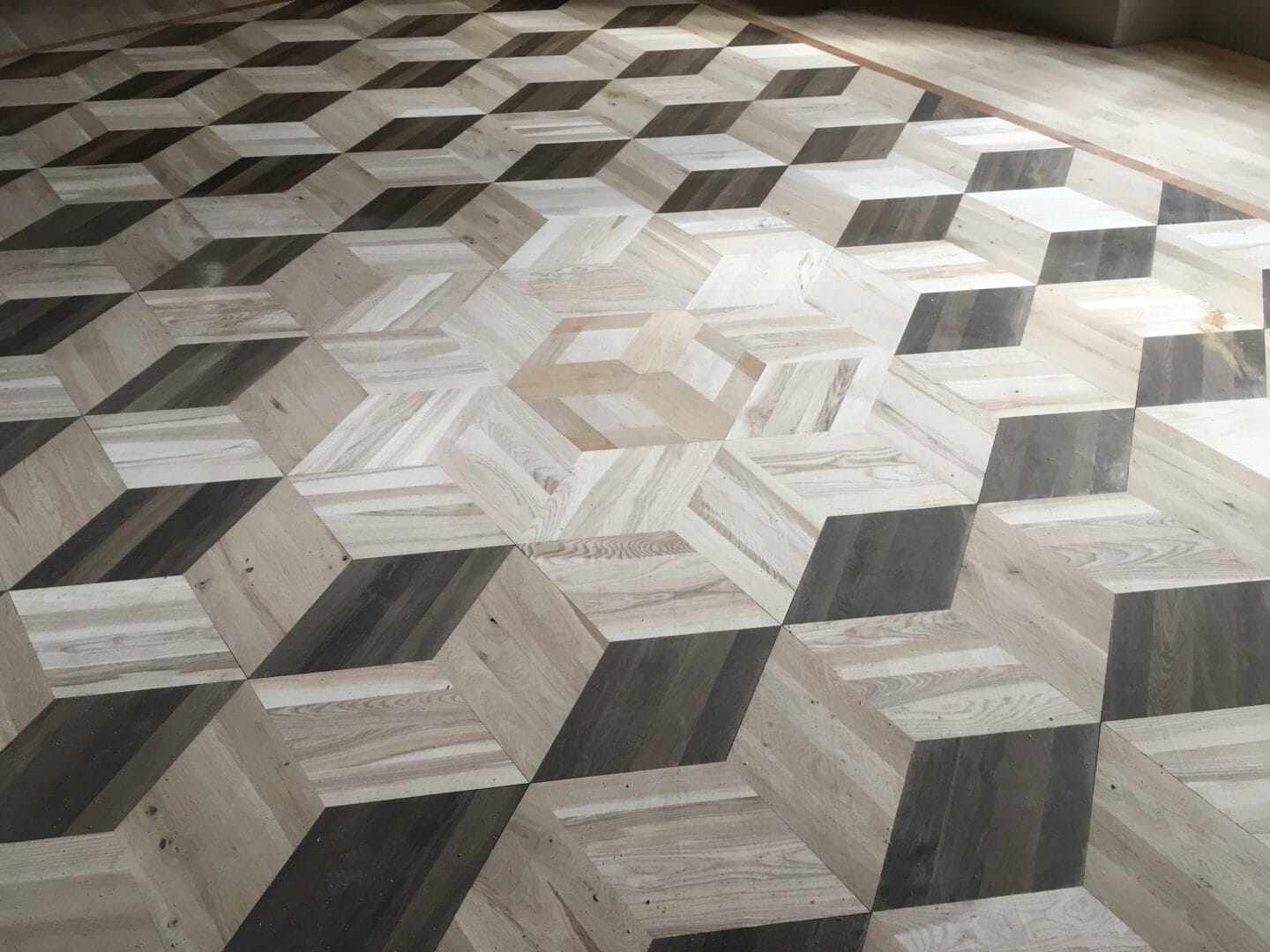
Parquet flooring is created by arranging smaller pieces of timber into repeating geometric patterns instead of laying long, straight planks.
Although parquet has its roots in historic European homes and grand buildings, it remains just as relevant in modern interiors. Today's engineered parquet flooring combines traditional craftsmanship with materials designed for contemporary living.
One of the reasons parquet remains so popular is that the pattern itself becomes part of the room's design. Rather than acting as a simple background, it introduces movement and visual interest that changes as natural light moves across the floor during the day.
At Art of Flooring, many homeowners are surprised by how different the same oak parquet sample can look when viewed in their own home compared with a showroom. Natural daylight, room size and surrounding colours all influence the finished appearance, which is why we always recommend viewing samples in the space where the floor will be installed.
Different patterns create different moods within a room. The best choice often depends on the style of your property and how you want the space to feel.
| Pattern | Appearance | Overall Style |
| Herringbone | Rectangular blocks laid at right angles | Classic and versatile |
| Chevron | Boards cut to create continuous V-shapes | Contemporary and elegant |
| Basket Weave | Interlocking square designs | Traditional and decorative |
| Versailles | Large decorative panels | Formal and luxurious |
Herringbone
Herringbone remains the most recognised parquet pattern. Its distinctive zigzag layout adds gentle movement without overwhelming the room, making it equally suited to period homes and modern extensions.
If you're comparing different layouts, our article explaining hardwood floor patterns explores how herringbone, chevron and other designs can completely change the feel of a room.
Chevron
Chevron flooring creates a sharper, more architectural appearance. Each board is cut at an angle so the pattern forms an uninterrupted point running across the floor, making it particularly popular in contemporary homes.
Basket Weave
Basket weave offers a softer, more traditional look using repeating square formations. It's often chosen for homes where character and period styling are a priority.
Versailles Panels
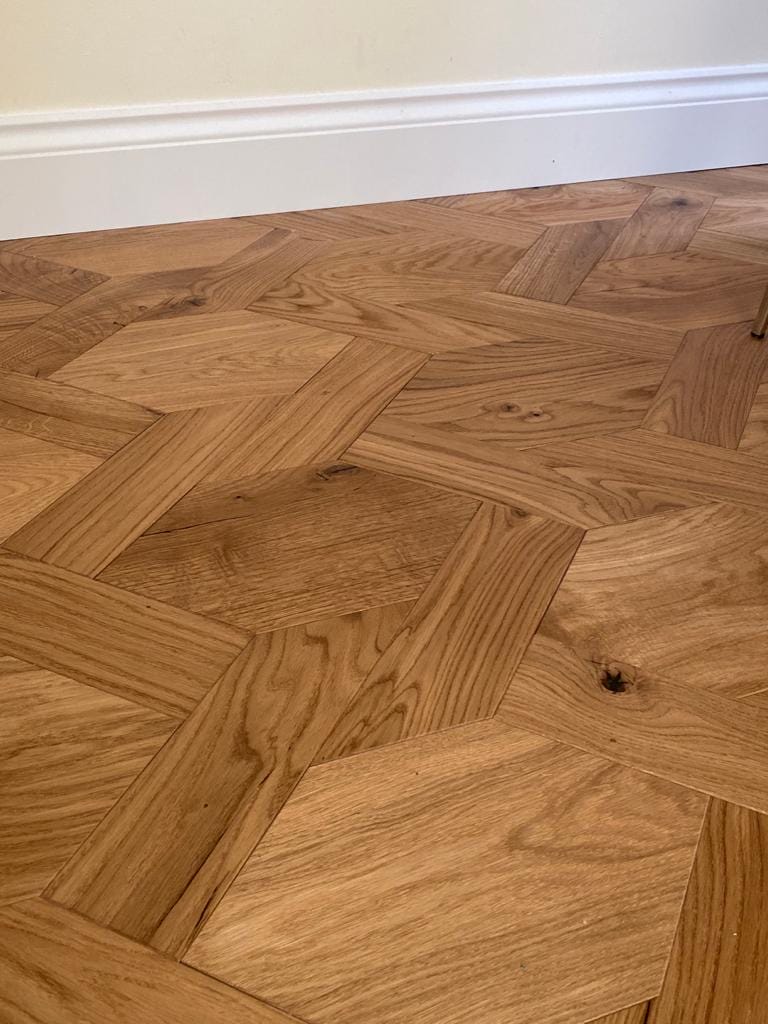
Inspired by classic French interiors, Versailles panels use intricate geometric designs to create a statement floor. While less common in modern homes, they remain a striking option for larger spaces.
Engineered wood flooring is made from several carefully bonded layers.
The visible surface is a real hardwood wear layer, most commonly oak, while the supporting core is built from multiple layers of plywood or other engineered timber products arranged in alternating directions.
This layered construction helps minimise the natural expansion and contraction that occurs as wood responds to seasonal changes in temperature and humidity.
For parquet flooring, that stability is particularly important. Because each floor is made up of many smaller individual pieces, maintaining accurate alignment helps preserve the precision of the pattern over time.
The National Wood Flooring Association recommends checking subfloor moisture levels, site conditions and installation requirements before any timber flooring is fitted to help achieve the best long-term results.
| Feature | Engineered Parquet | Solid Wood Parquet |
| Surface | Real hardwood | Solid timber throughout |
| Stability | Higher | More movement with humidity |
| Underfloor Heating | Often suitable | More limited |
| Installation | More flexible | Usually more demanding |
| Refinishing | Depends on wear layer | Can usually be sanded more often |
If you're considering underfloor heating, it's worth reading our guide to installing wood flooring over underfloor heating before making your final flooring choice.
Parquet has remained popular for generations because it offers something many other flooring styles don't: character. The repeating pattern adds interest without relying on bold colours or decorative finishes, allowing the natural beauty of the timber to take centre stage.
Unlike straight plank flooring, parquet creates movement across the room. A herringbone floor can make a hallway feel longer, while a chevron design can add a crisp, contemporary feel to an open-plan living area.
Its versatility is another reason homeowners continue to choose it. Depending on the timber, finish and pattern, engineered parquet flooring can suit everything from traditional cottages to newly built homes.
For example:
Because engineered parquet is available in a wide range of finishes and board sizes, it's often easier to match the flooring to your home's style rather than adapting your décor to suit the floor.

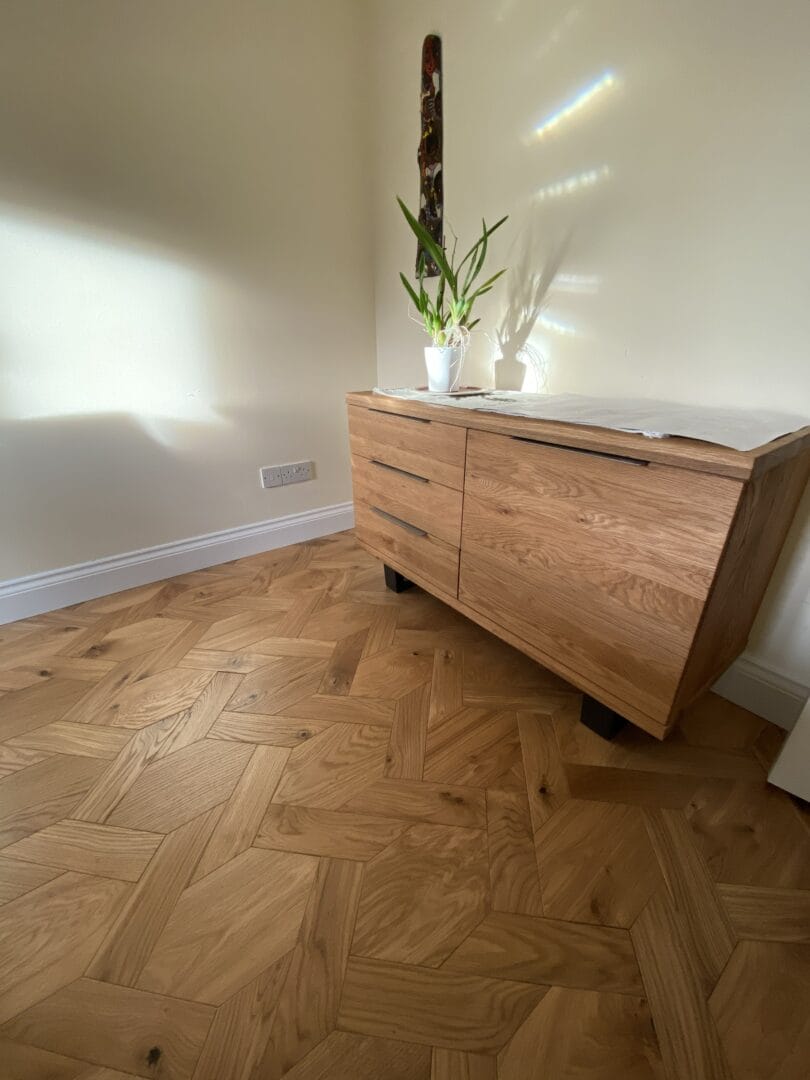
A well-made engineered parquet floor can last for decades when it's chosen carefully, installed correctly and looked after properly.
Its long-term durability depends on several factors.
Oak remains the most popular choice because it combines durability with an attractive grain and works well in both traditional and contemporary interiors.
Walnut offers a richer, darker appearance but is naturally softer, making it more susceptible to everyday knocks in busy family homes.
The hardwood wear layer determines whether a floor can be lightly sanded and refinished in the future.
Higher-quality products with thicker wear layers often provide greater longevity, although the number of times they can be refinished will always depend on the individual product and the manufacturer's guidance.
The finish protects the timber while influencing its overall appearance.
Neither option is inherently better. The right choice depends on how the room will be used and the finish you prefer.
Even premium flooring can disappoint if it's installed over an uneven or damp subfloor.
Careful preparation, moisture testing and accurate fitting are every bit as important as choosing a high-quality product.
Day-to-day maintenance is straightforward.
To keep your floor looking its best:
With sensible care, engineered parquet flooring can continue to look beautiful for many years.
One of the advantages of engineered parquet is its versatility. It works well throughout much of the home, provided the right product is chosen for the environment.
It is particularly suited to:
Hallways remain one of the most popular choices. The direction of a herringbone pattern naturally draws the eye through the property, creating a welcoming first impression.
Many homeowners also choose parquet for open-plan living spaces because the pattern helps define larger areas without introducing different floor finishes.
Parquet installation is a skilled process that rewards careful planning and precision.
Before fitting begins, the subfloor should be:
Depending on the product, the flooring may also need time to acclimatise to the room's conditions before installation.
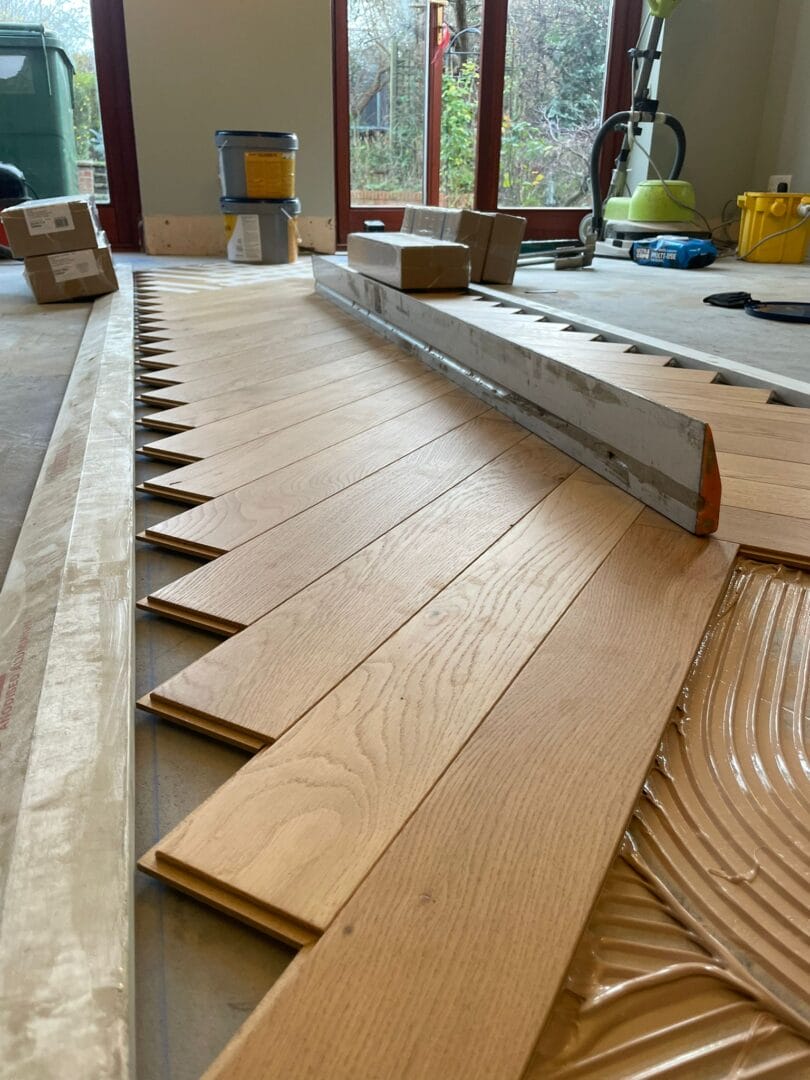
Many engineered parquet floors are glued directly to the prepared subfloor, although some products may use click-fit or tongue-and-groove systems where appropriate.
Unlike standard plank flooring, parquet patterns must remain perfectly aligned across the room.
Professional installers carefully plan:
A small error at the start of a herringbone installation can become increasingly noticeable as the pattern develops across the floor.
That's why many homeowners prefer professional installation, particularly in larger or more complex spaces.
If you're planning a renovation project, our wood floor installation service can help you understand the preparation, fitting process and the best flooring options for your home.
The cost of parquet engineered wood flooring depends on several factors, including:
As a broad guide, engineered herringbone flooring is commonly available from around £30–£70 per square metre for materials, while professionally installed projects typically cost more depending on the specification and the work involved.
Parquet installation generally costs more than straight plank flooring because accurate setting out, additional cutting and careful alignment all require extra time and skill.
When comparing quotations, it's worth checking whether the price includes:
A slightly higher quotation often reflects a more complete installation rather than simply a higher product price.
Where timber is sourced responsibly, many engineered flooring products are certified through organisations such as the Forest Stewardship Council (FSC), helping homeowners make more informed choices.
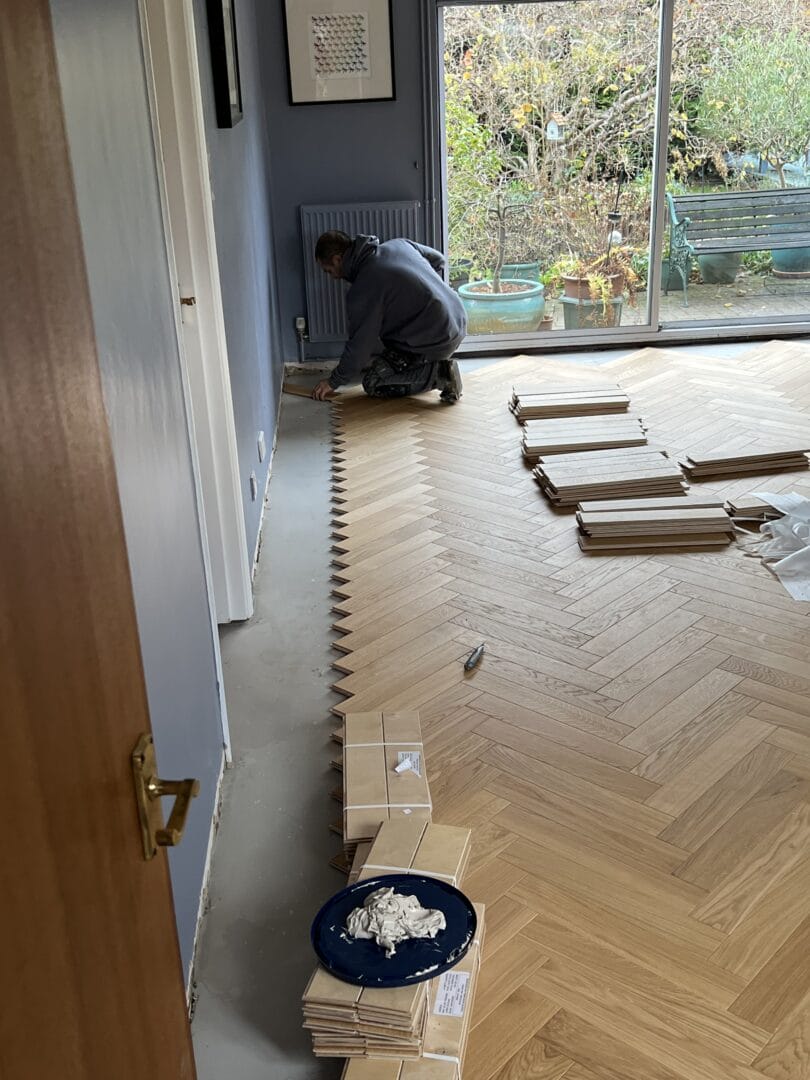
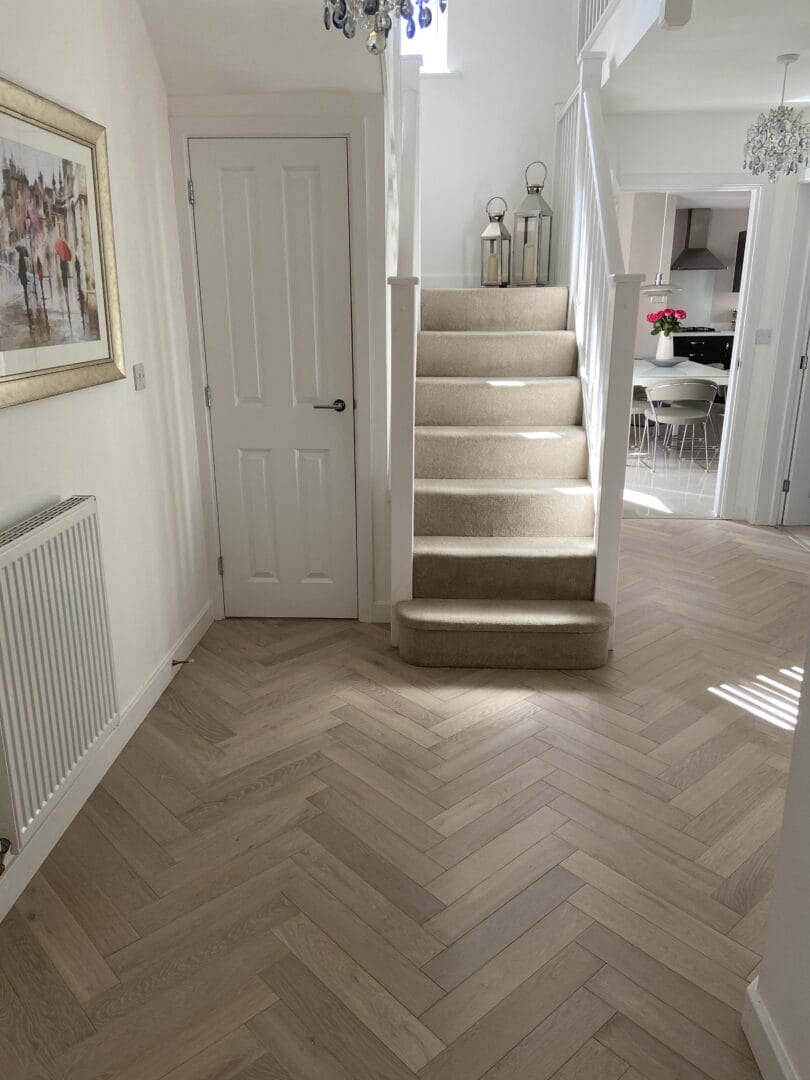
Choosing the right parquet floor is about more than selecting a pattern you like. The room, lighting and way you live all play a part in finding a floor that will continue to look good for years to come.
Before making a decision, consider the following:
Start by looking at the room rather than the sample board.
A small hallway, a large open-plan kitchen and a cosy sitting room will all showcase parquet differently. Larger blocks can create a cleaner, more contemporary appearance, while smaller herringbone patterns often suit traditional properties and period features.
Natural light is equally important. The same oak floor can appear noticeably warmer or cooler depending on the direction the room faces and the time of day.
Where possible, borrow samples and view them in the room where they'll be installed before making your final choice.
Although all engineered wood flooring has a real hardwood surface, products vary considerably in quality.
When comparing flooring, look at:
A thicker wear layer may allow the floor to be lightly sanded in the future, helping extend its lifespan.
Different finishes create different looks while affecting day-to-day maintenance.
For example:
The best choice is usually the one that suits how your home is used rather than simply following current trends.
If sustainability is important to you, check whether the flooring carries recognised certification such as FSC®.
The Forest Stewardship Council UK explains how certified timber supports responsible forest management and responsible sourcing throughout the supply chain.
Parquet engineered wood flooring combines the beauty of real timber with the improved stability of modern engineered construction.
Whether you prefer the timeless appeal of herringbone or the clean lines of chevron, it offers a practical way to introduce warmth, character and craftsmanship into your home without compromising on everyday performance.
The right floor isn't simply about choosing a pattern. It's about finding a product that suits your home, your lifestyle and the way you want the space to feel for years to come.
If you're still comparing options, seeing full-size samples in natural light is often the easiest way to narrow down your choices.
Choosing parquet flooring is much easier when you can compare different patterns, finishes and grades side by side.
If you'd like practical advice, visit our showroom or get in touch with the Art of Flooring team. We'll help you compare the options, explain what installation would involve and answer any questions before you make your decision.
👉 Contact us here: https://artofflooring.co.uk/contact/