To enable us to give you our full attention during your showroom visit, please book an appointment
- Opening Hours
Showroom Open by Appointment Only
Monday - Friday 9:00am - 5:00pm
Saturday or Sunday 9:00am - 3:00pm

To enable us to give you our full attention during your showroom visit, please book an appointment
Walnut engineered wood flooring has a real walnut top layer bonded to a stable plywood or multi-layer timber core. It offers the appearance of solid walnut while responding more reliably to normal changes in temperature and humidity.
It can work with underfloor heating when the exact product and installation method have been approved by the manufacturer. Walnut is softer than some hardwood species, so the finish and care routine also deserve attention.
An engineered wood floor is made from several bonded layers. The surface you see and walk on is genuine hardwood, while the layers underneath help control the natural expansion and contraction of timber.
A typical engineered walnut board includes:
This makes it a real wood floor, not a photographic imitation. Laminate uses a printed decorative layer, whereas engineered walnut has genuine timber at the surface.
For a closer explanation of the construction, read Art of Flooring’s guide to what engineered wood flooring is.
Which Type of Walnut Is Used For Flooring?
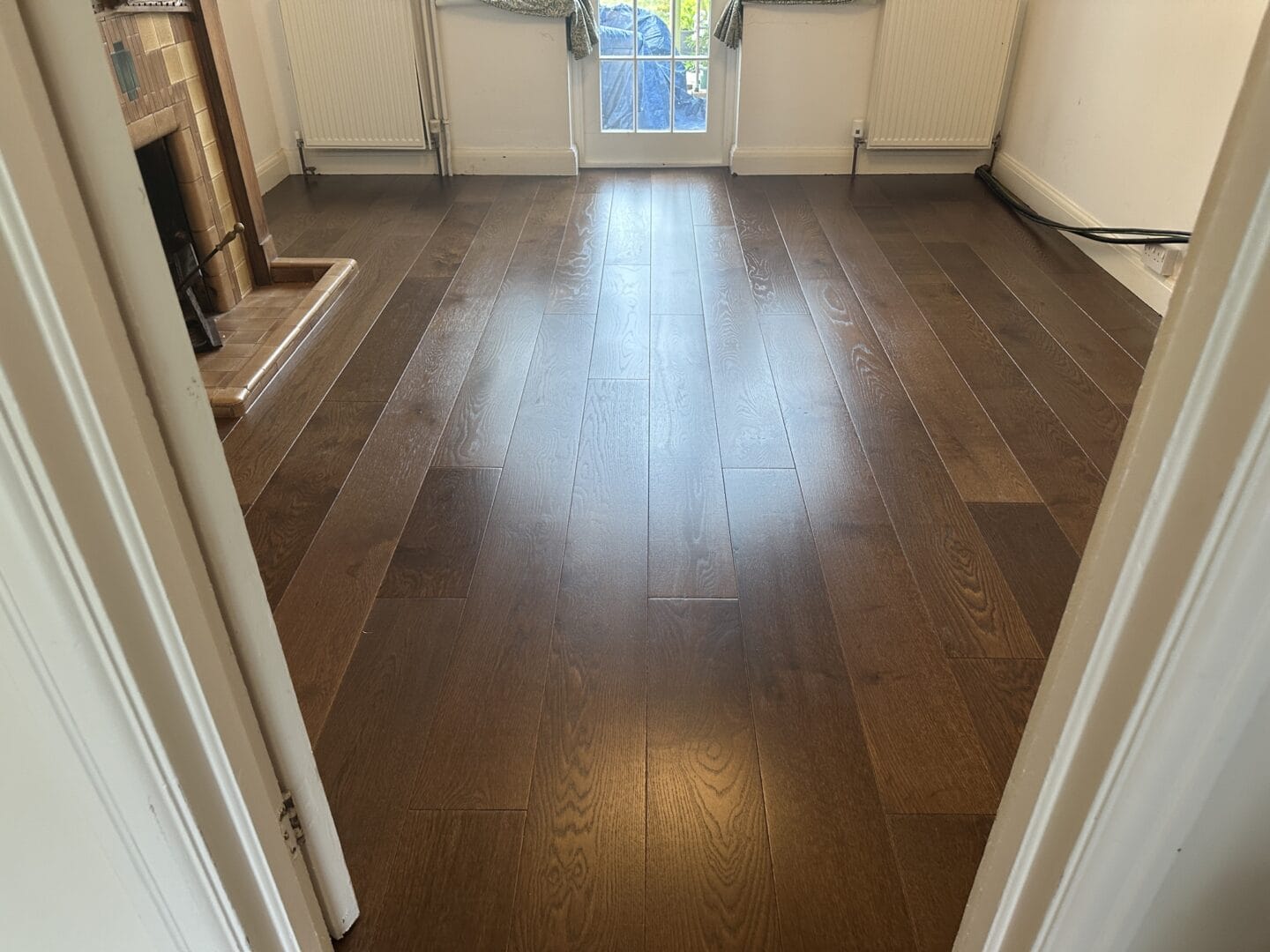
American Black Walnut is one of the most familiar choices. Its heartwood ranges from warm brown to deeper chocolate tones, often with flowing grain and areas of lighter sapwood.
The grade also changes the finished appearance.
Prime-grade boards tend to look calmer and more consistent. Character-grade walnut allows more knots, grain movement and natural colour variation.
Prime grade can suit a cleaner contemporary interior. Character grade is often the better fit when you want the timber’s natural personality to remain visible.
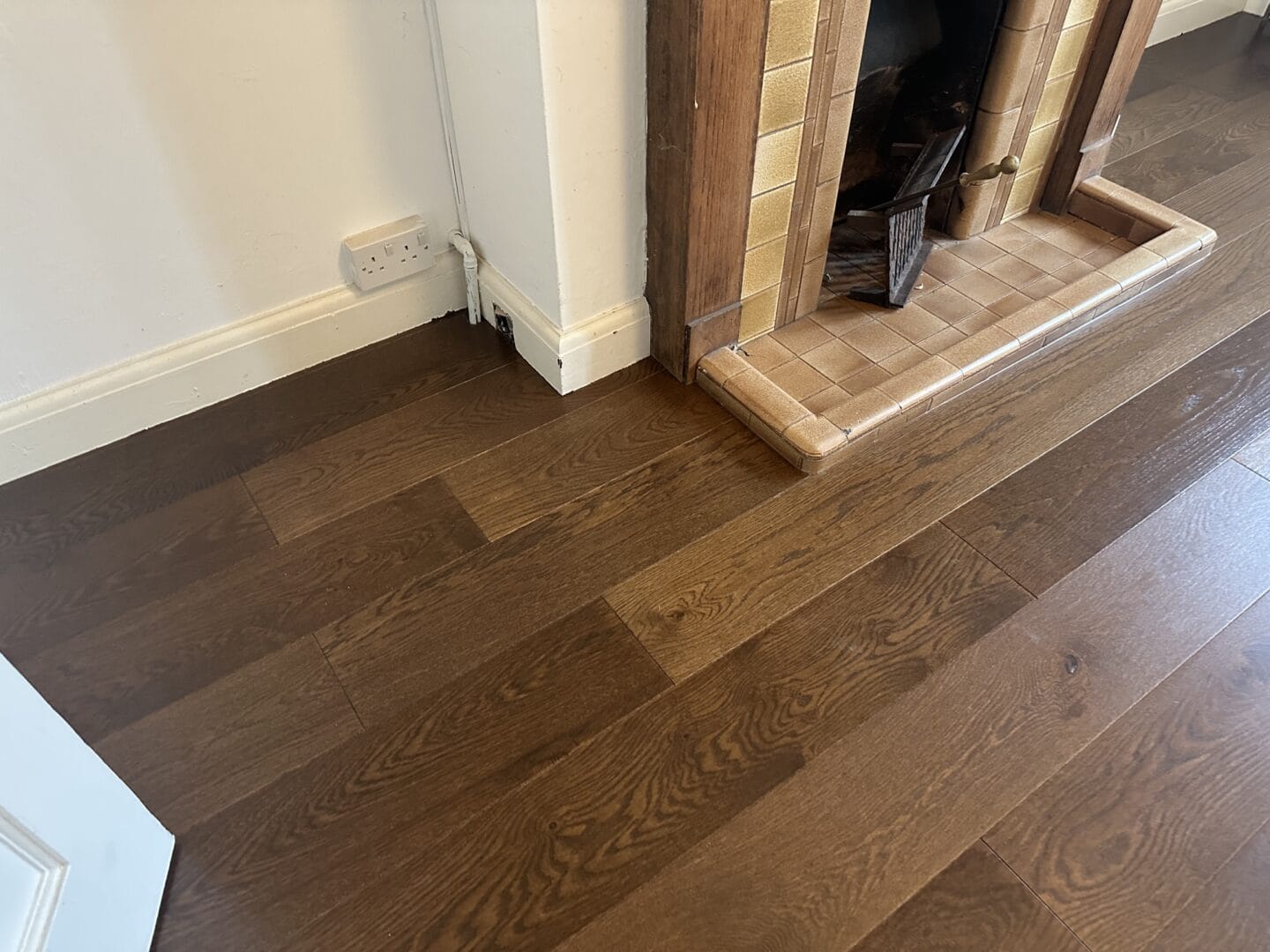
Both options provide a genuine walnut surface, so they can appear very similar after installation. The main difference is beneath the surface.
| Feature | Engineered walnut | Solid walnut |
| Construction | Walnut surface over a layered core | One solid piece of walnut |
| Stability | Better suited to normal environmental changes | Moves more readily as conditions change |
| Underfloor heating | Often compatible, subject to approval | More commonly restricted |
| Installation | May be floated, glued or nailed | Usually glued or nailed |
| Refinishing | Depends on wear-layer thickness | Usually offers more refinishing scope |
| Cost position | Premium | Commonly the more expensive option |
Engineered walnut is usually the more practical choice for a modern heated home. Solid walnut may suit a project where traditional construction and greater long-term refinishing potential are the priorities.
Walnut brings more depth than many pale or natural oak floors. Its darker heartwood, lighter sapwood and flowing grain prevent the surface from appearing flat or uniform.
It works particularly well with:
View several full boards together where possible. A small sample will not show the full range of tones that may appear across a completed room.
The layered core helps the board cope with normal fluctuations in temperature and humidity. It remains a natural timber product and still needs correct preparation and fitting, but its construction makes it more stable than a comparable solid walnut floor.
Homeowners comparing different materials can also review the independent Which? guide to types of wood flooring.
Many engineered walnut products can be installed over underfloor heating, but suitability must be confirmed for the exact board.
The technical information should cover the permitted surface temperature, thermal resistance and installation method. The heating system and subfloor must also be prepared correctly.
Art of Flooring explains the main considerations in its guide to installing wood flooring over underfloor heating.
Never assume that every engineered board is suitable simply because of its construction.
Only the visible top layer needs to be walnut. The supporting core can be formed from more readily available timber, allowing the feature hardwood to be used more efficiently.
Where responsible sourcing matters, look for specific certification rather than broad environmental wording. FSC UK explains how to recognise and choose FSC-certified products.
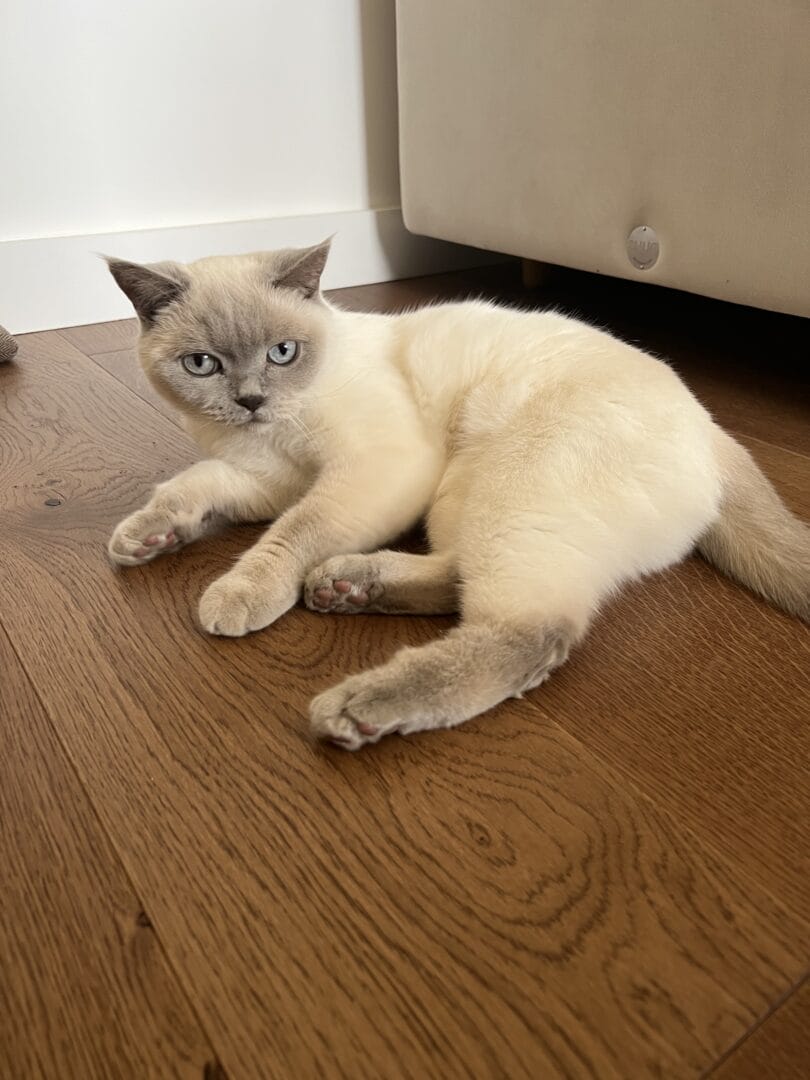
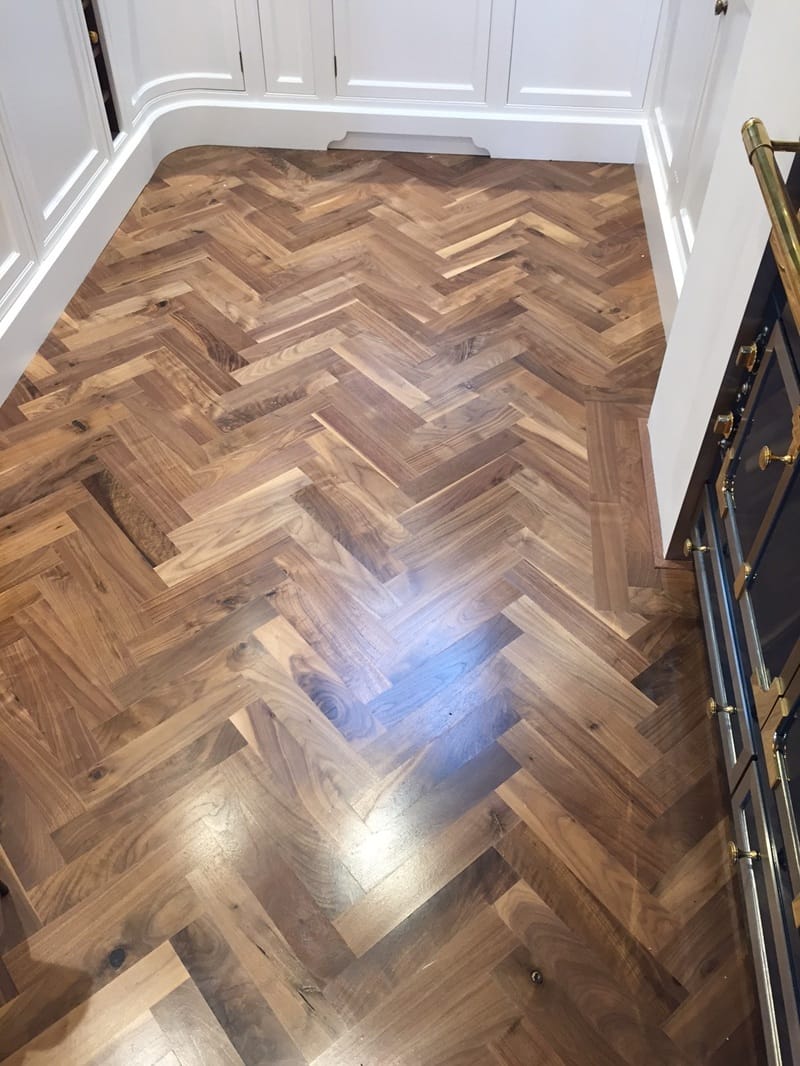
Walnut can pick up dents and scratches more readily than some harder wood species. This does not rule it out for family homes, but it makes day-to-day protection important.
Use effective entrance matting, place felt pads beneath furniture and lift rather than drag heavy items. Pet claws should also be kept trimmed.
A matt, brushed or oiled surface will usually make minor everyday marking less prominent than a high-gloss finish.
Walnut may become lighter and more mellow as it is exposed to daylight. Furniture and rugs can slow that process in covered areas, leaving temporary differences in tone.
Moving rugs and smaller pieces of furniture occasionally during the early months can help the colour develop more evenly.
Not every engineered walnut floor can be sanded. The available refinishing scope depends on the thickness of the real wood top layer, the remaining material and the condition of the boards.
The National Wood Flooring Association operates a voluntary programme identifying qualifying refinishable engineered wood flooring. For any individual product, check the manufacturer’s specification before assuming future sanding will be possible.
The finish affects both appearance and maintenance.
| Finish | Appearance | Practical consideration |
| Matt lacquer | Natural and low sheen | Straightforward routine care |
| Satin lacquer | Gentle sheen and richer colour | Suitable for many living spaces |
| High gloss | Reflective and formal | Shows dust and marks more readily |
| Oil or hardwax oil | Close-to-the-timber appearance | May need periodic replenishment |
| Brushed finish | More visible grain texture | Helps disguise light surface marking |
A lacquered finish creates a protective layer over the timber. An oiled finish gives a more tactile appearance and may allow small areas to be refreshed locally, although it generally needs a more involved maintenance routine.
Compare finishes in the room where the floor will be installed. Walnut can look significantly darker under artificial light or beside deep wall colours.
Walnut engineered flooring is commonly considered for:
Prompt spill management is particularly important in kitchens and entrance areas.
Bathrooms, wet rooms and spaces exposed to regular standing water usually need a material designed specifically for wet conditions. Engineered wood offers improved stability, but it is not waterproof.
Concrete and basement subfloors also require proper moisture assessment and preparation before installation begins.
Durability depends on the complete board rather than the timber species alone.
Check:
A thicker board is not automatically better. A well-made board with a strong core and suitable surface layer may outperform a thicker product with unclear construction.
Correct installation matters just as much. Moisture testing, subfloor preparation and suitable expansion provision all affect long-term performance.
Walnut normally sits towards the premium end of engineered wood flooring. The final cost depends on the grade, board dimensions, wear layer, finish, fitting pattern and timber origin.
Installation costs will also vary according to:
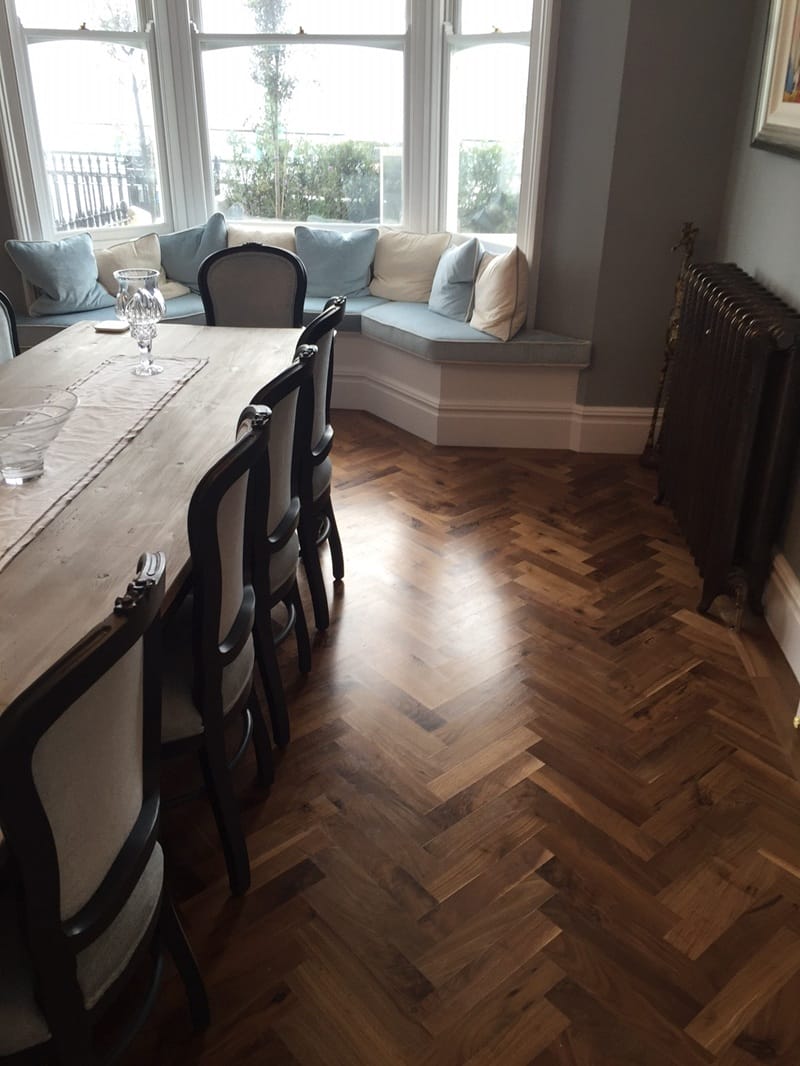
Herringbone and other parquet layouts usually require more preparation, cutting and material than straight planks.
Ask for a written quotation that separates the flooring, preparation, fitting materials, labour and finishing details. This allows you to compare completed-project costs rather than board prices alone.
Ask how thick the genuine walnut surface is and whether the manufacturer considers it suitable for future refinishing.
The product information should explain what sits beneath the walnut. A well-made plywood or multi-layer core supports stability and reliable performance.
Walnut has pronounced natural variation. View several boards together instead of choosing from one small piece.
Match the finish to the room and your expectations around care. A highly reflective finish may look dramatic but will usually reveal dust and surface marks more readily.
Get written confirmation where the floor will be installed over underfloor heating, concrete or another subfloor requiring particular preparation.
Look for traceable sourcing information, recognised certification and clear fitting and maintenance instructions. A reputable supplier should be able to explain more than the colour and overall board thickness.
You can explore Art of Flooring’s wider wood flooring service when comparing engineered and solid options.
The correct fitting method depends on the board and subfloor.
A floating floor is joined and laid over a suitable underlay without bonding every board to the base. Glue-down installation fixes the boards directly to a properly prepared subfloor and can create a firmer feel underfoot. Some products may also be nailed to an appropriate timber base.
A professional installation should include:
Boards should normally be blended from several packs so that lighter sapwood and darker heartwood are distributed naturally across the room.
Remove grit regularly using a soft brush or a vacuum attachment suitable for wood floors. Clean with a lightly damp method and a product approved for the finish.
Avoid:
Use barrier mats at external doors and felt protection beneath furniture. An oiled floor may need periodic maintenance oil, while a lacquered floor requires a different care routine.
Always follow the instructions supplied with the chosen product.
Walnut engineered flooring is worth considering when you want genuine hardwood, deep natural tones and a more stable construction than solid walnut.
It suits homeowners who value variation and are prepared to protect a premium natural surface. It may be less suitable where standing water, frequent heavy impacts or minimal maintenance are the main concerns.
The safest choice is a floor with transparent technical information, a suitable wear layer and a finish matched to the way the room will be used.
The beauty of walnut lies in its natural variation. Viewing complete boards beside your other materials will give you a much clearer idea of how the colour, grain and finish will work in the room.
Bring photographs, approximate measurements and details of any underfloor heating when comparing products. The team at Art of Flooring can help you assess wear layers, finishes and installation requirements without rushing the decision.
Book a Cambridge showroom appointment to compare suitable wood flooring options in person.