To enable us to give you our full attention during your showroom visit, please book an appointment
- Opening Hours
Showroom Open by Appointment Only
Monday - Friday 9:00am - 5:00pm
Saturday or Sunday 9:00am - 3:00pm

To enable us to give you our full attention during your showroom visit, please book an appointment
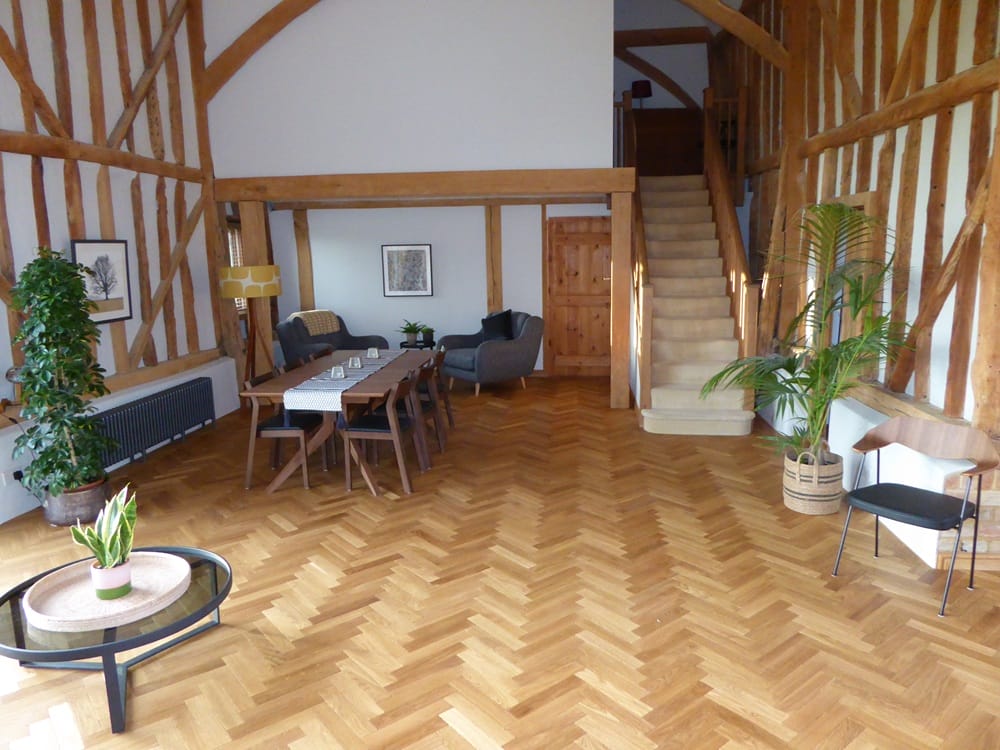
Herringbone engineered wood flooring is a type of parquet flooring made from real wood, where individual boards are laid in a distinctive zigzag pattern. Unlike solid wood flooring, it uses an engineered construction with a hardwood top layer and a stable multi-layer core. This gives you the classic look of a traditional herringbone floor with greater stability, making it a popular choice for modern homes and underfloor heating systems.
The herringbone pattern is created by laying rectangular planks at right angles to one another, forming a broken zigzag design. This style has roots in traditional European parquet flooring and continues to be a favourite because it brings character, movement, and elegance to a room.
A herringbone wood floor can work equally well in period properties and modern interiors. The pattern draws the eye across the room, creating a sense of flow that many homeowners find appealing.
Although often grouped together, herringbone and chevron flooring are different.
| Feature | Herringbone | Chevron |
| Plank Ends | Rectangular | Angled |
| Pattern Style | Broken zigzag | Continuous V-shape |
| Installation Complexity | Moderate | Higher |
| Typical Cost | Lower | Higher |
Chevron flooring requires precisely angled cuts, which can increase both material and installation costs.
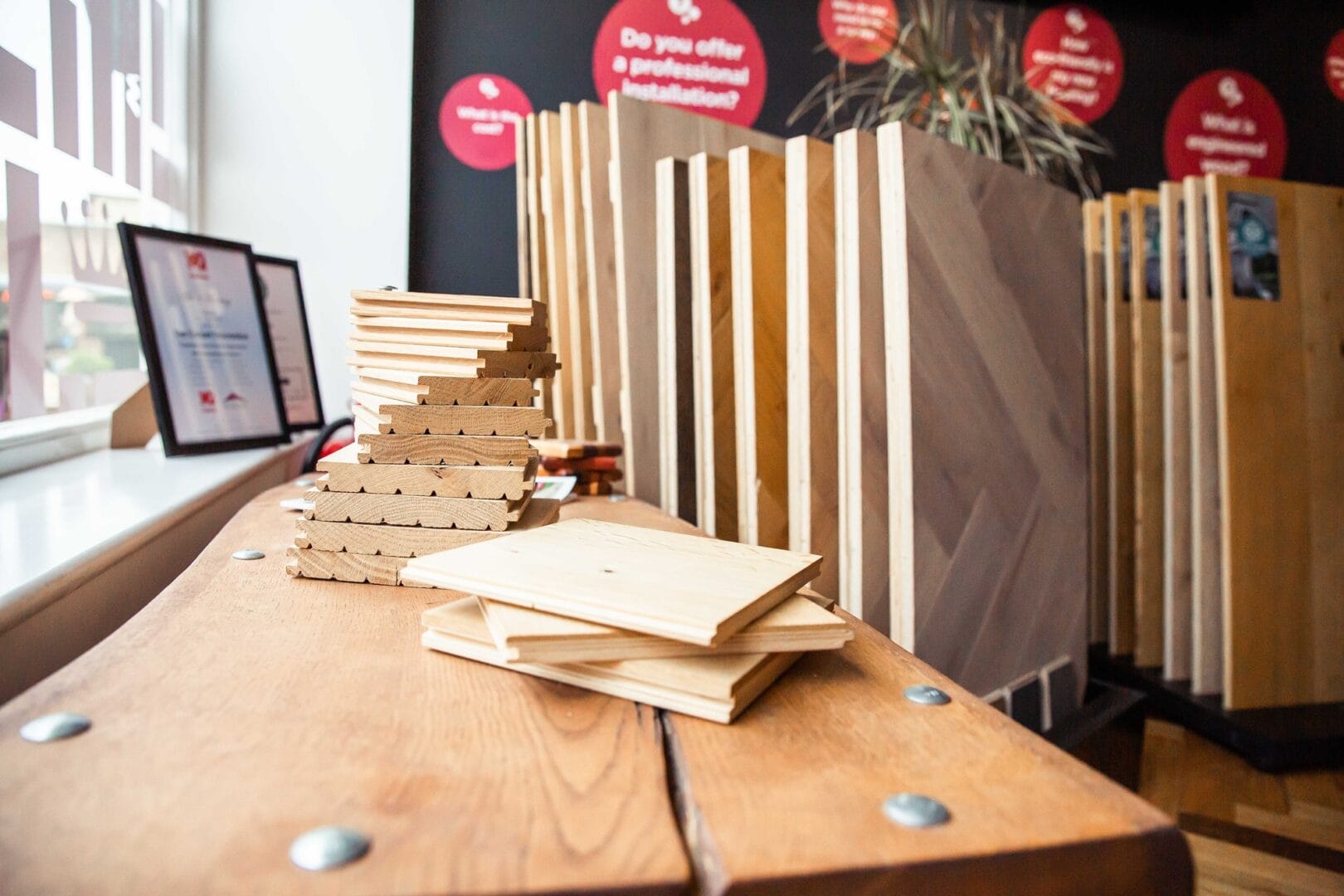
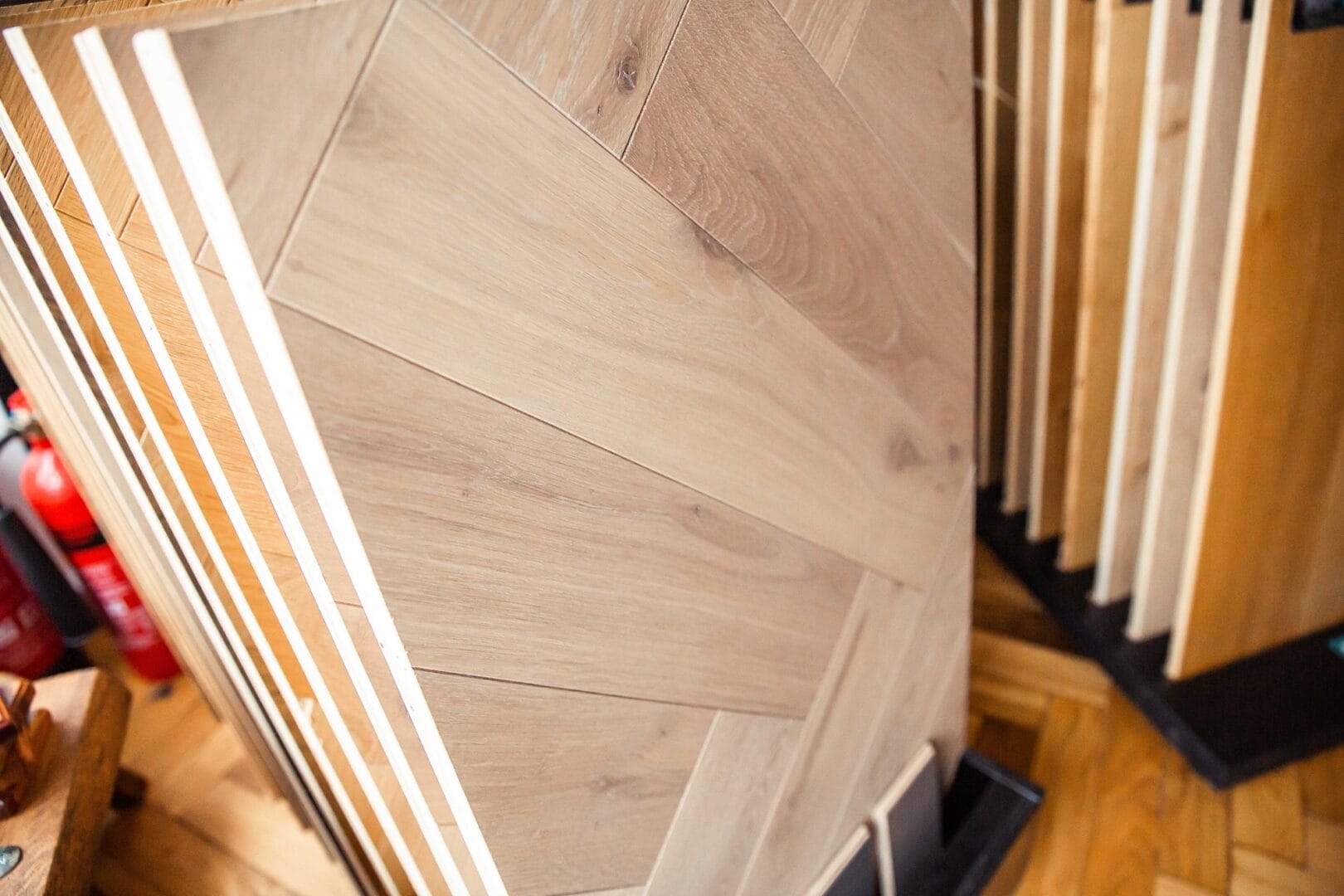
Engineered wood flooring consists of:
This engineered construction helps the floor remain more stable than solid wood flooring.
Solid wood is made from a single piece of timber. Engineered wood floors use multiple layers bonded together.
Benefits of engineered flooring include:
Many premium products can also be sanded and refinished, depending on the thickness of the wear layer.
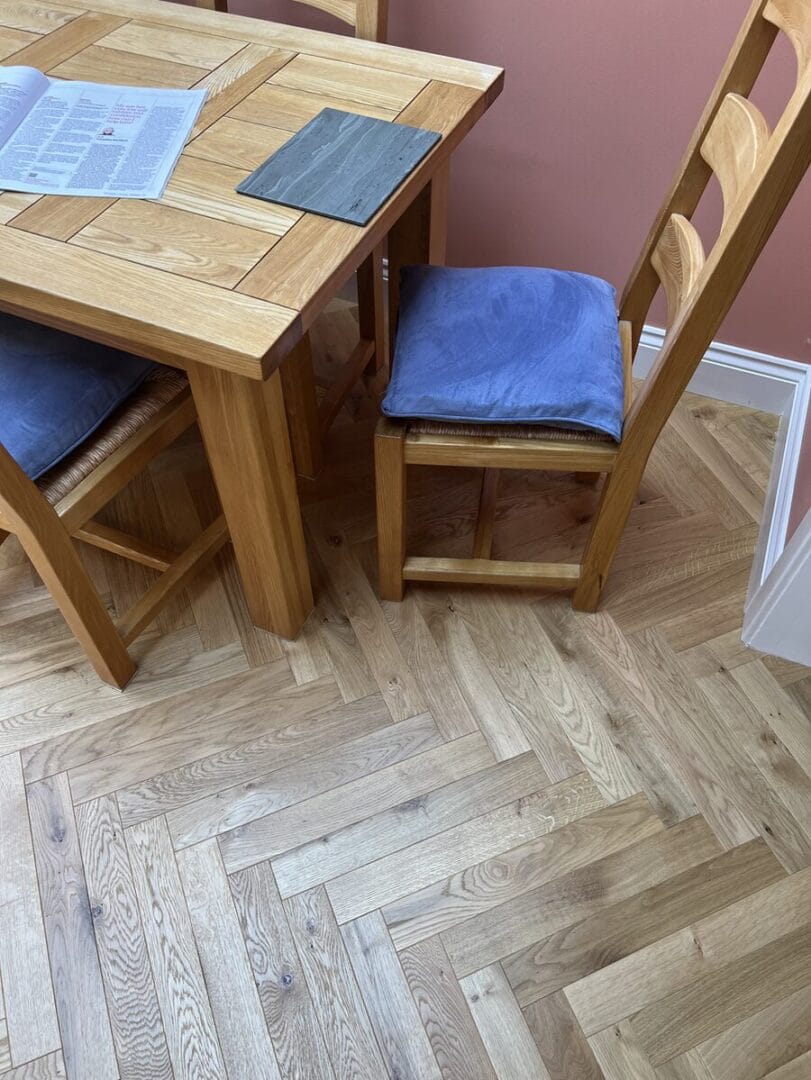
Oak remains the most popular option thanks to its durability, natural beauty, and wide range of oak tones.
Other choices include:
Few flooring styles have the timeless style of herringbone. The pattern adds elegance and visual interest without feeling overly decorative.
A herringbone pattern naturally introduces movement and texture. In some rooms, it can even help spaces feel larger by guiding the eye through the layout.
Because engineered boards are designed to cope with changes in temperature and humidity, they are often a more practical flooring choice than traditional solid wood.
Many oak herringbone engineered flooring products are compatible with underfloor heating systems, making them ideal for modern renovations and extensions.
Always check manufacturer guidance before installation.
Advantages | Disadvantages |
| Elegant appearance | Higher installation cost than straight plank layouts |
| Long-lasting durability | Installation requires precision |
| Suitable for underfloor heating | More material waste during fitting |
| A wide range of finishes | Subfloor preparation is essential |
| Easier maintenance than some solid wood floors | Lower-quality products may delaminate |
Homeowners can choose from several options:
Click-lock systems are often faster to fit, while tongue-and-groove flooring remains popular for premium glue-down installations.
Pre-finished boards arrive with factory-applied lacquer or oil finishes. Unfinished products are finished on site for a more bespoke appearance.
Wide plank herringbone collections create a bolder look, while narrower boards deliver a more traditional parquet herringbone appearance.
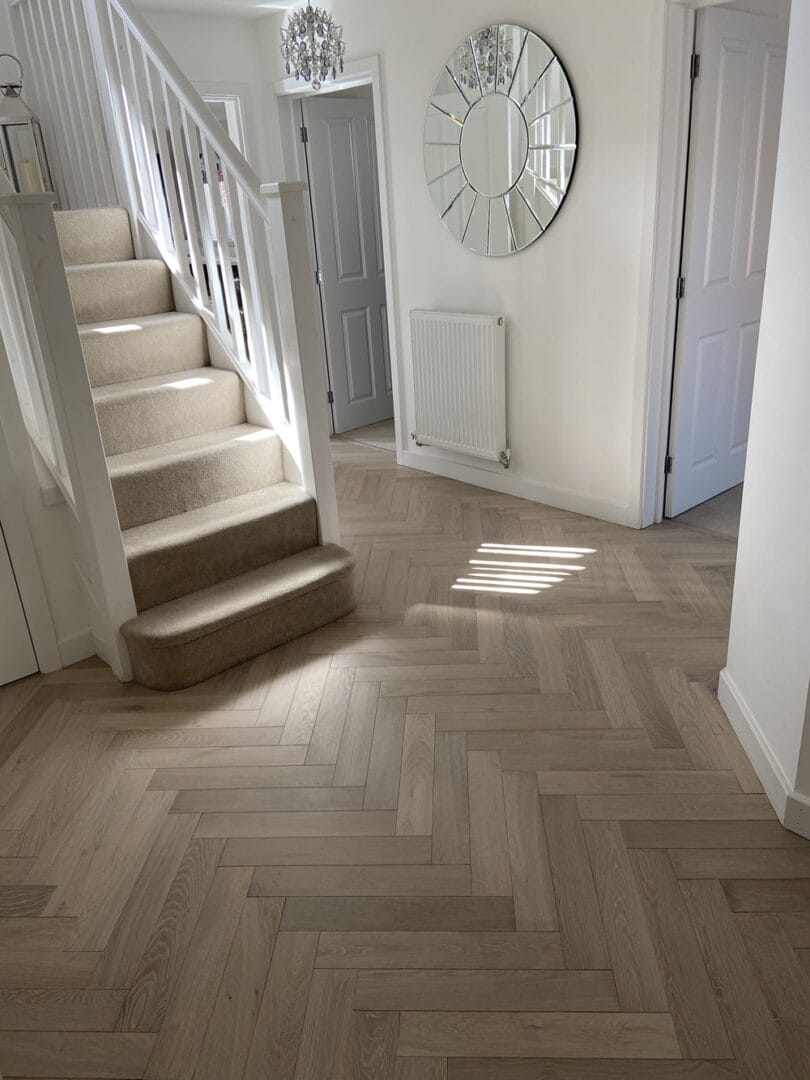
Light oak remains highly sought after, while smoked and rustic finishes continue to grow in popularity.
A successful installation begins with:
Common installation methods include:
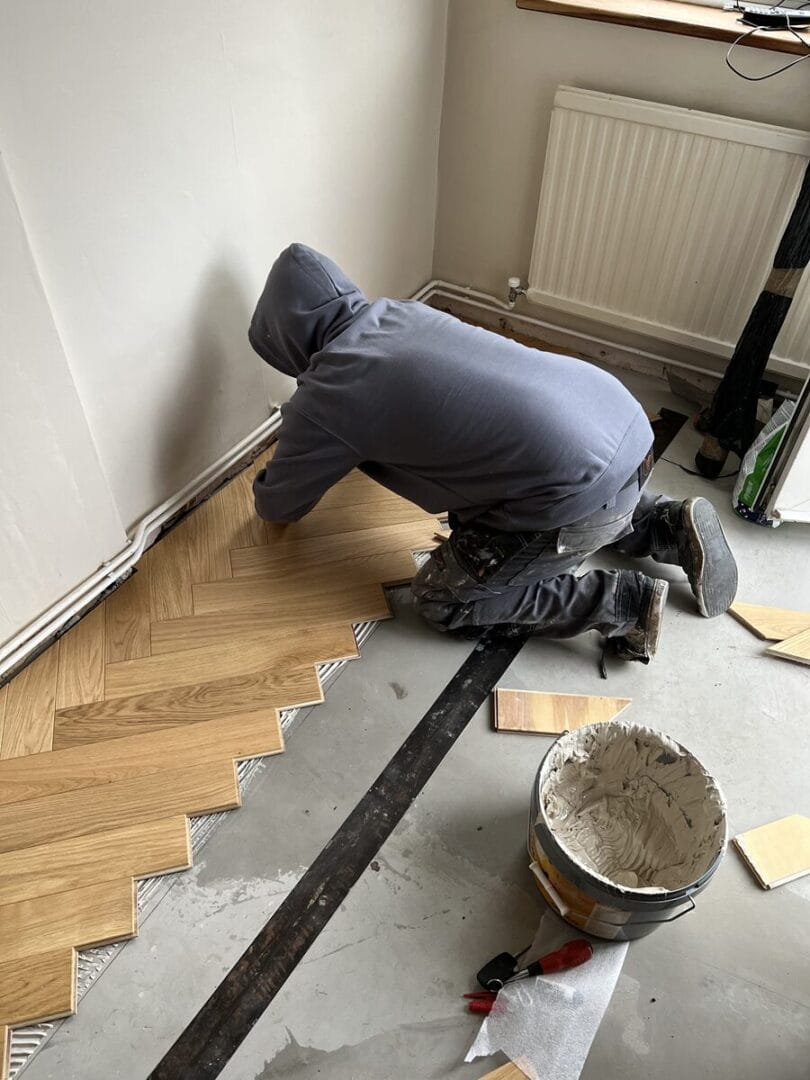
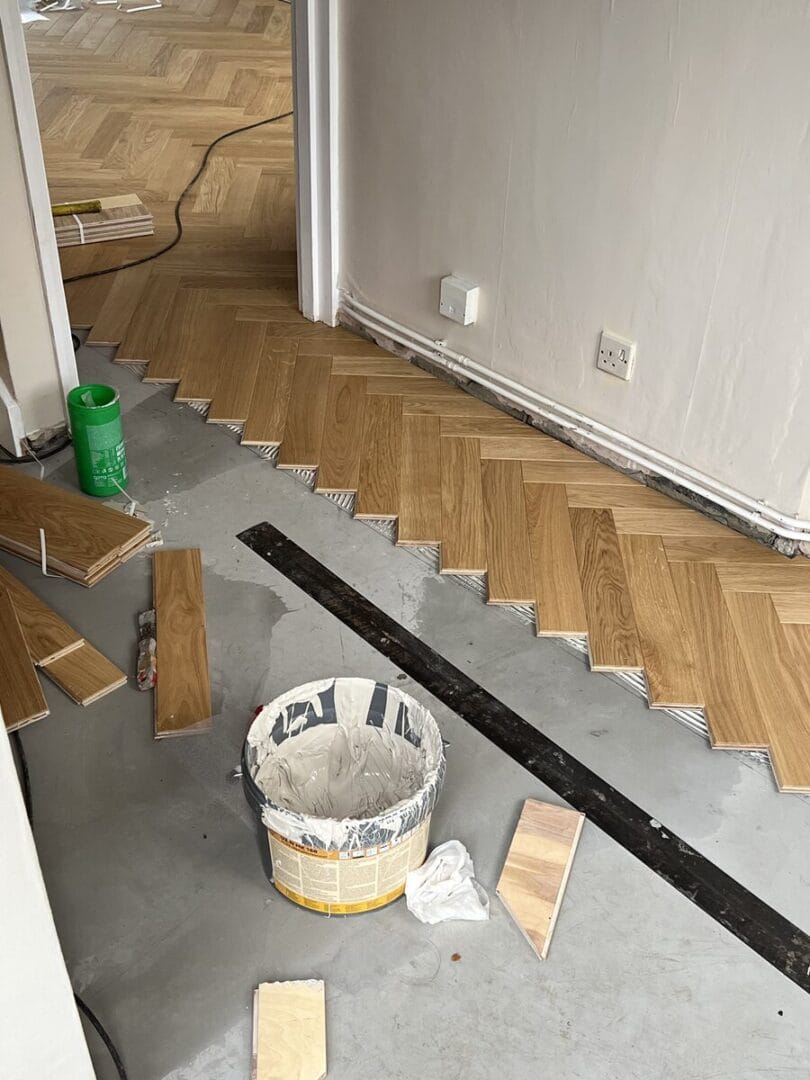
Accurate pattern alignment is critical. Small errors can become highly visible across a large floor area, making professional installation a worthwhile investment. Always follow manufacturer guidance and installation recommendations.
Costs vary depending on:
Herringbone layouts generally cost more than standard plank installations because of the additional labour and material waste involved.
A quality herringbone engineered wood flooring product can last for decades when properly maintained.
Factors affecting lifespan include:
Many engineered oak floors can be sanded and refinished at least once, helping extend their lifespan.
Creates a statement feature while remaining practical for daily use.
Adds impact to one of the busiest areas of the home.
Brings warmth and comfort with the appearance of real oak and natural wood.
Suitable when moisture is managed carefully and spills are cleaned promptly.
Bathrooms with excessive humidity are generally less suitable.
Daily care is straightforward.
Proper maintenance helps minimise scuff marks and preserve the finish.
Before buying, ask:
Ordering free samples is one of the simplest ways to compare colour, texture, and finish in your own home.
Current trends include:
Many homeowners are looking for flooring that balances timeless design with practicality and long-term value.
Herringbone engineered wood flooring combines the elegance of traditional parquet with the practical benefits of modern engineered construction. It offers the warmth of real wood, improved stability, compatibility with underfloor heating, and a timeless design that suits a wide range of interiors.
If you are comparing finishes, exploring oak herringbone options, or planning a renovation, it is worth taking time to view samples in your own space. Order your samples today, compare finishes side by side, and choose a floor that feels right for your home.