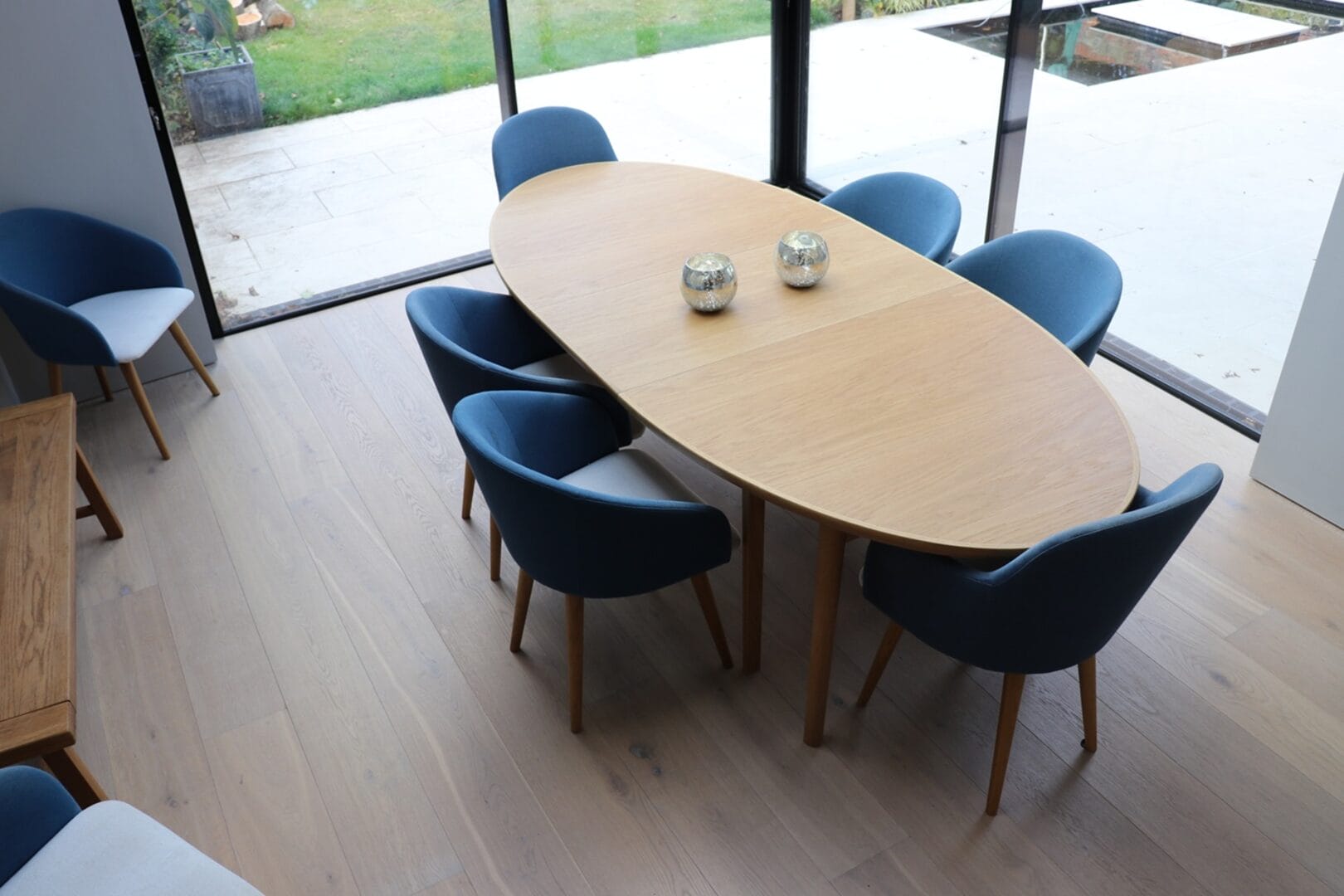
To enable us to give you our full attention during your showroom visit, please book an appointment
- Opening Hours
Showroom Open by Appointment Only
Monday - Friday 9:00am - 5:00pm
Saturday or Sunday 9:00am - 3:00pm

To enable us to give you our full attention during your showroom visit, please book an appointment
Wide plank engineered wood flooring combines the beauty of real wood with a stable engineered construction. Typically made using boards measuring 180mm or wider, it offers a cleaner, more spacious appearance than standard plank flooring while providing greater stability than many solid wood alternatives.
For homeowners looking to create a more open and premium-feeling interior, wide-plank engineered wood flooring has become one of the most popular choices for modern homes.
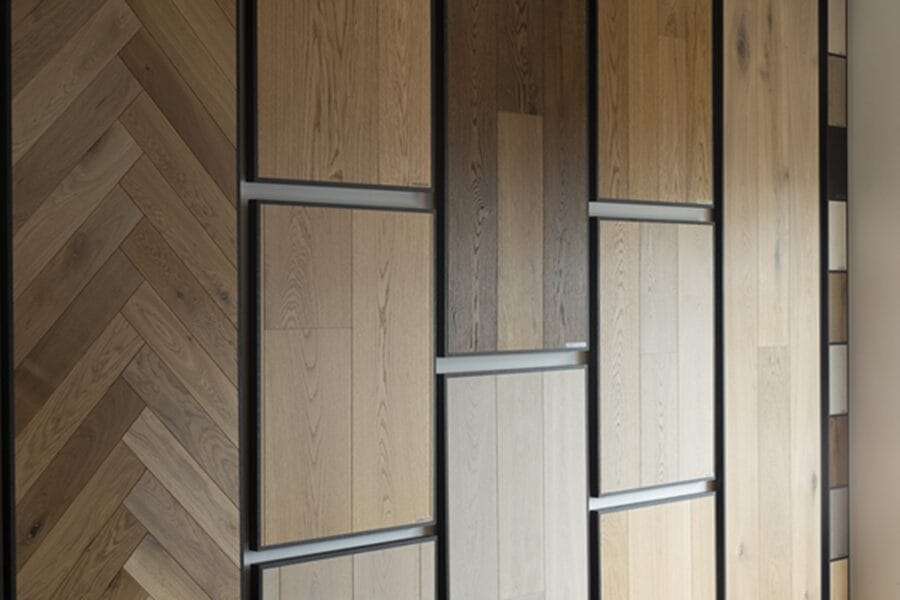
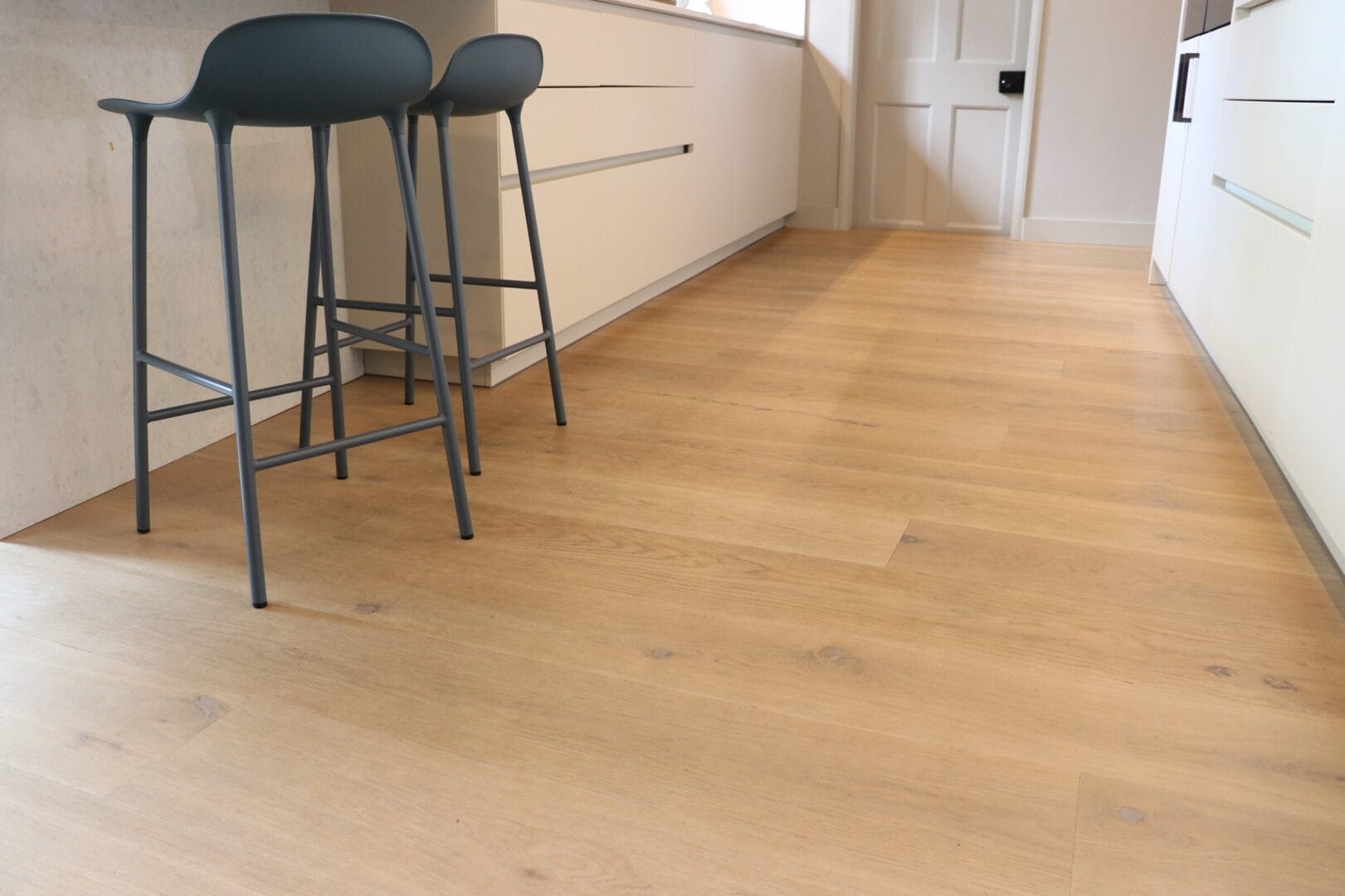
Wide plank flooring refers to wood floor boards that are significantly wider than traditional flooring planks. Standard plank flooring typically ranges from 90mm to 150mm in width, while wide plank flooring generally starts at 180mm and may extend to 240mm or more.
Many premium collections now include extra-wide plank formats designed to showcase more timber character and create a less fragmented floor appearance.
| Flooring Type | Typical Width |
| Narrow Plank | 50–90mm |
| Standard Plank | 90–150mm |
| Wide Plank | 180mm+ |
| Extra Wide Plank | 220–240mm+ |
Board width has a noticeable impact on how a room feels. Wider boards reduce the number of visible joins across the floor, helping create a stronger sense of space. This is one reason wide plank wood flooring is often used in open-plan kitchens, living areas, and larger family homes.
For homeowners comparing flooring styles, see our guide to engineered oak flooring.
Engineered wood flooring is made from multiple layers.
These usually include:
The surface provides the appearance of a traditional oak floor, while the core helps improve stability.
| Feature | Engineered Wood Flooring | Solid Wood |
| Stability | Excellent | Moderate |
| Moisture Resistance | Better | Lower |
| Underfloor Heating | Often suitable | Limited suitability |
| Refinishing | Depends on wear layer | Multiple times |
| Cost | Moderate to premium | Premium |
Because engineered oak flooring expands and contracts less than solid wood, it is often preferred for wider formats and extra-wide planks.
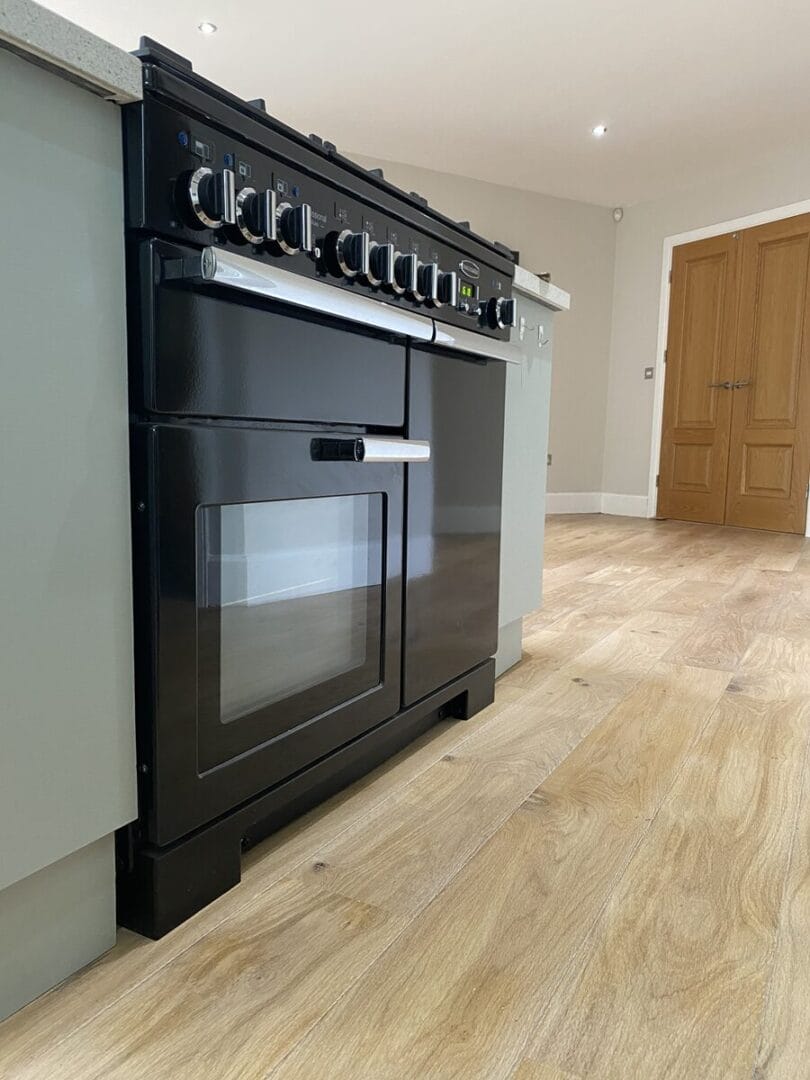
One of the main attractions of wide-plank engineered oak flooring is the reduction in visible seams. With fewer joins across the room, the floor looks calmer and less busy.
A wider floorboard reveals more natural timber character. Grain patterns, knots, and colour variation become more noticeable, helping showcase the beauty of real wood.
Wide engineered wood flooring is often associated with contemporary interiors, but it also works well in period homes and traditional settings. The result is a look that feels current without being trend-led.
Several factors have contributed to the growing demand for wide-plank engineered wood flooring.
Fewer joins help create stronger visual flow, making rooms appear more open.
Large kitchen-diners and open-plan living spaces benefit from the continuity that wide boards provide.
From natural European oak to smoked and whitewashed finishes, engineered oak wood flooring is available in styles that suit both modern and classic interiors.
Wide boards place greater demands on flooring materials. The multi-layer core used in engineered wide plank products helps reduce movement caused by seasonal changes in temperature and humidity.
For homeowners considering underfloor heating, our guide explains compatibility in more detail.
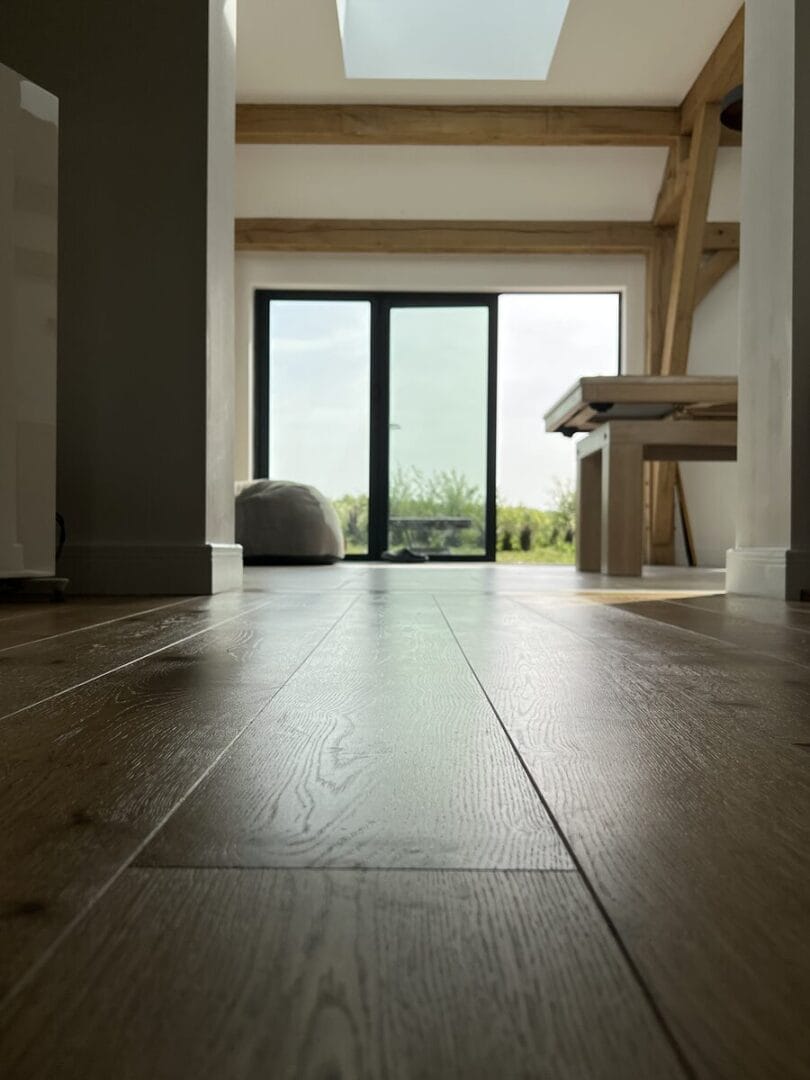
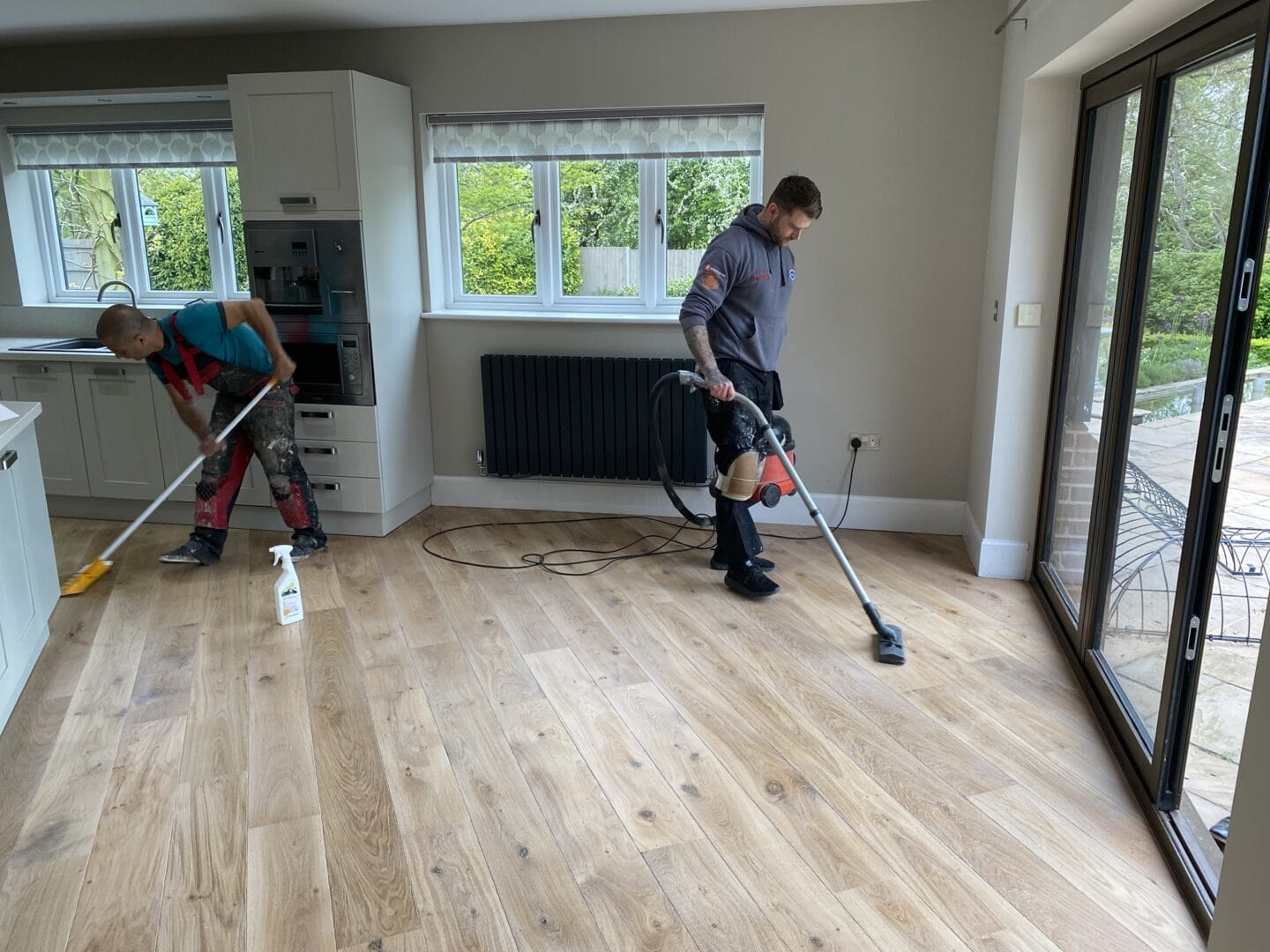
A flat, stable subfloor is essential for wide-plank flooring. Moisture levels should be checked and any uneven areas corrected before installation begins.
Depending on the product, installation may be carried out using:
Because wide boards cover a larger surface area, correct support and installation are particularly important. Following manufacturer guidance helps minimise movement and maintain long-term performance.
For examples of completed installations, view our recent flooring projects.
A high-quality engineered oak floor can last for decades when properly maintained.
The wear layer is the real oak surface that may be sanded and refinished in the future. Thicker wear layers generally offer greater longevity.
Engineered oak flooring is designed to cope better with changes in humidity and temperature than many solid wood alternatives.
Many products can be refinished, although this depends on wear layer thickness and manufacturer recommendations.
Wide plank engineered oak flooring works particularly well in:
Bathrooms and other high-moisture areas require additional consideration and should only use products approved for those environments.
| Feature | Wide Plank | Standard Plank |
| Appearance | Spacious and modern | Traditional |
| Number of Seams | Fewer | More |
| Cost | Higher | Lower |
| Installation Precision | More critical | More forgiving |
| Wood Grain Visibility | Greater | Moderate |
Pricing varies depending on:
Extra-wide engineered wood flooring generally costs more than standard-width options because larger boards require more raw material and more specialised manufacturing.
When comparing plank options, consider:
Look for FSC-certified timber where possible.
You may also find manufacturer installation guidance useful before purchasing.
For environmental information on timber products: UK Government Timber Procurement Guidance
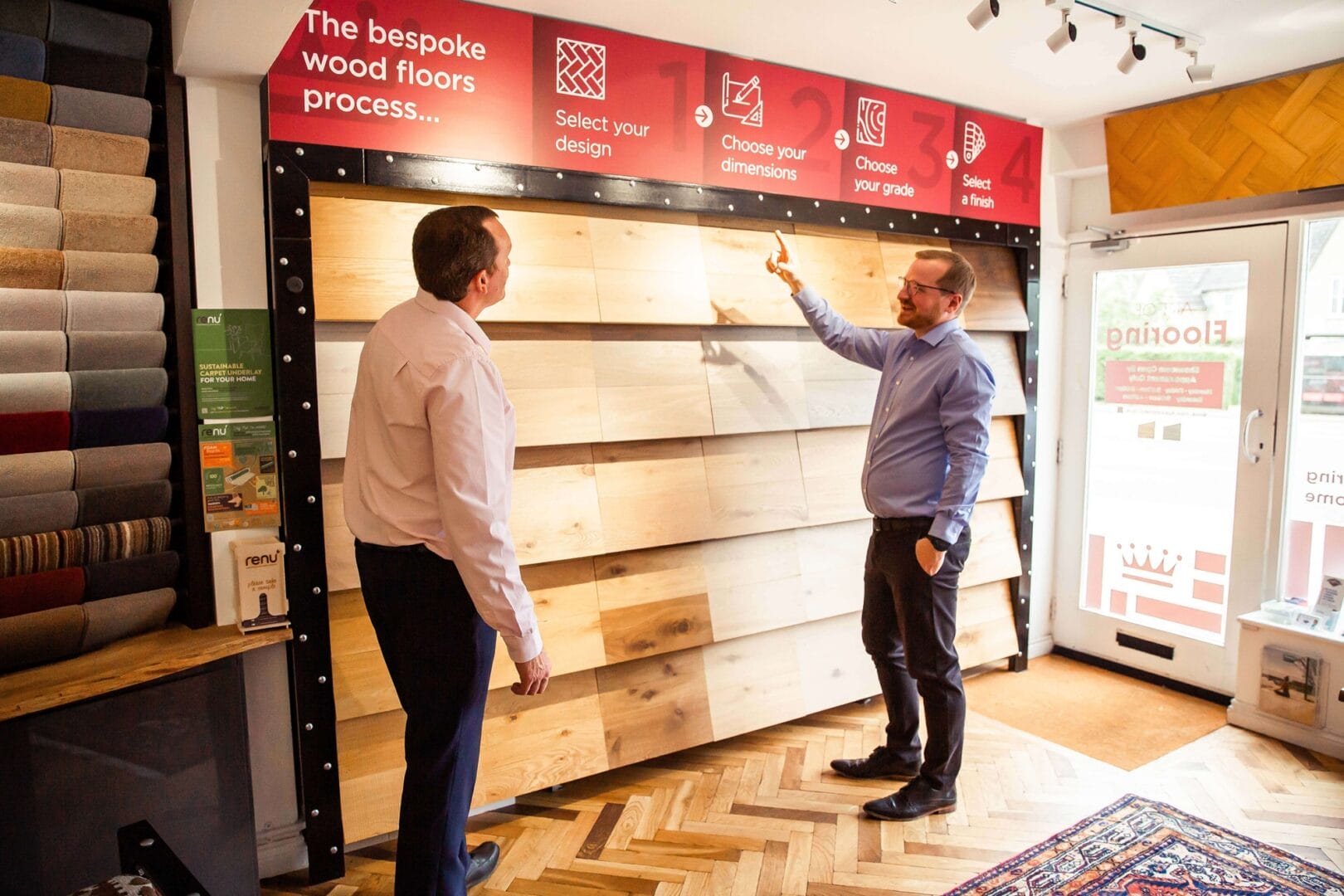
Before making a decision, compare samples at home under natural and artificial lighting. Many suppliers offer free samples for this purpose.
Wide plank engineered wood flooring combines the natural appeal of real oak with the practical advantages of engineered construction. Wider boards create a cleaner, more seamless appearance, showcase wood grain more effectively, and work particularly well in modern open-plan interiors.
When comparing flooring options, pay close attention to board width, wear layer thickness, installation requirements, and finish quality. Ordering free samples and speaking with a flooring specialist can help you compare options confidently before choosing the right floor in your home.