To enable us to give you our full attention during your showroom visit, please book an appointment
- Opening Hours
Showroom Open by Appointment Only
Monday - Friday 9:00am - 5:00pm
Saturday or Sunday 9:00am - 3:00pm

To enable us to give you our full attention during your showroom visit, please book an appointment
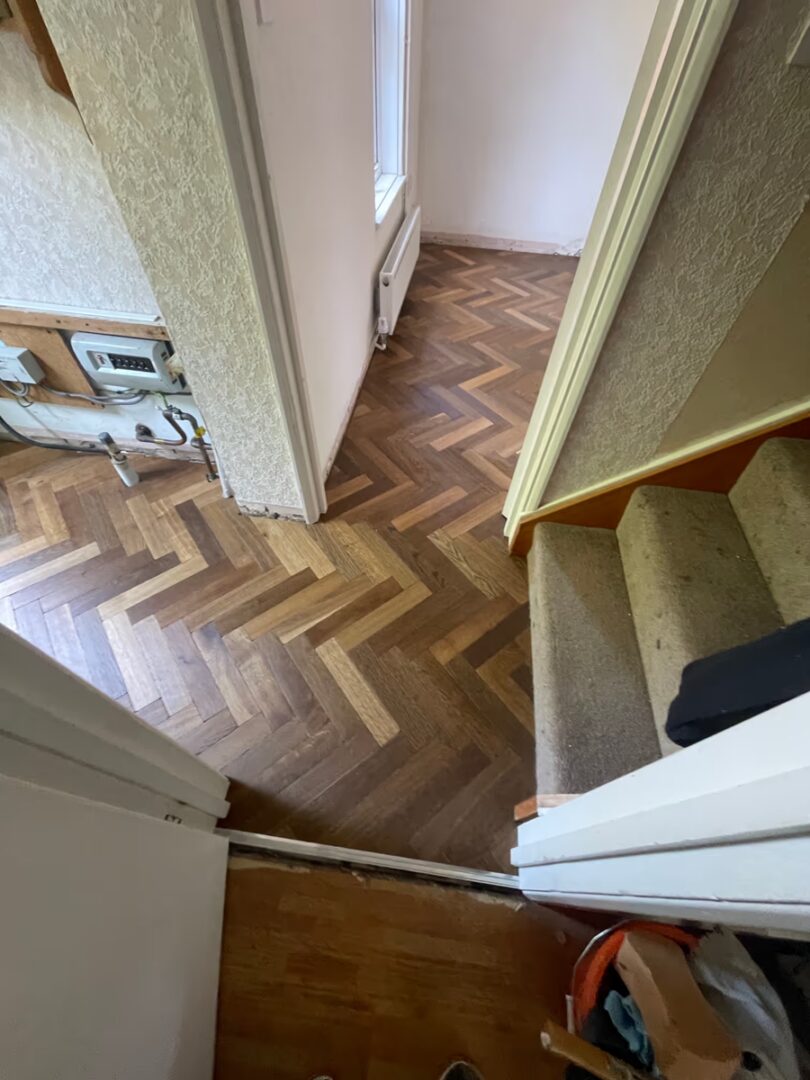
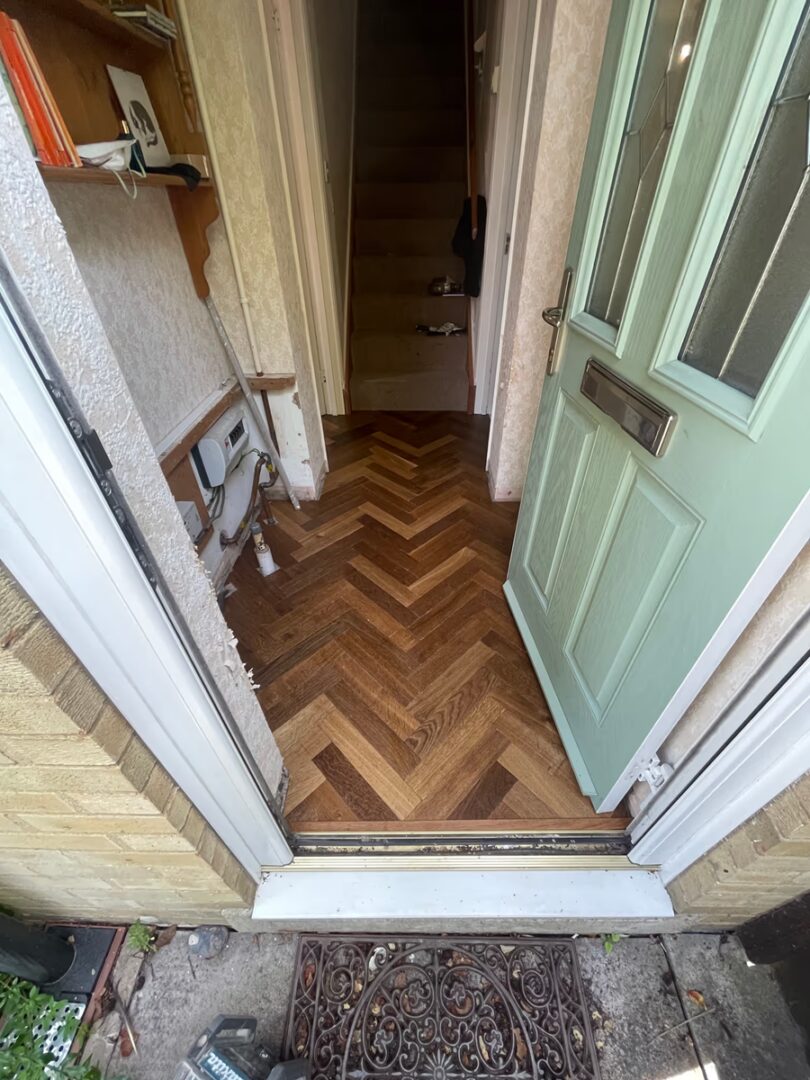
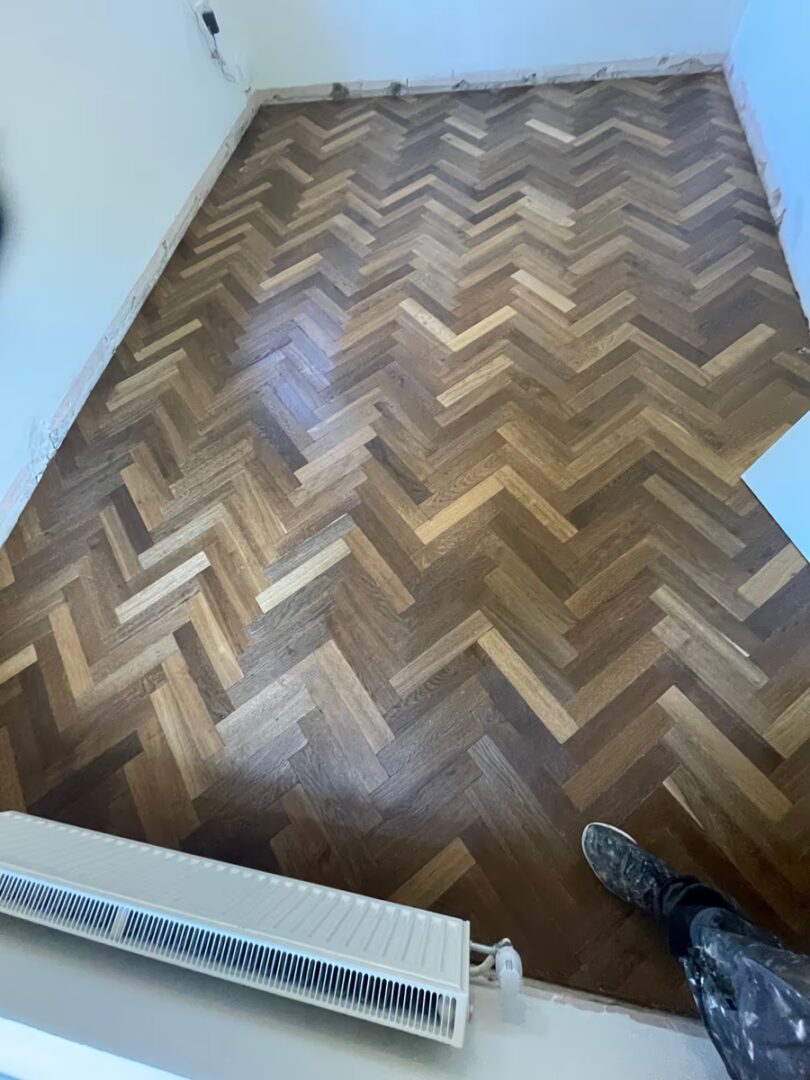
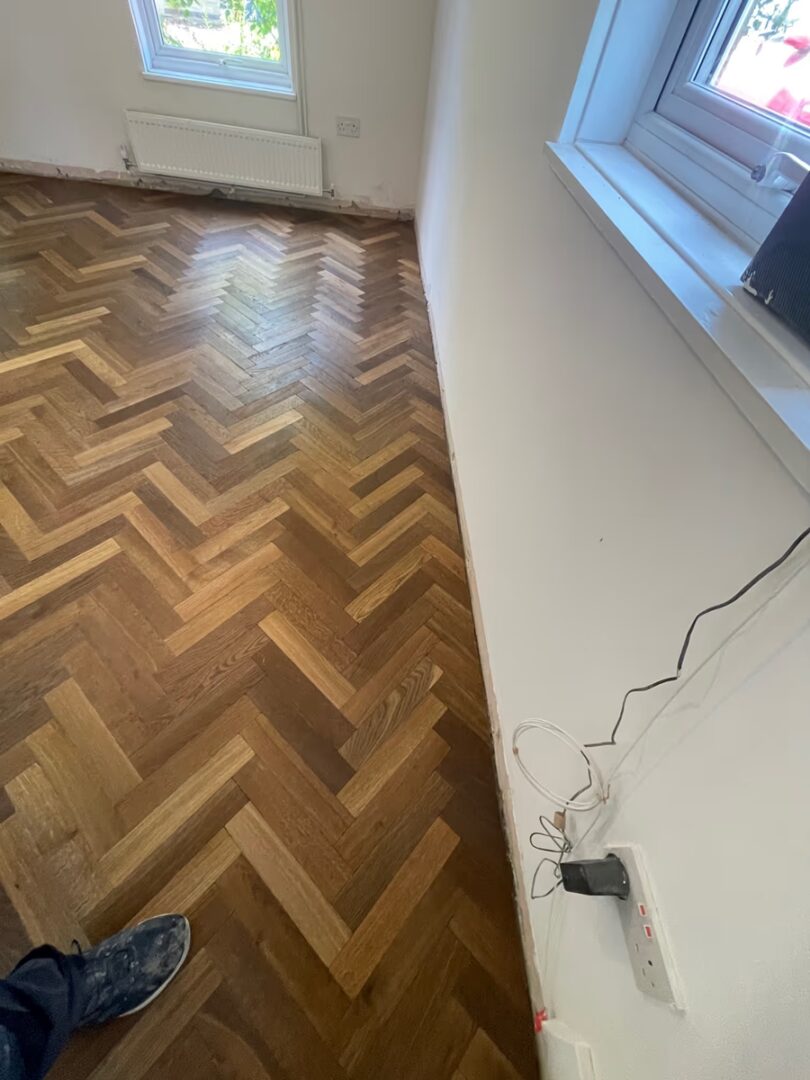
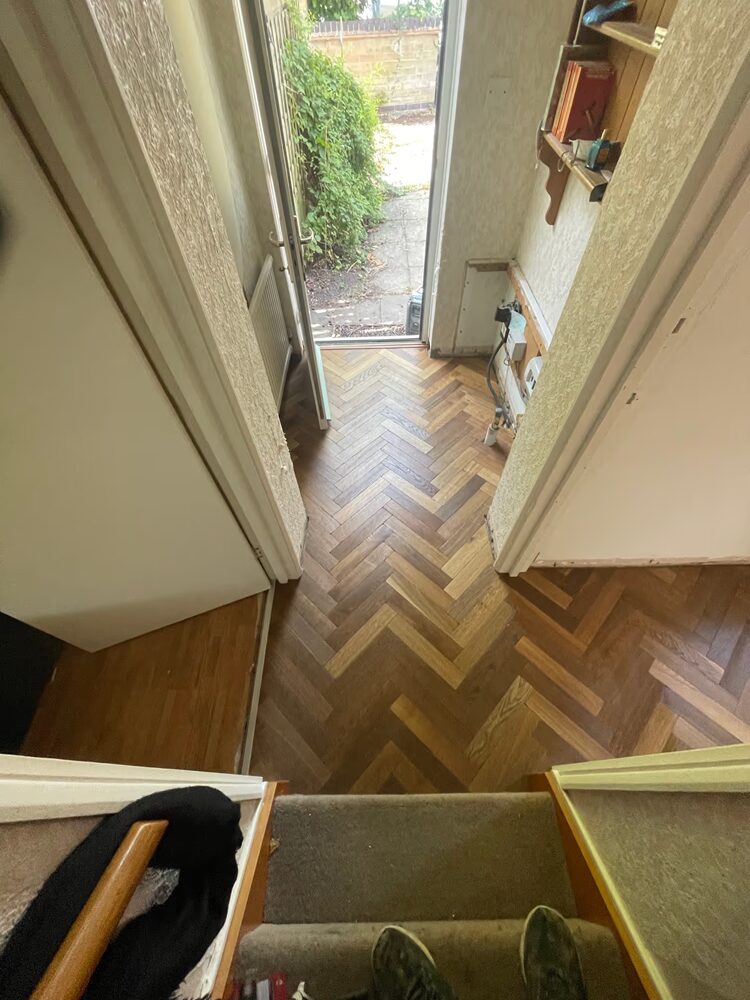
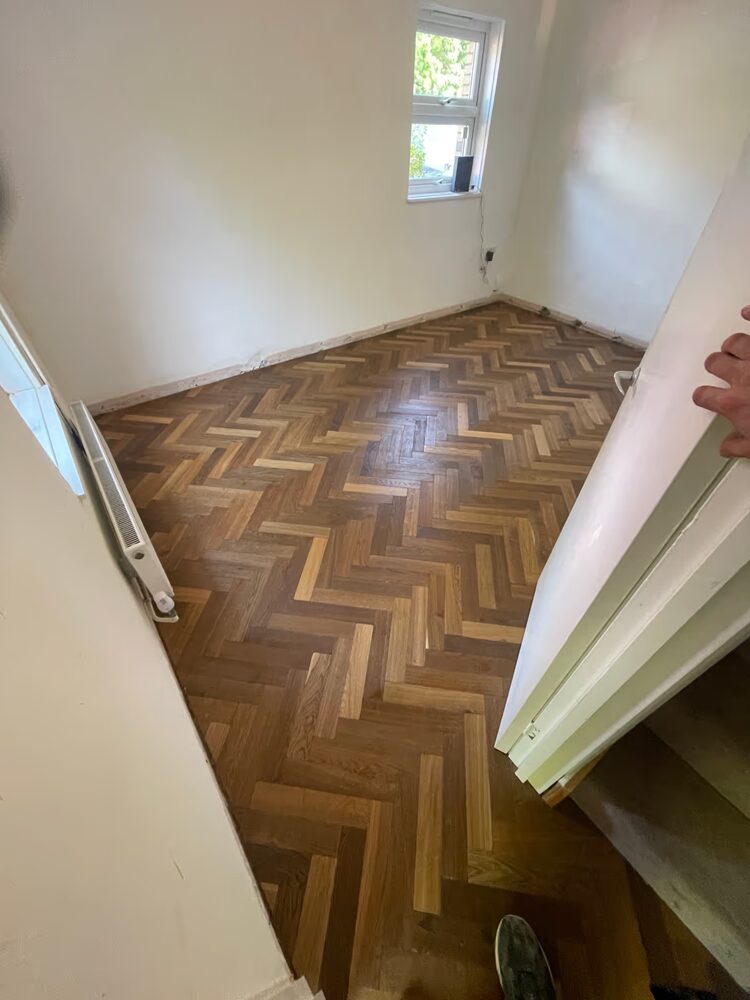
When Liam and Izzy visited our Cambridge showroom, they were restoring a beautiful home and wanted a floor that would complement its character. They instantly fell in love with our Engineered Herringbone flooring, 350 x 70 x 15/4mm, in our bespoke Grantchester finish. With its aged appearance and timeless herringbone pattern, it was exactly the look they had imagined.
Choosing the floor was the exciting part.
Making sure it could be installed correctly was even more important.
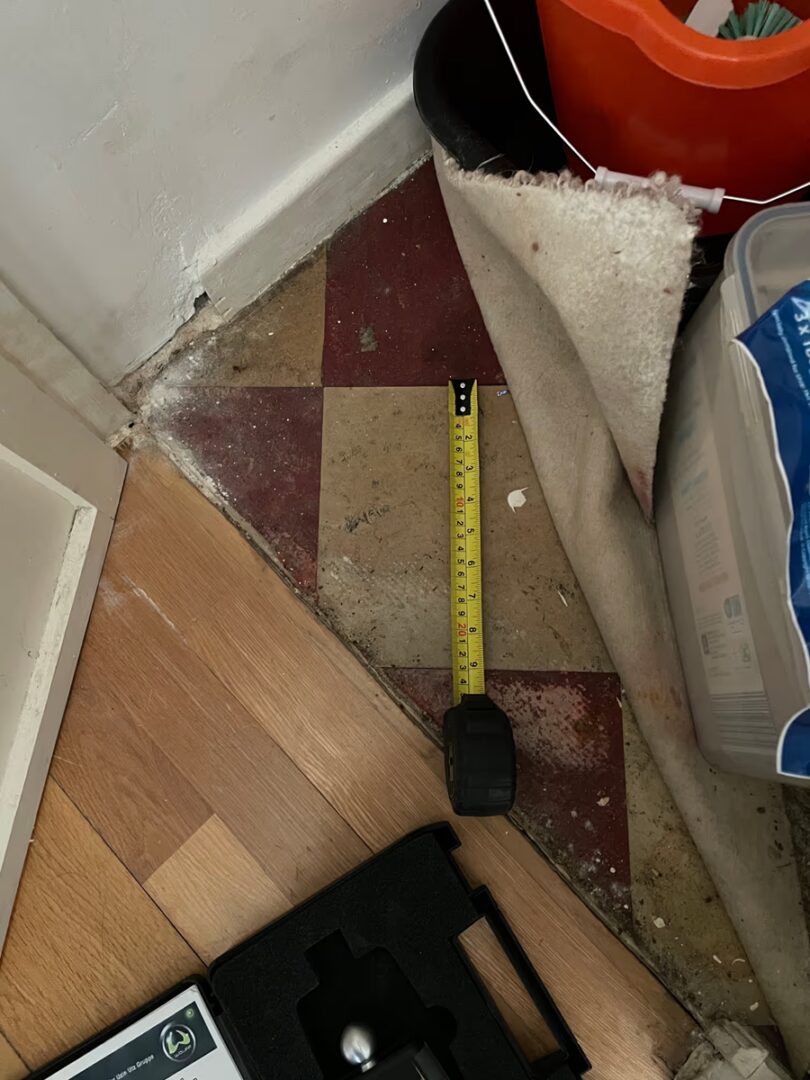
During our site survey, we discovered that the existing ground floor was covered with old thermoplastic tiles, something we regularly encounter in homes built between the 1960s and early 1990s across Cambridge and the surrounding villages.
Although many homeowners don't realise they're there, these tiles can present significant problems if they are simply covered over with a new floor.
Thermoplastic floor tiles were widely used throughout the UK because they were durable, inexpensive and easy to install. They were commonly laid directly onto concrete subfloors using black bitumen adhesive and can often be found hidden beneath carpets, vinyl or laminate flooring today.
Some thermoplastic tiles manufactured before the mid-1980s may contain asbestos fibres. The Health and Safety Executive lists thermoplastic floor tiles among the materials most likely to contain asbestos in this age of property.
When left undisturbed, they usually present very little risk, but breaking, sanding or removing them without the correct procedures can release harmful asbestos fibres into the air. You can read more on our own asbestos and flooring page.
That is why identifying the existing floor before installation is such an important part of every project we undertake.
It can be tempting to leave the tiles in place and install a new floor over the top, but this is something we would never recommend.
As thermoplastic tiles age, the bitumen adhesive beneath them can become brittle and begin to fail. Even if the tiles appear solid today, movement beneath a new engineered wood floor can eventually lead to serious problems.
These can include movement underfoot, hollow-sounding areas, gaps opening between boards, adhesive failure, uneven floors and, in the worst cases, complete failure of the flooring installation.
A premium floor deserves a stable foundation.
Installing over an unstable subfloor risks the longevity of the entire installation and could result in costly repairs in the future. We believe it is always better to deal with the problem properly before laying a floor that is designed to last for decades.
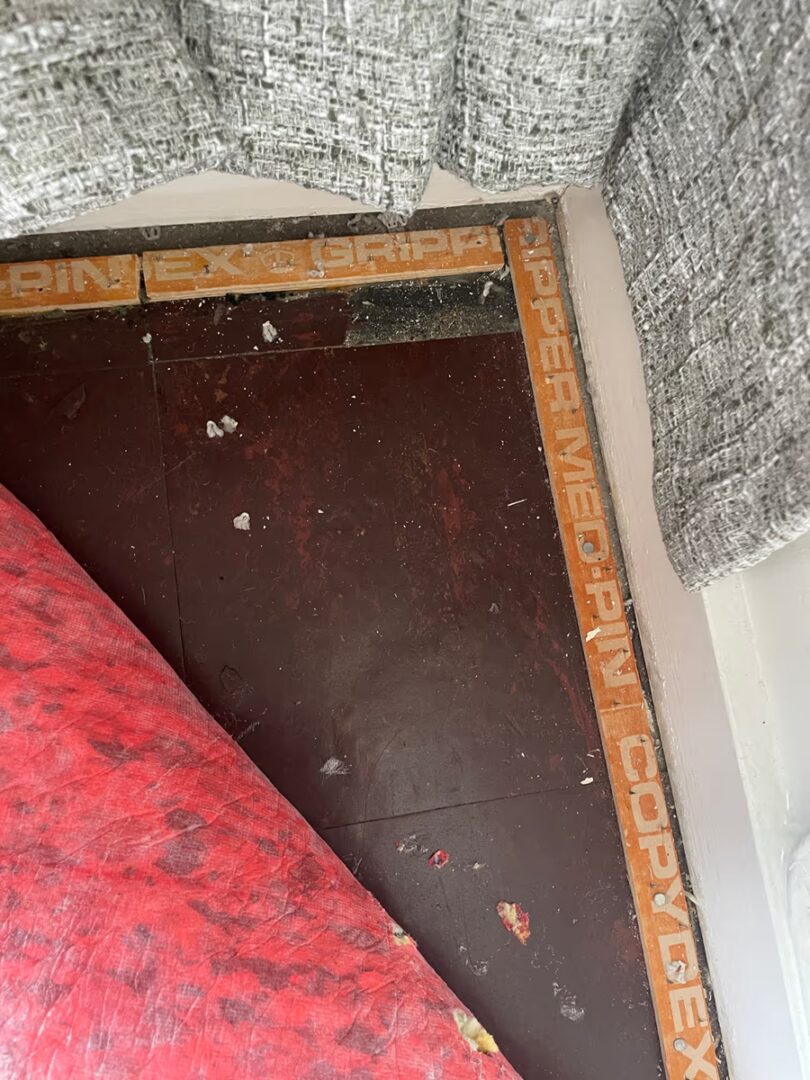
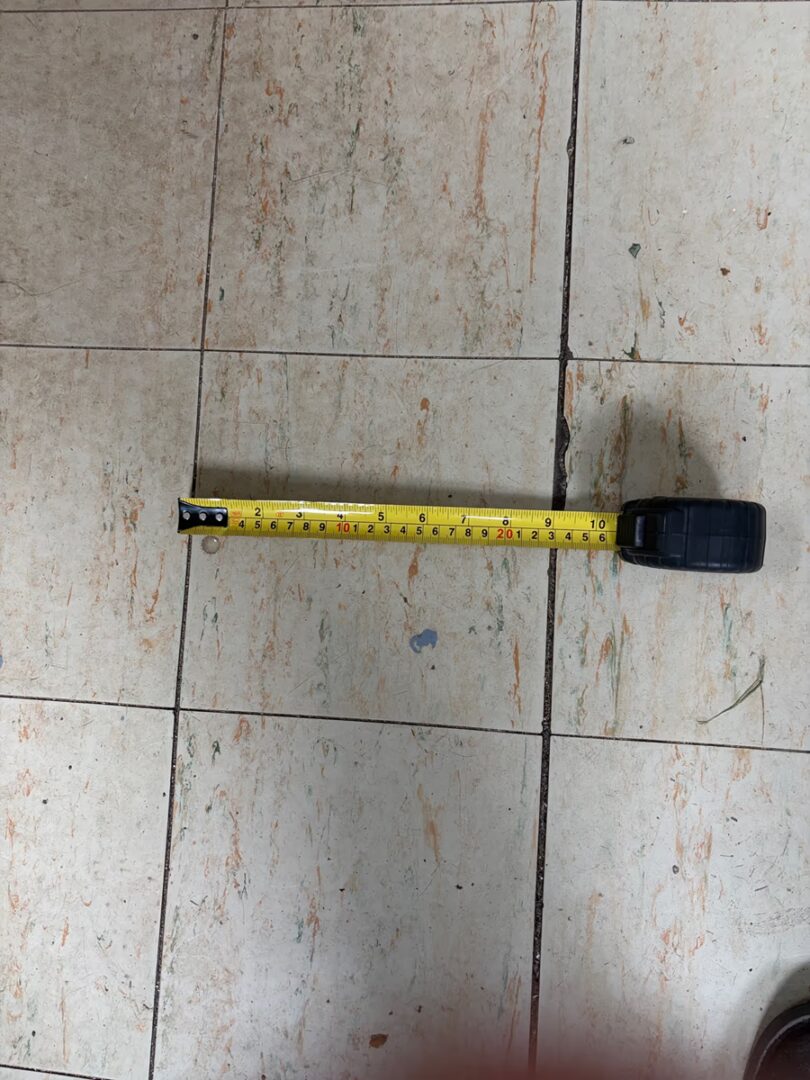
Because of the age of Liam and Izzy's property, we recommended asbestos testing before any flooring work began.
At Art of Flooring, we never guess when it comes to potential asbestos-containing materials. Instead, we work alongside Alliance Asbestos Services, a trusted asbestos specialist based in Cambridge, who carried out the sampling, testing and safe removal of the thermoplastic tiles before we began our installation.
Working with qualified specialists means the work is completed safely, professionally and in line with current regulations. More importantly, it gives our customers complete peace of mind that their home is safe before the new flooring is installed.
Once Alliance Asbestos Services had completed the removal, we were ready to begin the next stage immediately. Careful planning meant Liam and Izzy were not left living with exposed black bitumen adhesive any longer than necessary, helping to minimise disruption while keeping their renovation project moving forward.
If you suspect your property may have thermoplastic floor tiles, we always recommend arranging professional testing before starting any renovation work.
For asbestos testing and removal, we are happy to recommend Alliance Asbestos Services.
Email: [email protected]
Website: www.alliance-asbestos-services.co.uk
Removing the old tiles is only part of the process.
Once they had been lifted, the concrete subfloor was left with the original black bitumen adhesive. This residue creates an uneven surface, can produce an unpleasant smell and is completely unsuitable for installing engineered wood flooring directly onto.
To create the perfect foundation, we prepared the entire ground floor using Ardex NA Rapid Setting Smoothing Compound, a product designed to bond over old adhesive residues without the need for intensive priming. If you'd like a fuller picture of what goes into a job like this, our guide to installing engineered wood flooring step by step covers the subfloor preparation stage in more detail.
This encapsulated the remaining bitumen residue and created a perfectly smooth, stable surface ready for the new floor.
Subfloor preparation is often the part homeowners never see once the project is complete, but it is one of the most important factors in ensuring a beautiful floor continues performing for decades. The quality of the floor you walk on is only ever as good as the preparation beneath it.
With the subfloor fully prepared, the installation could finally begin.
Unlike a straight plank floor, a herringbone installation cannot simply start against one wall. Every herringbone floor begins with establishing what is known as the crown line, which acts as the central reference point for the entire installation.
Our expert fitter, Karl, carefully measured the room and marked the crown line to ensure the herringbone pattern would remain perfectly centred and symmetrical throughout the property. This stage takes time, but it is one of the most important parts of achieving a premium finish.
If the crown line is even slightly out of position, the pattern can gradually drift across the room. By the time the floor reaches the opposite wall, the blocks may need to be cut unevenly, borders can appear unbalanced, and the whole floor can look visually out of square, even if the room itself is not perfectly straight.
Many older Cambridge homes have walls that are far from perfectly parallel, so working from the room itself rather than a carefully established centre line can quickly highlight these imperfections. By setting the crown line first, Karl was able to make subtle adjustments as the installation progressed, ensuring the finished floor looked balanced from every angle.
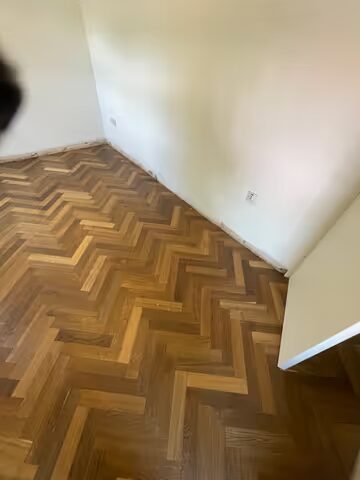
Only once the crown line had been established did the first blocks of the bespoke Grantchester engineered oak flooring begin to take shape. Each board was carefully positioned and bonded into place, with every joint checked to maintain the precision of the pattern.
The bespoke aged finish adds warmth, depth and character, while the traditional herringbone design creates a timeless centrepiece that perfectly complements the property's restoration.
Normally we would complete an installation by fitting new skirting boards. However, Liam and Izzy had further plastering and decorating planned, so the skirting will be installed once the remaining renovation work has been completed. This ensures the final finish is completed without risk of damage to the new flooring.
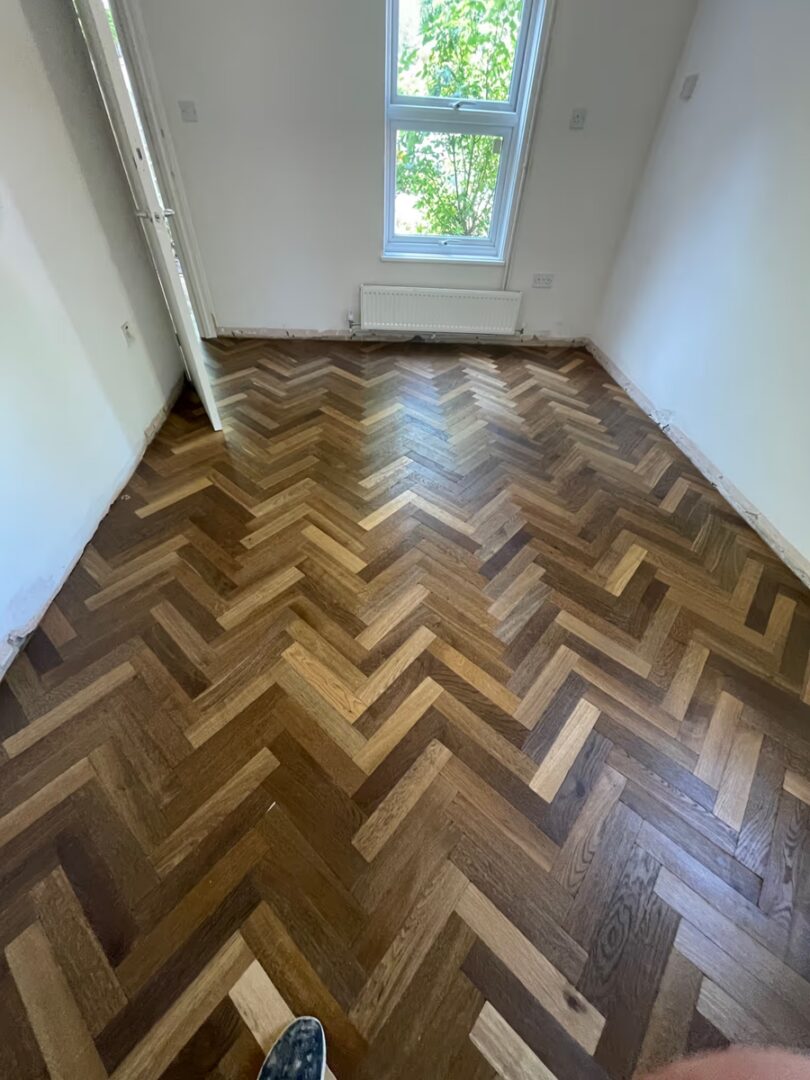
Liam and Izzy now have exactly the floor they imagined when they first walked into our showroom.
Their bespoke Grantchester herringbone floor has transformed the ground floor of their Cambridge home, bringing warmth, character and timeless elegance to every room.
More importantly, they have complete confidence that what lies beneath the floor has been prepared correctly and built to last.
Projects like this are a reminder that great flooring is about far more than choosing the right product. Careful surveys, honest advice, working with trusted specialists such as Alliance Asbestos Services, meticulous subfloor preparation and expert installation all play an essential role in achieving a floor that will perform beautifully for many years to come.
If you're renovating a property in Cambridge that was built between the 1960s and early 1990s, we'd always recommend arranging a professional survey before choosing your new flooring. Discovering thermoplastic tiles at the beginning of a project is far easier and far less expensive than discovering them after your new floor has been installed.