To enable us to give you our full attention during your showroom visit, please book an appointment
- Opening Hours
Showroom Open by Appointment Only
Monday - Friday 9:00am - 5:00pm
Saturday or Sunday 9:00am - 3:00pm

To enable us to give you our full attention during your showroom visit, please book an appointment
Run a hand across an oiled oak board, and it feels like timber, not a coating. That is most of the appeal. Oil soaks into the wood rather than sitting on top, so the grain looks deeper, the sheen stays low, and the floor feels warm underfoot.
It also asks a little more of you. The right cleaner, an occasional top-up of maintenance oil, some thought about which rooms it goes in. None of it is difficult, but it is worth knowing before you commit to a floor you will live with for decades.
Here is an installer's honest view of how oil differs from lacquer, which rooms suit it and what upkeep really involves.
It is a real wood floor whose top layer is protected with oil instead of lacquer. The oil penetrates the timber and hardens inside the fibres. Lacquer does the opposite: it cures into a thin film on the surface.
That one difference explains most of this guide. With no film, an oiled floor shows the grain and character of the oak more honestly. Wear shows as gradual dulling in busy areas rather than a scratched coating, and it can be refreshed patch by patch.
Underneath, the board is the same as any engineered floor: a solid wood top layer, known as the wear layer, bonded to a stable plywood or HDF core. Our guide to what engineered wood flooring is explains the construction in more detail.
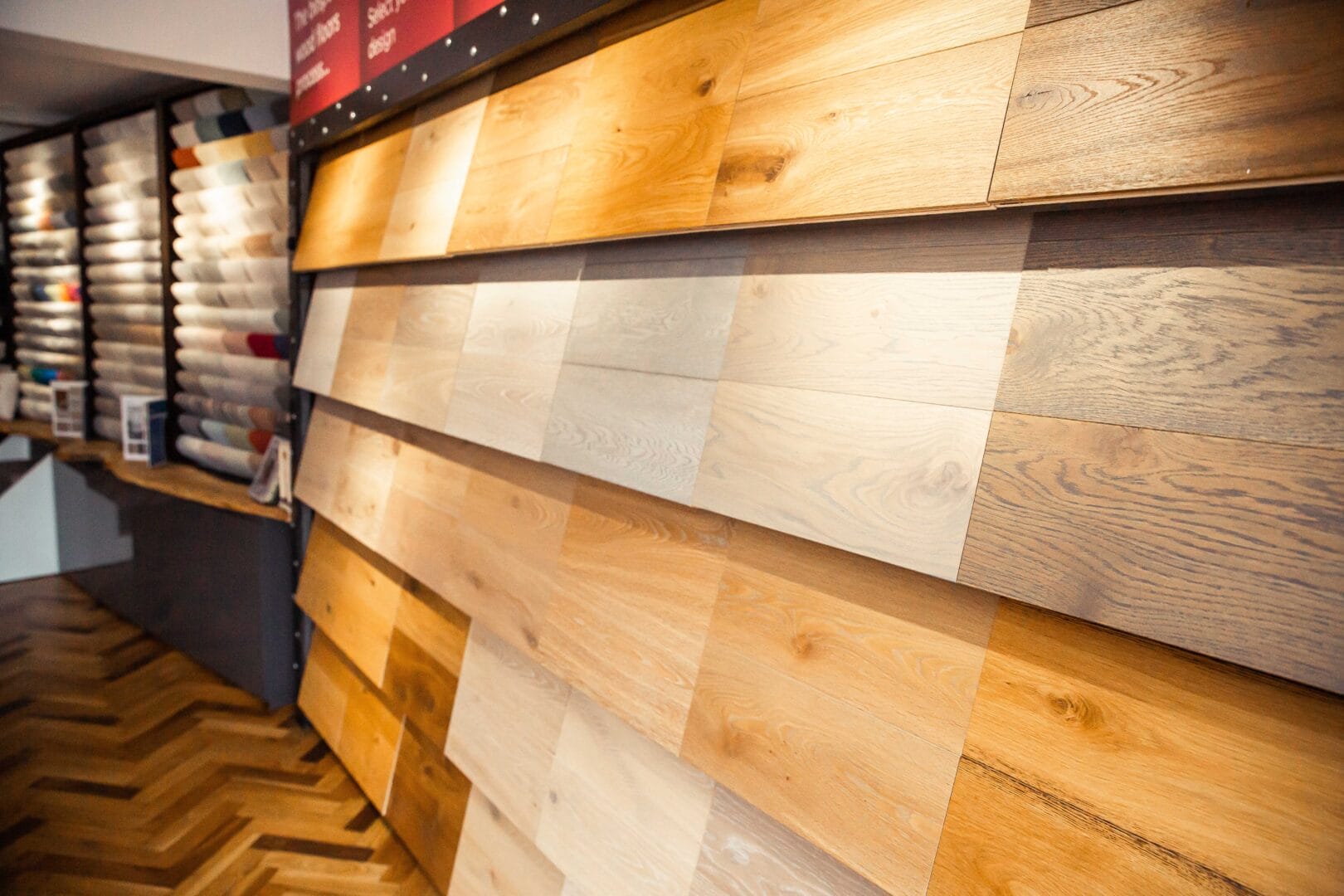
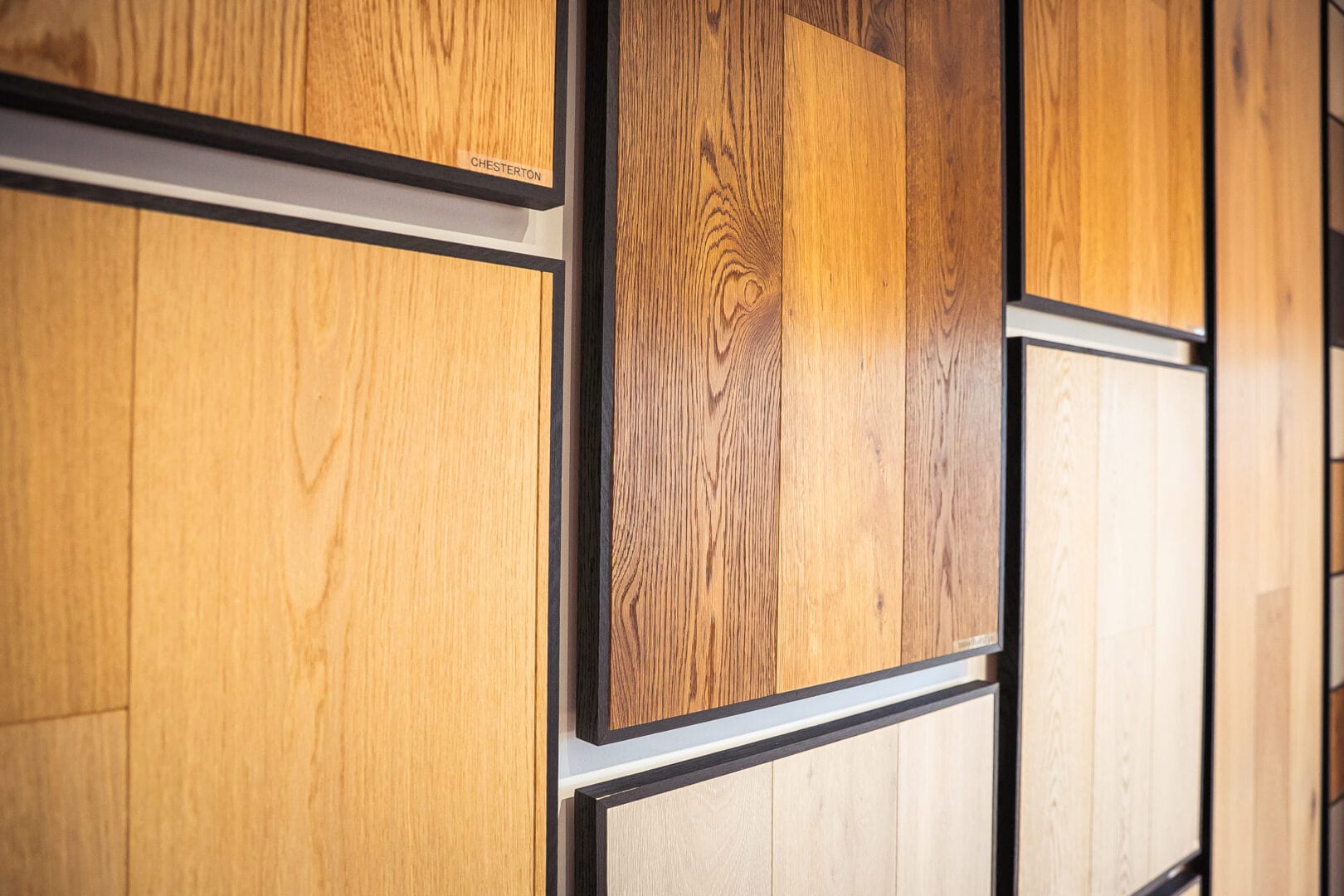
"Oiled" covers three quite different finishes. Product pages tend to lump them together, which is where much of the conflicting advice about mopping and durability comes from.
| UV oil | Natural oil | Hardwax oil | |
| How it's applied | In the factory, cured instantly under UV lamps | Penetrating oil, cured slowly by air | On site, thin coats worked into sanded timber |
| Look | Low sheen, very even | Soft and deep, closest to raw wood | Matt and velvety, grain enhanced |
| Protection | Thin but hard-wearing, walkable once fitted | The least of the three | Good; the wax helps repel water and dirt |
| Upkeep | Maintenance oil compatible with the factory finish | The most frequent re-oiling | Periodic maintenance oil, easy spot repair |
Most pre-finished boards sold as oiled are UV oiled. Because the oil is cured on the production line, the floor is ready to walk on as soon as it is down, and UV oils tend to wear better than traditional site-applied oils.
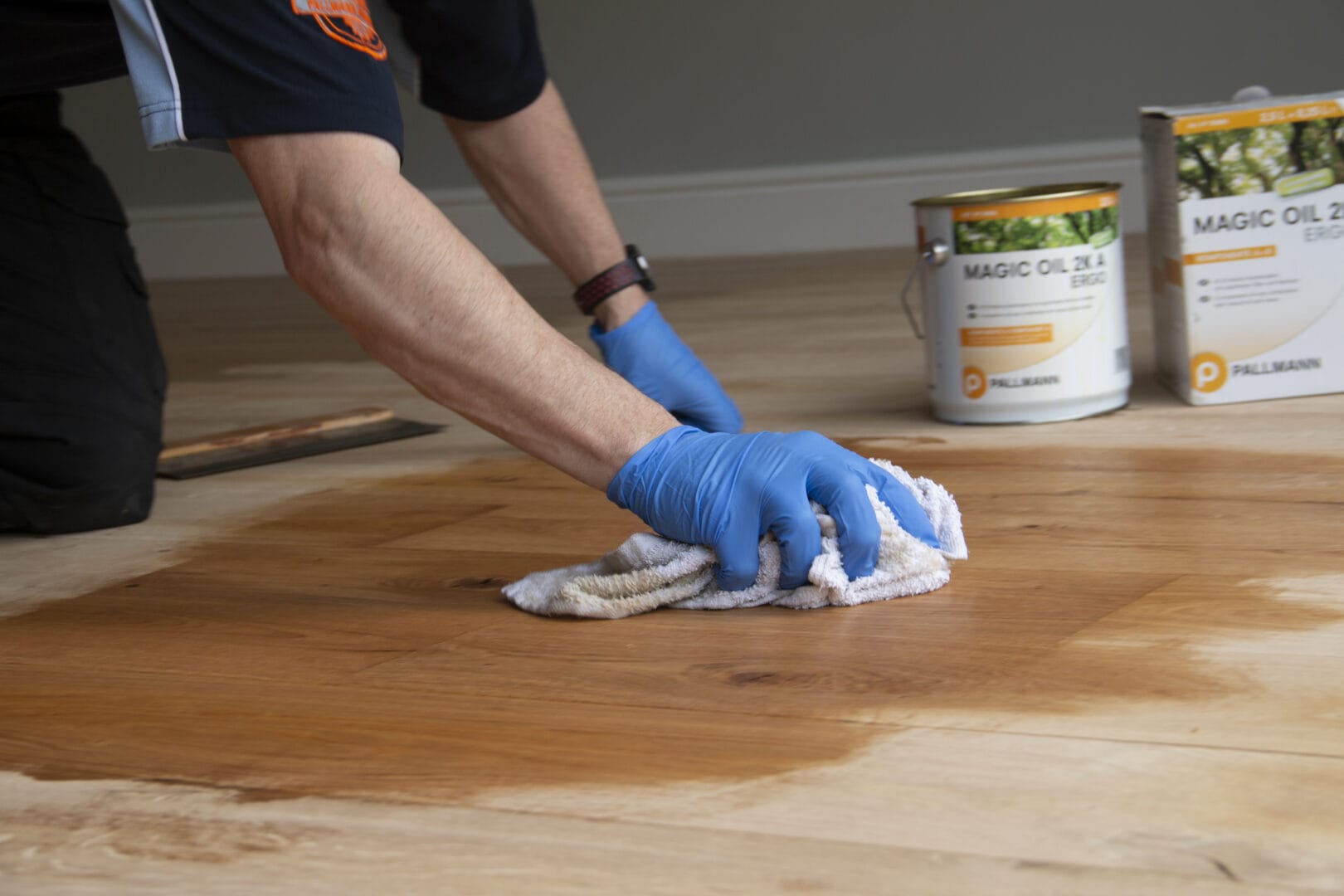
Hardwax oil blends natural oils with waxes. For bespoke floors that are sanded and finished on site, our Pallmann-approved craftsmen use Pallmann Magic Oil, and the finish carries a two-year guarantee.
Traditional natural oil still has a place, mostly in restorations. In a busy family home, it asks the most of its owner.
That is the trade for a floor that looks and feels like wood.
| Oiled | Lacquered | |
| Look | Matt, natural, grain enhanced | Matt, satin or gloss; more uniform colour |
| Durability | Wears gradually; scratches blend in | More resistant to spills and scratches |
| Repairs | Spot repair in the affected area | Usually a full sand and refinish |
| Upkeep | Wood floor soap and maintenance oil | pH-neutral cleaner, little else |
| Best rooms | Living rooms, bedrooms, dining rooms | Busy kitchens, homes wanting the lowest upkeep |
Most of the lacquered floors we fit are matt, so the visual gap is smaller than it used to be. The real difference is how each one wears and how it is put right. Our comparison of oil and lacquer finishes goes into more depth.

Living rooms, dining rooms and bedrooms are where oil is happiest: moderate traffic, occasional spills.
Hallways work well with one condition: a proper barrier mat at the door. Grit carried in on shoes wears an oiled floor faster than anything else, so a hallway will need maintenance oil more often than the rooms beyond it.
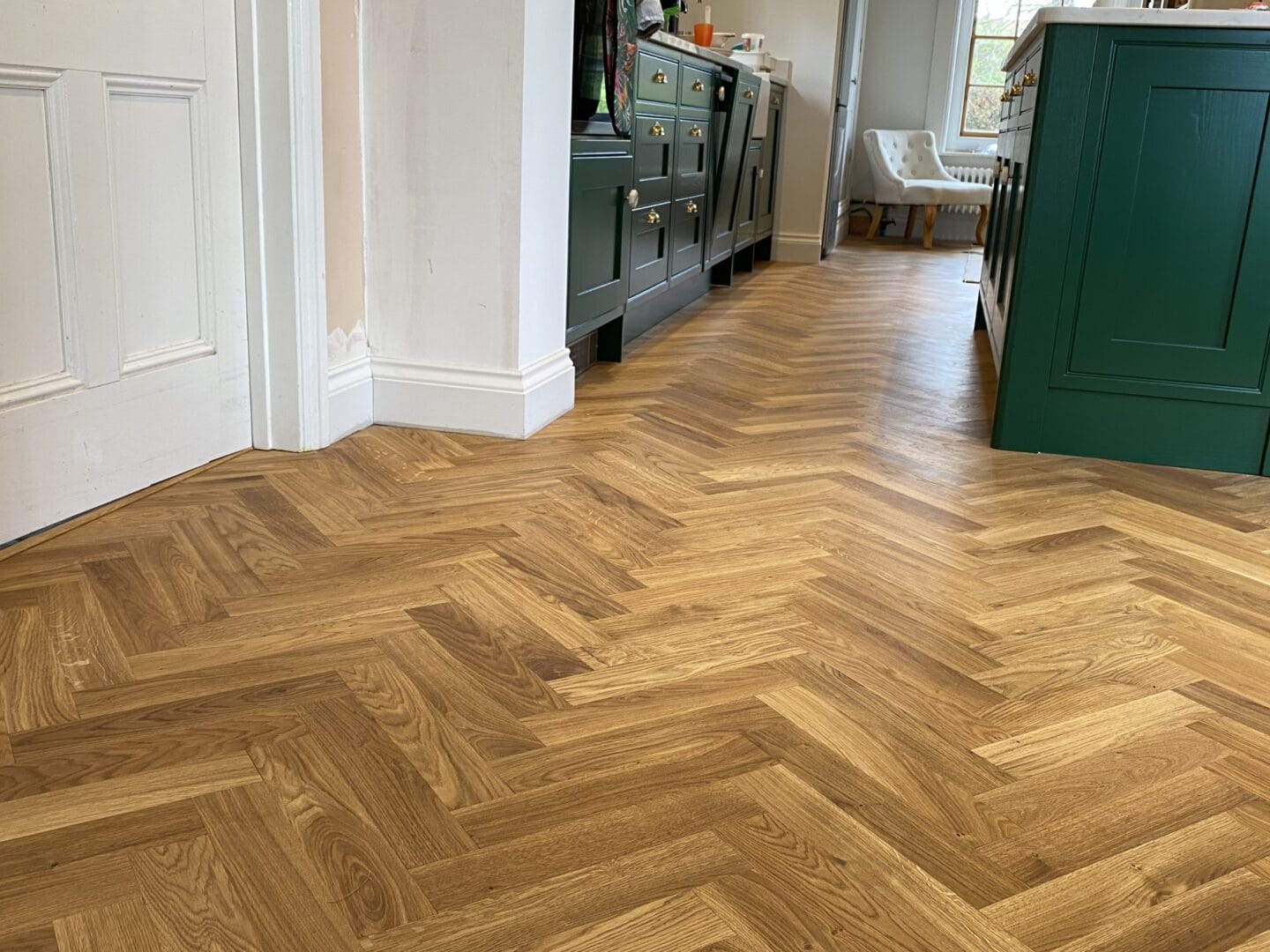
Kitchens are the honest conversation. Oil can go in a kitchen. We fitted prime-grade engineered oak herringbone finished with Pallmann Magic Oil in a kitchen in Histon. It works when spills are wiped up promptly, and the finish is kept topped up. If your household is relaxed about puddles by the sink, lacquer is the easier life.
Pets and children worry people more than they need to. Claws and toy cars mark any wood floor. On oiled floors, those marks soften into the character of the boards, and felt pads under chair legs prevent most of the rest.
Underfloor heating is generally compatible, because a layered engineered core is more stable than solid wood. Each manufacturer sets its own maximum floor surface temperature, so we work to the limits for the specific product rather than a rule of thumb.
Sweep or vacuum with a soft brush head to lift grit. When the floor needs washing, use a damp mop only, wrung out until it is barely wet, with a pH-neutral wood floor soap made for oiled finishes. Pallmann's CLEAN, for example, is a neutral cleaner for oiled and lacquered wood. Avoid steam mops, vinegar and washing-up liquid, which can strip the oil. Our guide to cleaning engineered wood floors without damage has a fuller routine.
Maintenance oil is a light refresh, not a full re-oil. Pallmann describes Magic Oil Care as a way to refresh oiled floors and extend the life of the finish, with the frequency set by how hard the floor is used. As a starting point:
| Area | Traffic | Maintenance oil |
| Hallways, kitchens, back doors | High | Check every few months; the busiest walkways may need it more than once a year |
| Living and dining rooms | Medium | Around once a year |
| Bedrooms and studies | Low | Every year or two |
Your floor's own care guidance comes first, as UV and hardwax oils use different products.
Drip a little water on a busy spot, such as the path into the kitchen. If it beads on the surface, the finish is doing its job. If it soaks in and darkens the wood within a few minutes, that area is ready for maintenance oil.
If you would rather not do it yourself, our sister company Art of Clean cleans and refreshes oiled floors, and can sand and refinish a tired floor years after it was fitted.
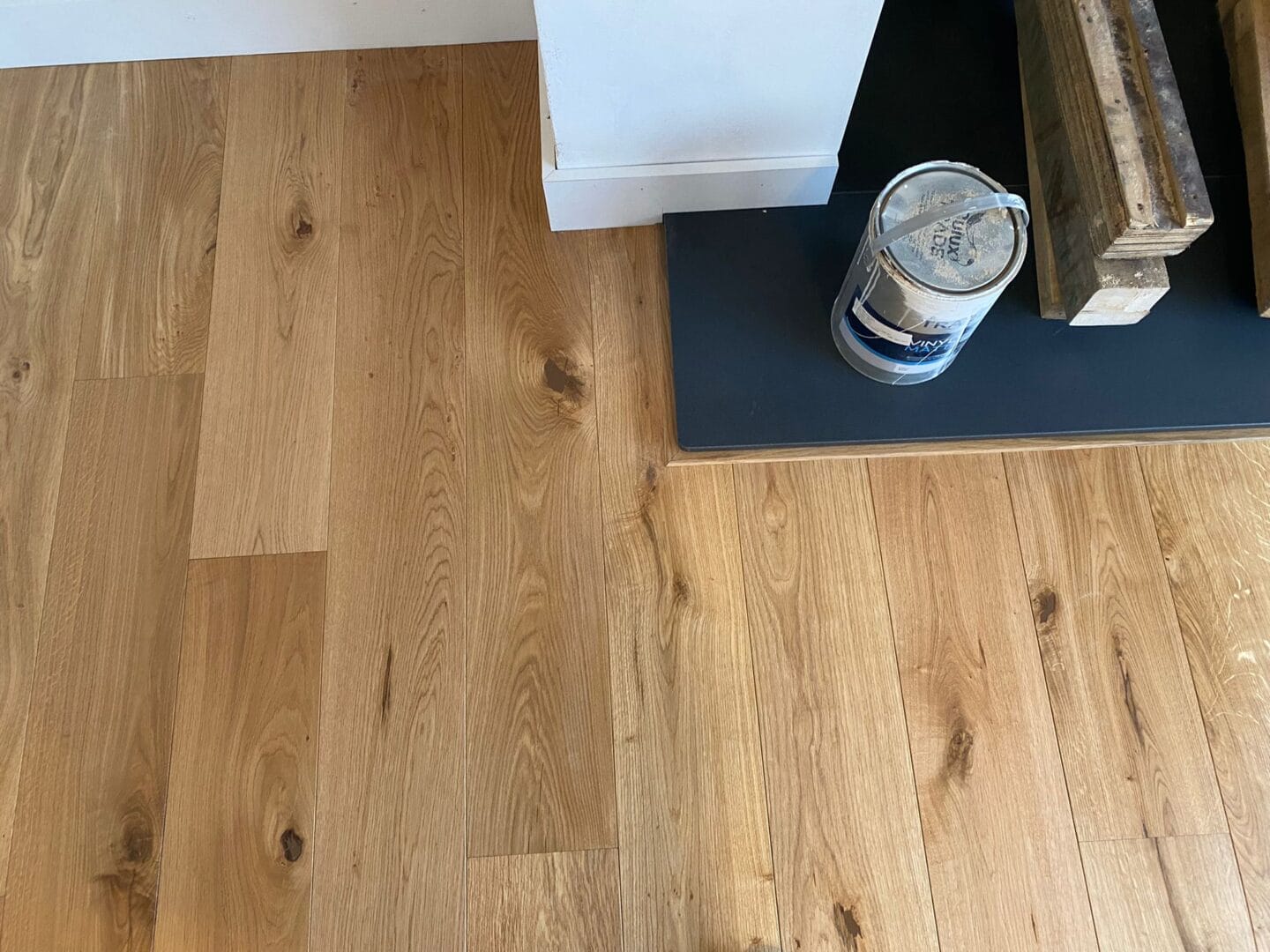
Brushing lifts some of the softer timber between the grain before the oil goes on. The result is a gently textured surface that hides everyday marks well, which makes it the most forgiving oiled finish for a family home.
Oil suits herringbone and other parquet patterns because it picks up the change in grain direction from block to block. The Histon kitchen above is a good example.
Wide boards show off the knots and grain of rustic grade oak, and oil makes the most of that character.
Click-lock boards can be floated over an underlay, while herringbone and wide planks are often glued down for stability.
A sample under showroom lighting can look quite different in a north-facing sitting room on a grey morning. The best way to decide is to see oiled and lacquered finishes side by side in your own home.
Book a consultation at our showroom on Milton Road, Cambridge, or arrange a home visit. We will bring samples, check the subfloor, talk through how each room is used and give you a fitted quote. As a rough guide before then, our engineered timber buying guide puts typical board prices depending on quality. Fitting costs depend on your subfloor, which is what the visit is for.