To enable us to give you our full attention during your showroom visit, please book an appointment
- Opening Hours
Showroom Open by Appointment Only
Monday - Friday 9:00am - 5:00pm
Saturday or Sunday 9:00am - 3:00pm

To enable us to give you our full attention during your showroom visit, please book an appointment
If you’ve been looking at parquet flooring, you’ve probably come across chevron engineered wood flooring. The clean V-shaped pattern can make a room feel more refined and considered, but many homeowners want to know whether it is practical as well as attractive.
In simple terms, chevron engineered wood flooring combines a real wood surface with a stable engineered core, giving you the appearance of traditional parquet with greater suitability for modern homes. It offers the elegance of a classic wood floor while providing improved stability and compatibility with features such as underfloor heating.
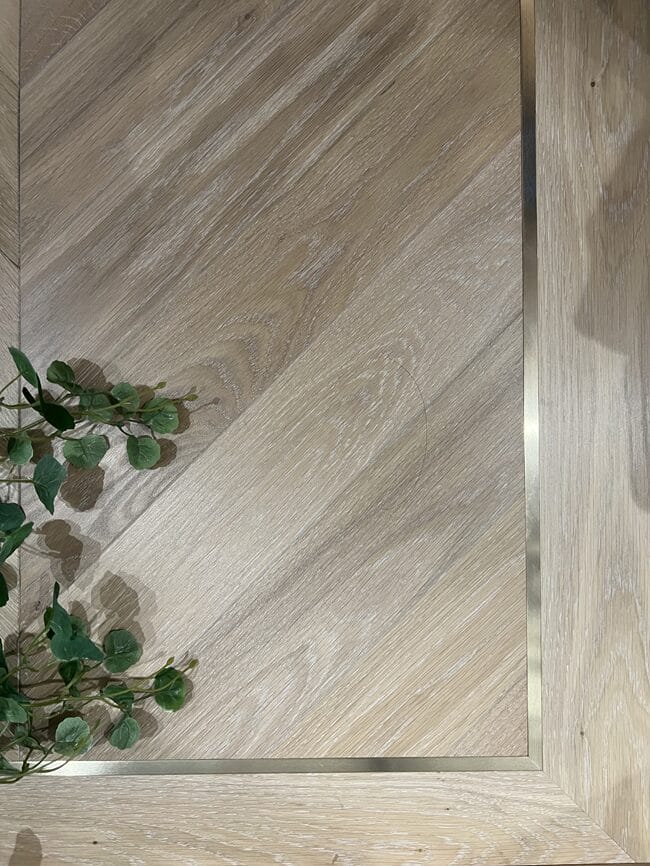
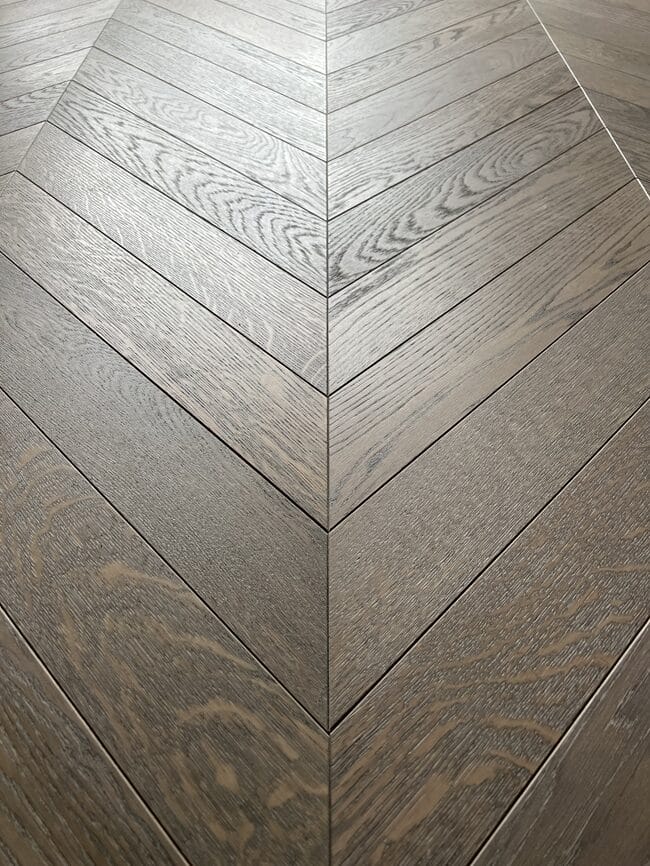
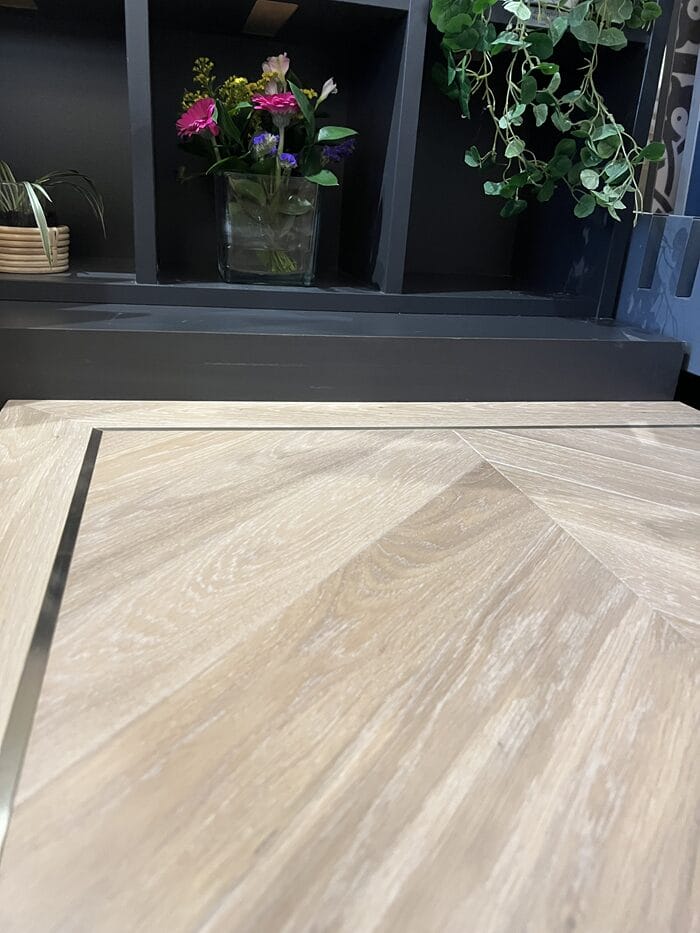
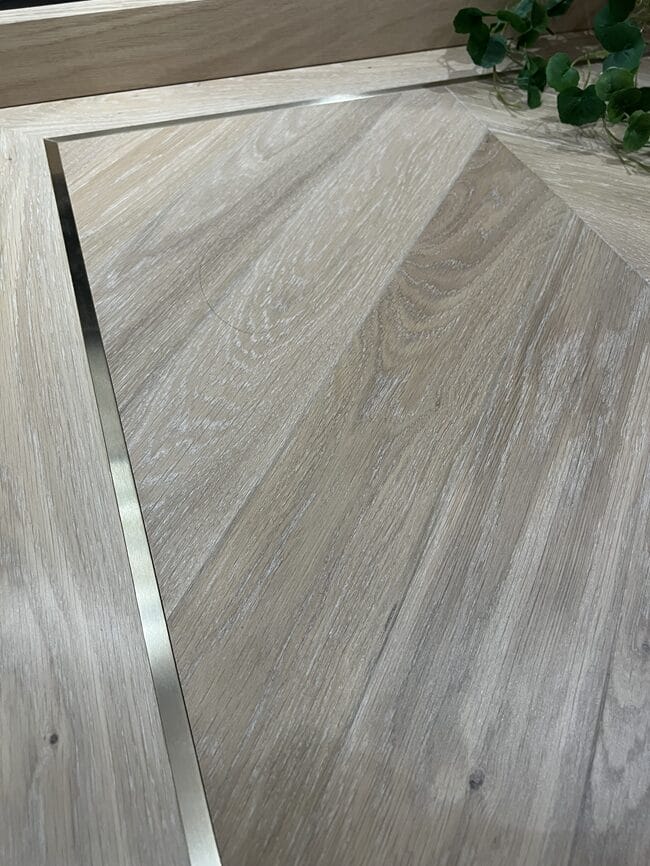
Chevron flooring is a parquet style where each plank is cut at an angle, typically 45 or 60 degrees, and laid so the ends meet in a continuous point. This creates the distinctive arrow-like pattern often associated with luxury European interiors.
Unlike standard wood floor planks laid in straight rows, a chevron pattern naturally draws the eye through a room. This can make hallways feel longer, add structure to open-plan spaces, and create a stronger visual focal point.
| Feature | Chevron Flooring | Standard Plank Flooring |
| Layout Pattern | Continuous V-shape | Straight boards |
| Installation Complexity | High | Moderate |
| Design Style | Elegant and decorative | Traditional and understated |
| Visual Movement | Strong | Minimal |
Chevron flooring is often considered a premium option because the boards must be manufactured and installed with exceptional accuracy.
For homeowners considering parquet, our guide to parquet flooring provides a useful overview of the different styles available.
Engineered wood flooring is made using a real wood top layer bonded to a multi-layer plywood or HDF core.
The oak top layer provides the authentic appearance and feel of real timber, while the engineered construction improves dimensional stability. This helps reduce the natural expansion and contraction that can occur as temperature and humidity levels change.
| Feature | Engineered Chevron | Solid Wood Chevron |
| Stability | Higher | Lower |
| Moisture Resistance | Better | More sensitive |
| Underfloor Heating | Often suitable | More limited |
| Cost | Moderate to high | Premium |
This stability is one reason engineered flooring works so well in chevron designs, where multiple board joins and precise alignment make movement more noticeable.
Chevron and herringbone are both parquet floors, but they create very different effects.
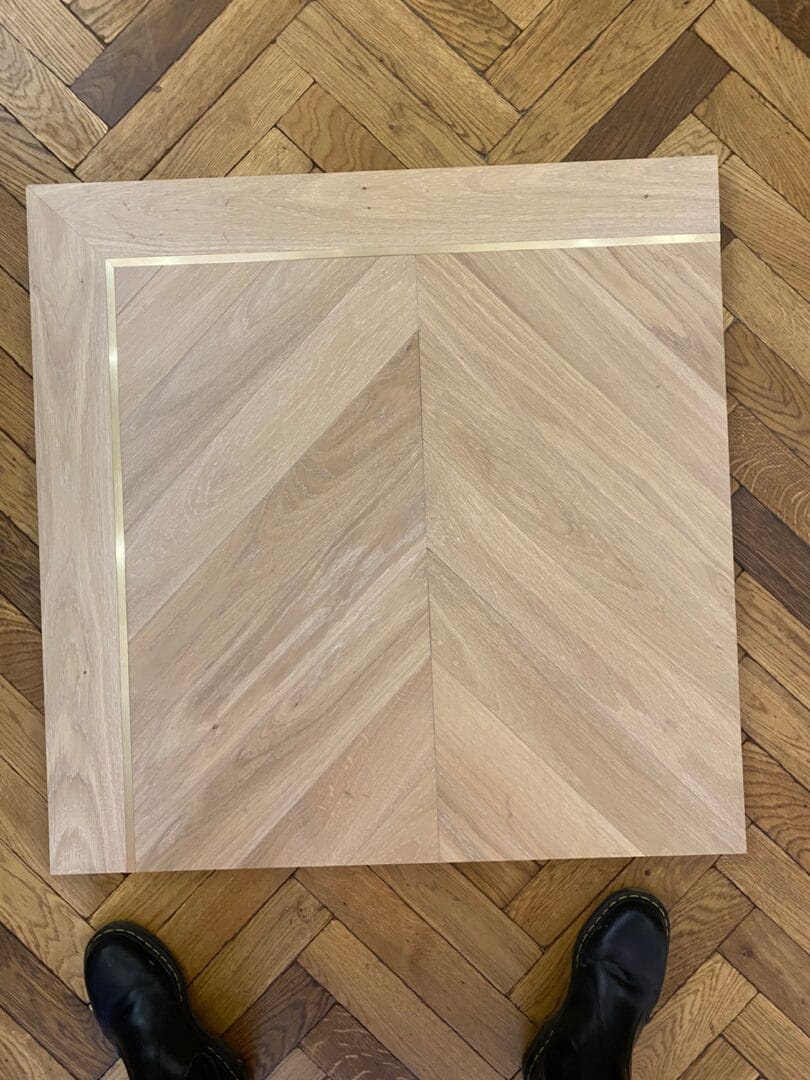
Chevron boards are cut at an angle and meet at a point, creating a seamless V-shape. Herringbone uses rectangular planks laid in a staggered zigzag pattern.
| Feature | Chevron | Herringbone |
| Appearance | Continuous V-shape | Broken zigzag |
| Board Shape | Angled ends | Straight planks |
| Style Feel | Refined and directional | Traditional and textured |
| Installation Complexity | Higher | Moderate to high |
Neither style is universally better. Chevron often suits contemporary and open-plan interiors, while herringbone can feel more traditional and heritage-inspired.
The appeal of chevron flooring goes beyond appearance.
The pattern creates a sense of movement without relying on bold colours or decorative finishes. It adds visual interest while remaining timeless enough to work with both modern and classic interiors.
Engineered construction also makes chevron more practical for everyday family life. Many products offer:
Oak chevron is particularly popular because it balances warmth, durability and versatility. Whether finished with oil, lacquer or a brushed surface treatment, oak works comfortably across a wide range of interior styles.
For homeowners comparing options, this buying guide is a useful next step.
| Pros | Cons |
| Elegant premium appearance | Higher installation costs |
| Real wood surface | Requires skilled fitting |
| Good stability | More material waste |
| Often suitable for underfloor heating | Subfloor preparation is critical |
| Wide range of finishes | Premium products can be expensive |
The biggest factor in long-term satisfaction is not simply the colour or style. The quality of the board, wear layer, subfloor preparation and installation will usually have a greater impact on how the floor performs over time.
Oak remains the most common choice for chevron engineered wood flooring.
It offers a durable surface, attractive grain and a broad range of finishes, making it suitable for most homes.
Popular finishes include:
Before ordering, it is always worth viewing a sample in your own room. Lighting conditions can dramatically affect how oak finishes appear throughout the day.
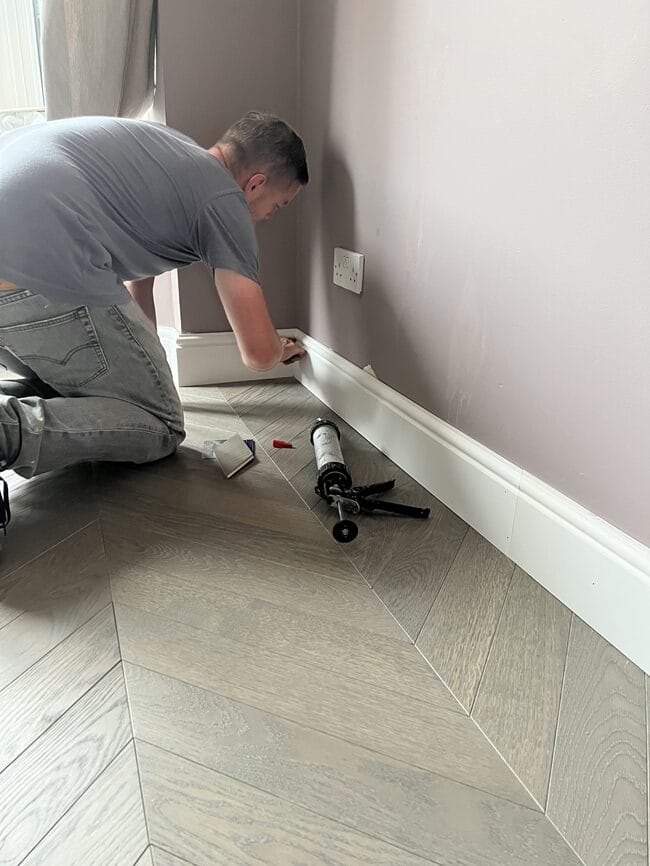
Chevron flooring demands more precision than standard plank flooring.
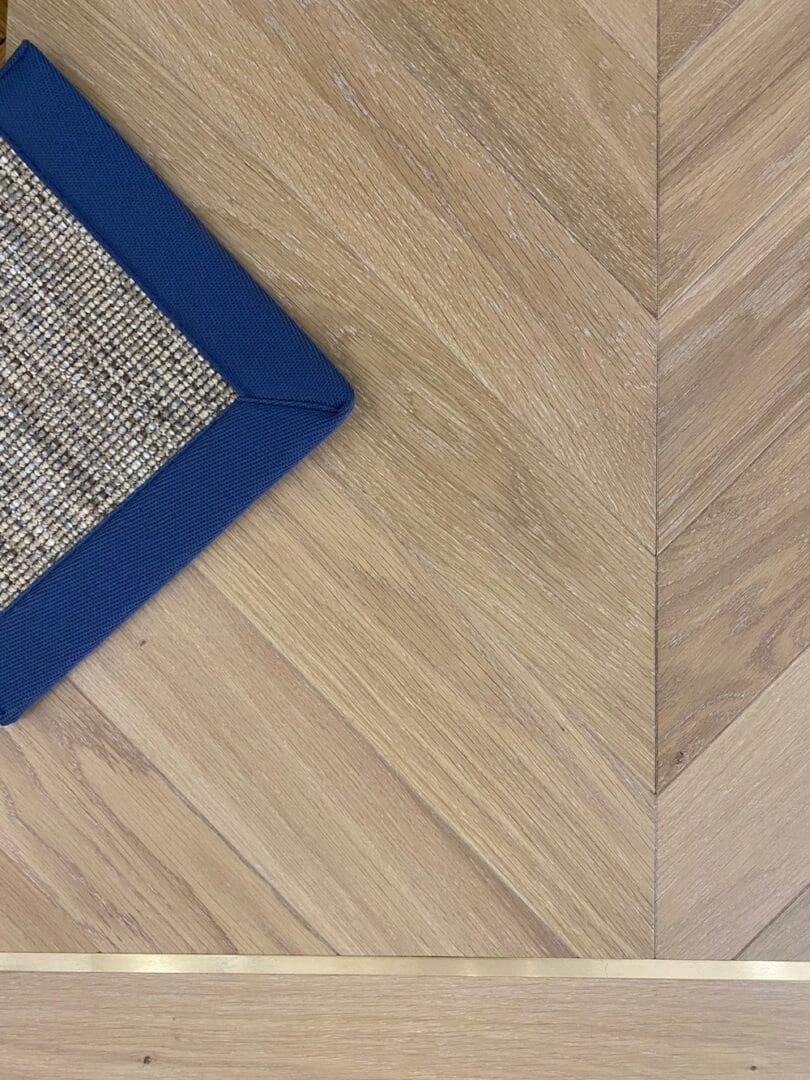
The subfloor must be level, dry and properly prepared before installation begins. Installers typically establish a centre line and carefully align each row to ensure the pattern remains symmetrical throughout the room.
Because even minor errors can become noticeable across the floor, professional installation is strongly recommended.
The National Wood Flooring Association provides recognised guidance on installation standards and moisture management.
A high-quality engineered oak floor can provide decades of service when correctly installed and maintained.
Durability is influenced by:
Engineered flooring is not waterproof, so spills should be cleaned promptly and excessive water should be avoided during cleaning.
For busy households, engineered hardwood flooring often provides a practical balance between appearance and performance.
Chevron engineered wood flooring works particularly well in:
It can also perform well in kitchens when the correct product and finish are selected.
Bathrooms and high-humidity areas require additional caution, as prolonged moisture exposure can affect any real wood floor.
Costs vary according to:
Chevron flooring is usually more expensive than standard plank flooring because both manufacturing and fitting require greater precision.
When budgeting, remember to allow for professional installation and a waste allowance for angled cuts.
Before making a final decision, consider:
| Buyer Checklist | What to Check |
| Board Size | Does it suit the room scale? |
| Wear Layer | Is it suitable for long-term expectations? |
| Finish | Oil, lacquer, brushed or smoked? |
| Grade | Rustic or prime appearance? |
| Underfloor Heating | Manufacturer approval confirmed? |
| Sustainability | FSC or PEFC certification? |
The Forest Stewardship Council provides guidance on responsibly sourced timber.
PEFC certification is another recognised indicator of responsible forestry.
Chevron engineered wood flooring offers a combination of elegance, practicality and long-term appeal. The distinctive pattern adds character to a room, while engineered construction provides the stability modern homes often require.
The right choice depends on more than appearance alone. Wear layer thickness, board quality, finish and installation standards all play an important role in how the floor looks and performs over time.
If you are comparing oak chevron options, order a few samples, view them in your own space, and discuss your plans with a flooring specialist. A little extra consideration at the selection stage can make all the difference to the finished result.